
London Food Guide: Where to Eat in London as a US Visitor (2026)
London’s food scene has changed beyond recognition over the past two decades. This London food guide is for US visitors who want to eat well, spend wisely, and discover the city through its kitchens — from a steaming bowl of ramen in Soho to a Sunday roast in a centuries-old pub in Greenwich. Forget the outdated clichés about British cooking. London is one of the most exciting food cities in the world right now, and you don’t need a reservation at a Michelin-starred restaurant to prove it.
What Makes London’s Food Scene Worth Your Time
London feeds over nine million people every day. That creates fierce competition. Standards are high. Chefs from every corner of the world cook here. Walk down a single street in Brixton or Peckham. You’ll pass Jamaican jerk chicken, Vietnamese bánh mì, Nigerian suya, and artisan sourdough bakeries — often within a few hundred metres of each other.
For US visitors, one of the first surprises is just how international London’s food is. This isn’t a city where you eat “British food” every night. It’s a city where brilliant food from dozens of cultures sits side by side, at every price point. The other surprise is how easy it is to eat well without spending a fortune. London has world-class street food, brilliant casual dining, and some of the best markets on the planet — and much of it costs far less than you might expect from a major world capital.
The Great British Classics Worth Trying
Before diving into the global options, there are some genuinely brilliant British dishes you should seek out. A proper fish and chips — battered cod with thick chips, wrapped in paper — tastes best near the South Bank or at a no-frills East End chippy. A Sunday roast with roast beef, crispy Yorkshire pudding, roast potatoes, and gravy forms a weekly ritual for most Londoners. Old-school cafés in Bethnal Green and Deptford still serve pie and mash, a working-class staple since Victorian times. And a full English breakfast — eggs, bacon, sausage, baked beans, grilled tomatoes, black pudding, and toast — remains the best hangover cure in the world.
These aren’t museum pieces. Londoners actually eat them. They’re part of the rhythm of the city, and trying them gives you a real sense of what daily life here feels like — which is exactly what the best travel should do.
London’s Best Food Neighbourhoods
London doesn’t have one food district. It has dozens. Each neighbourhood has its own eating identity, shaped by who lives there, what markets operate nearby, and which cuisines have taken root over the decades. Understanding where to eat in each area of London saves you time and money — and stops you from settling for a tourist-trap café near the big sights when something genuinely brilliant is around the corner.
If you’re planning which areas to base yourself in or explore, our London Neighbourhoods Guide covers the character of each district in detail. Here’s how their food scenes break down.
Borough Market and the South Bank
Borough Market, just south of London Bridge, is one of the oldest and best food markets in Europe. It runs Thursday to Saturday and draws both serious foodies and casual visitors. Stalls sell everything from aged cheeses and cured meats to fresh ravioli, West African groundnut stew, and some of the finest sourdough bread in the city. Go on a Thursday if you want it slightly quieter. Saturdays are heaving but atmospheric.
The South Bank more broadly is excellent for eating on a budget. Street food stalls, casual cafés, and independent restaurants line the riverside walkway between Westminster and Tower Bridge. Prices here are often lower than you’d expect given the location, and the views of the Thames are free.
Soho and Chinatown
Soho is London’s most densely packed food neighbourhood. Within a ten-minute walk you can find Japanese ramen, Lebanese mezze, Cantonese dim sum, hand-rolled pasta, and some of the city’s oldest private members’ clubs. Carnaby Street and the surrounding streets have seen a wave of interesting independent restaurants open in recent years, alongside old-school institutions that have been feeding Soho’s theatrical and creative crowds for decades.
Chinatown sits right on Soho’s eastern edge, centred on Gerrard Street. The famous red gate is one of London’s most recognisable landmarks. The restaurants here serve Cantonese, Sichuan, Malaysian, Vietnamese, and Thai food — often at prices that feel astonishingly reasonable given the central location. Go for dim sum at lunch or late-night noodles after the theatre. It stays lively until midnight most evenings.
Shoreditch and East London
East London is where London’s most creative chefs tend to set up first. Shoreditch, Hackney, and Dalston have a higher concentration of independent restaurants per square metre than almost anywhere else in the city. The food here leans experimental — fermented everything, natural wines, unusual protein sources, dishes that draw on three or four culinary traditions at once. But alongside the avant-garde restaurants are brilliant Turkish ocakbasi grills in Dalston, Vietnamese canteens on Kingsland Road (nicknamed “Pho Mile”), and some outstanding West Indian takeaways in Hackney.
Brick Lane remains famous for its Bangladeshi and Indian curry houses, though the quality varies enormously. Pick somewhere with locals eating inside rather than a tout working the pavement outside.
Notting Hill and West London
Notting Hill’s Portobello Road market is at its best on Saturdays, when the upper section (north of the Westway) fills with hot food stalls alongside the famous antiques. You can eat your way along the road — grilled halloumi wraps, Moroccan tagine, Spanish tortilla, Caribbean rice and peas. It’s relaxed, colourful, and genuinely delicious. Our full Notting Hill guide has more on the market and the surrounding streets.
Chelsea and South Kensington have some of London’s most polished restaurant options — quieter than Soho, with a strong showing of continental brasseries, high-end European dining, and smart British gastropubs. The King’s Road is worth a walk for its café culture, especially on weekend mornings.
Camden and North London
Camden Market’s food stalls are a genuine highlight — most visitors walk right past them, assuming the market is just vintage clothing and vinyl records. The Hawley Wharf section has over forty food stalls operating simultaneously on weekends, covering cuisines from Ethiopian injera to Japanese takoyaki to Peruvian ceviche. It gets busy, but the quality is high and the atmosphere is unlike anywhere else in the city.
London Food Markets: The Best Ones to Visit
London’s street food markets are one of the most distinctive things about eating here. They’re not tourist traps — they’re where Londoners actually shop for their produce and eat lunch on weekdays. A good market visit gives you access to world-class food at street-food prices, often in spectacular settings. Our full London Markets Guide covers all of them in depth, but here are the key ones for food specifically.
Borough Market (London Bridge)
Already mentioned above, but worth repeating: this is the best food market in London. Come hungry and come with cash as well as a card. The free samples at the cheese, charcuterie, and olive stalls can constitute a full meal if you’re strategic about it. Hot food stalls are brilliant for lunch — look for the queues, which always indicate quality.
Broadway Market (Hackney)
Broadway Market runs every Saturday and is more of a local neighbourhood event than a tourist attraction. The food stalls are excellent. Look for Ethiopian lentils, South Asian street food, fine coffee, and incredible pastries. The surrounding streets fill up with independent cafés and pop-up restaurants. It feels like the real London in a way that some of the more famous markets don’t quite manage.
Maltby Street Market (Bermondsey)
Maltby Street runs on Saturday and Sunday mornings under the railway arches near London Bridge. It’s smaller than Borough but arguably better — less crowded, more focused, and with a genuine neighbourhood feel. The smoked meats, the artisan breads, and the natural wine producers who set up here on weekends make it essential for anyone who takes food seriously.
Exmouth Market (Clerkenwell)
Exmouth Market in Clerkenwell is a semi-pedestrianised street packed with independent restaurants, cafés, and a small cluster of food stalls at lunchtime on weekdays. It’s local, relaxed, and excellent — the kind of place where architects and designers from nearby studios eat lunch in the sun. Less visited by tourists than the bigger markets, which is exactly its appeal.
How to Eat Well in London Without Overspending
London has a reputation for being expensive, and in some parts of the city, that reputation is earned. But it’s entirely possible to eat brilliantly for very little money if you know where to look. This matters for US visitors, because the tendency is to eat near the tourist sights — and the restaurants clustered around Westminster, Buckingham Palace, and the Tower of London are almost universally overpriced and underwhelming.
The single best piece of advice for eating cheaply in London: move one or two streets away from any major tourist sight. The restaurant prices drop dramatically within a two-minute walk. The same principle applies to coffee — the chain outlets near the sights charge the same as everywhere, but independent cafés a street away are often cheaper and far better.
Set Lunches Are Your Best Friend
Many of London’s best restaurants — including some that would be far out of budget at dinner — offer a set lunch menu on weekdays. These typically run from noon to 3pm and offer two or three courses for a fixed price that’s often half what you’d pay in the evening. Michelin-starred restaurants, celebrated chefs’ tables, and neighbourhood bistros all follow this pattern. If there’s somewhere you really want to eat, check whether they do a set lunch before dismissing it as unaffordable.
Pub Kitchens at Lunch
London’s gastropub scene is one of its genuine glories. A well-run gastropub serves restaurant-quality food in a relaxed setting, usually at lower prices than a comparable restaurant. Many pubs offer a cheaper lunchtime menu — a pie, a burger, a roast — that’s among the best-value eating in the city. Look for pubs with a chalkboard menu rather than a laminated card, which is usually a reliable indicator of quality.
For a full breakdown of how to budget your London trip, see our London Travel Budget guide, which includes typical meal costs at every price point.
Supermarket Meal Deals
This sounds unromantic, but the British supermarket meal deal — a sandwich or wrap, a snack, and a drink for around £4.50 to £5.50 — is genuinely good. Marks and Spencer Food, Pret a Manger, and Greggs (for cheap hot pastries) are the most popular options for quick, cheap eating. There’s no shame in grabbing a Pret sandwich and eating it in one of London’s parks. It’s what most Londoners do when they’re busy.
London Drinking Culture: Pubs, Coffee, and Tea
You can’t write a London food guide without talking about what Londoners drink. The pub is the social centre of London life — more important, in many ways, than the restaurant. A good London pub isn’t just somewhere to have a pint. It’s a place to read the paper on a Sunday morning. Watch people. Strike up conversations with strangers. Understand the city at street level.
Which Beers to Try
Real ale — cask-conditioned British beer served at cellar temperature — is worth trying even if you normally drink lager. It tastes nothing like flat warm beer, which is the common American misconception. Ask for a half-pint to try it first. London also has a thriving craft beer scene, with excellent breweries in Bermondsey, Hackney, and Southwark producing IPAs, pale ales, stouts, and sours that rival anything in the US market.
Coffee Culture
London has one of the best independent coffee scenes in the world. The city went through a specialty coffee revolution in the 2010s. The quality at good independent cafés is genuinely exceptional. Monmouth Coffee (with branches near Borough Market and Covent Garden) helped start that revolution and remains a benchmark. Neighbourhood roasters in Hackney, Brixton, and Stoke Newington are producing outstanding coffee. Ask for a flat white — it arrived in London via Australia and New Zealand and is now the default order for most coffee drinkers in the city.
Afternoon Tea
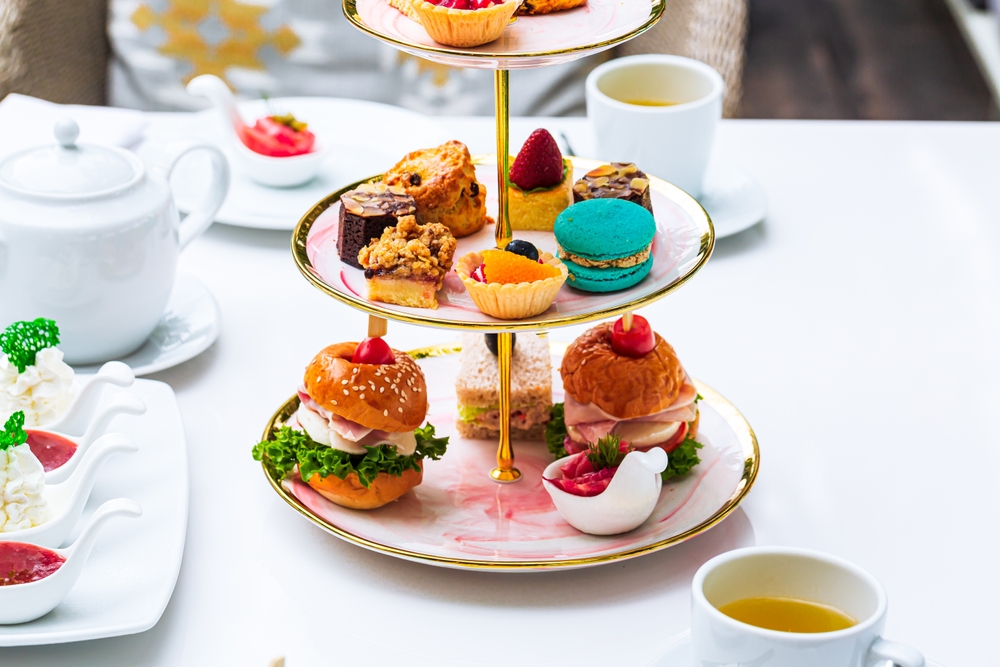
Traditional afternoon tea — finger sandwiches, scones with clotted cream and jam, and a tier of cakes — is a genuine London experience worth having once. The famous hotels (The Ritz, Claridge’s, The Savoy) charge handsomely for it. More affordable options exist at department stores like Fortnum and Mason in Piccadilly, or at independent tea rooms in Kensington and Chelsea. Book in advance for the famous venues. A pot of tea in any café or pub is always affordable and always good.
Practical Tips for Eating in London as a US Visitor
A few things that catch American visitors off guard when eating in London:
Tipping is different. In London restaurants, tipping works differently from the US. A 10–12.5% tip is standard — many restaurants add a service charge automatically, so check the bill before adding more. In pubs, you don’t tip for drinks unless you want to offer the bar staff a drink (you can say “and one for yourself”).
Reservations matter at popular spots. For well-regarded restaurants, booking ahead — even a few days in advance — is standard practice. Many places now offer online booking. Walk-ins work at pubs and casual spots, but you can’t rely on it at the better restaurants on a Friday or Saturday evening.
Portion sizes are smaller. This isn’t a complaint — it’s just different. British restaurant portions tend to be smaller than American ones. The quality is high, but don’t expect the vast plates you might be used to. Order sides if you’re hungry.
Water is always free. Unlike some European countries, London restaurants will always bring you a jug of tap water if you ask. You don’t have to order bottled water. London tap water is perfectly safe to drink.
Dietary needs are well catered for. London is one of the easiest cities in the world if you have dietary restrictions. Vegan and vegetarian options are standard on most menus. Gluten-free options are widely available. Allergen information is legally required on menus, so staff are well trained to answer questions.
Frequently Asked Questions About Eating in London
What is the best area in London for food?
Borough Market and the South Bank offer some of the best food in London across all price points, from street food stalls to celebrated restaurants. For international variety and late-night eating, Soho and the surrounding streets — including Chinatown — are hard to beat as a destination for any food lover visiting London.
How much does it cost to eat in London?
Eating in London can cost as little as £5–8 for a street food or market meal, or £15–25 for a solid meal at a mid-range restaurant. Budget around £30–50 per person per day for food if you mix market meals with one sit-down restaurant, or more if you want to eat well at dinner every night.
Is the food in London really as good as people say?
Yes — London’s food scene is genuinely world class. The combination of brilliant British ingredients, a highly diverse population bringing their culinary traditions to the city, and fierce competition between chefs has produced a restaurant culture that rivals any city in the world. The days of bland British cooking are long gone.
What should I eat in London that I can’t get easily in the US?
A proper Sunday roast with all the trimmings, pie and mash with liquor (a parsley sauce), a steak-and-kidney pudding, Eton Mess for pudding, and a full English breakfast are all experiences that are hard to replicate well outside the UK. Afternoon tea is also far better in London than any approximation you’ll find elsewhere. These are the dishes most worth seeking out on your trip.
Where do Londoners actually eat on a day-to-day basis?
Most Londoners eat at local cafés, canteens, and independent restaurants in their own neighbourhoods — not at the famous tourist spots. Following Londoners means heading to places like Exmouth Market, Broadway Market, Brixton Village, or the side streets of Hackney rather than sticking to the central tourist trail. The food is usually better and the prices are consistently lower.
Join 3,000+ London Lovers
Every week, get London’s local secrets, little-known places and travel inspiration — the kind you won’t find in any guidebook.
Subscribe free — enter your email:
Free forever · One email per week · Unsubscribe anytime