
Most visitors to London see the city in daylight. They take the Tube, join the queues at landmarks, and are back at their hotel before the evening crowds thin out. But London after midnight is a different place entirely, and one of the best ways to see it costs nothing more than a contactless tap on a bus reader.
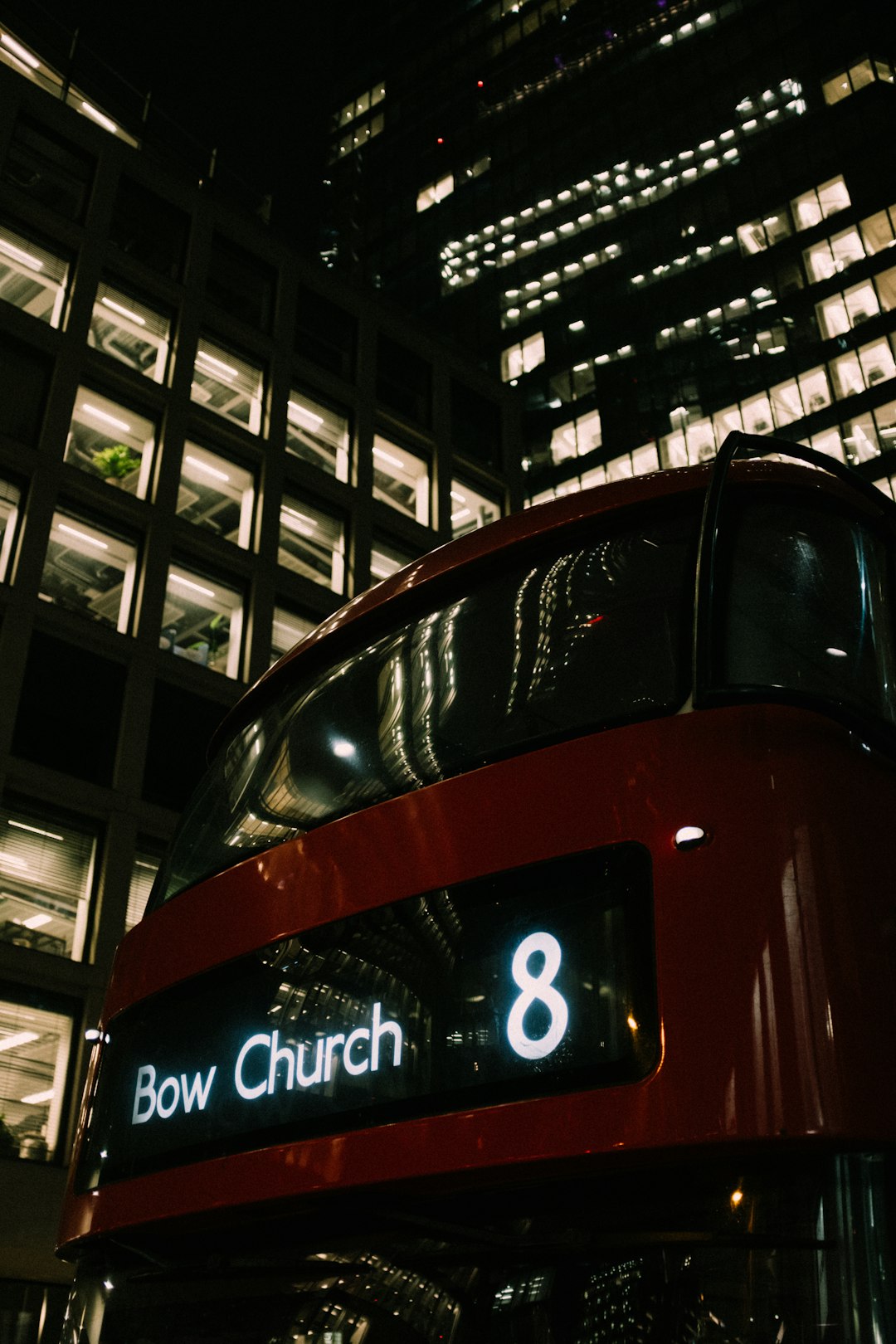
The London night bus network is one of the largest in the world. It runs 24 hours a day, seven days a week, covering routes that reach nearly every corner of the city. It is the same red double-decker bus you see during the day — but the view from the top deck at 2am is something you will not forget quickly.
This article covers what the night bus is, which routes are worth taking, what you will see, and how to use the network without any fuss.
How the Night Bus Network Works
Transport for London (TfL) runs buses around the clock. During the day, buses run on their standard numbered routes. Overnight, many of those same routes continue running, and they are joined by a set of routes prefixed with the letter N — these are the dedicated night bus services.
Night routes include the N1, N5, N8, N15, N18, N25, N26, N29, N38, N41, N55, N63, N68, N73, N86, N97, N109, N133, N136, N155, N171, N199, N207, N253, N279, N343, N381, and others. Most radiate outward from central London, particularly from Trafalgar Square and Oxford Street, which act as the main interchange points during the night.
The frequency drops compared to daytime services. Many night routes run every 10 to 30 minutes depending on the hour, so it is worth checking the TfL Bus Tracker app or Citymapper before you travel. You pay with the same contactless card or Oyster card you use during the day. The flat bus fare applies: £1.75 per journey as of 2026, and the daily cap protects you from paying more than a set amount across all buses in a day.
The Routes Worth Taking
Not all night routes are created equal. Some are purely functional — long stretches of dual carriageway through outer London that tell you little about the city. Others pass through the centre and give you a rolling tour of London’s most famous streets with almost no one else on board.
The N15 is one of the best. It runs from Trafalgar Square east to Romford, passing through the City, the East End, and Barking. You cross Tower Bridge, pass Aldgate and Whitechapel, and move through parts of east London that most tourists never reach by day.
The N29 heads north from Trafalgar Square through Camden Town and Finsbury Park, continuing to Wood Green and Enfield. The stretch through Camden at 1am — past the market stalls that are shuttered and dark — has a quality unlike anything in the daytime.
The N38 goes west and south-west from Victoria, through Chelsea, Putney, and on to Staines. It crosses the Thames at Putney Bridge and shows you the quieter, residential parts of west London that rarely make travel guides.
The N73 connects Victoria with Stoke Newington, running up through Islington and Hackney. It is a route through working-class and gentrifying London in equal measure, and after midnight you see a cross-section of the city that is worth paying attention to.
Want more ways to see London beyond the tourist trail? Our newsletter goes out every week with ideas, stories, and practical guides. Subscribe here — it’s free.
What London Looks Like After Midnight
The city does not go to sleep the way smaller cities do. London after midnight is not empty — it is just different. Riding a night bus makes that clear.
From the top deck, the landmarks you know look different without crowds in front of them. The Houses of Parliament and Big Ben on a quiet night, lit amber against a dark sky, look more substantial than they do during a busy weekday. The Thames, crossed on Westminster Bridge or Waterloo Bridge, is wide and still. The city is spread out around you in a way that is hard to take in at street level.
Soho, just after the clubs close, is not peaceful — it is loud and messy in a way that is specific to London and nowhere else. But half an hour later, on the upper deck of a bus passing through Clerkenwell or Bermondsey, the streets are almost entirely empty. You can see the architecture properly. You notice things — a carved stone lintel above a pub door, a Victorian warehouse that is now flats, the width of a Victorian street built for horses and carts.
Further out, the city changes character. In Tottenham or Streatham or Barking at 3am, the night bus is not a novelty — it is how people get home from work. You are sharing the bus with kitchen porters, care workers, cleaners heading to early shifts. London is not a 9-to-5 city, and the night bus is proof of that.
The People You Share the Bus With
This is the part nobody mentions in travel guides.
London’s night buses carry a wide range of people. There are those coming back from a night out, often loud, occasionally entertaining. There are hospital staff in scrubs. There are security guards. There are students. There are people who have been working since midnight and are heading home at 5am. There are older men who seem to be riding purely because they have nowhere else to be.
Conversations happen on night buses that would never happen in the daytime. The anonymity of the night and the shared experience of being awake when most of the city is not creates a certain openness. People talk across the aisle. Strangers offer directions. Someone will almost certainly comment on where you are going and whether that is wise at this hour.
The night bus is one of the most genuinely democratic institutions in London. Everyone pays the same fare. Everyone waits at the same stop. There is no separate entrance or premium tier. It is egalitarian in a way that the city often is not.
We share stories like this every week. Real London, not just the highlights. Join the newsletter for free.
Practical Tips Before You Board
A few things worth knowing before you take your first night bus:
Always sit on the top deck if you can. The view is better, it is generally quieter, and you can see where you are going. Front seats on the upper deck give you an unobstructed view along the road ahead.
Check the route before you get on. At night, buses run to the end of their route and then stop. If you fall asleep — and it happens — you may end up somewhere unexpected. Know your stop and set a reminder on your phone.
Use the TfL Go app or Citymapper. Both show real-time bus positions and will tell you when the next bus is due. Night buses can run infrequently, and standing at a stop in the rain for 25 minutes is avoidable.
Oyster or contactless payment only. You cannot pay with cash on any London bus. Make sure your contactless card or Oyster card has credit before you board.
The bus stops at request stops. During the day, many stops are compulsory — the bus always stops. At night, some are request stops, meaning you press the bell before your stop and the driver may pass by if no one signals. Press the bell one stop early to be safe.
Night buses can be delayed on weekends. The area around Soho, Leicester Square, and the West End gets very congested between 11pm and 2am on Friday and Saturday nights. If you are trying to get out of the centre, allow extra time.
A Brief History of the Night Bus
London has had some form of night bus service since the 1910s, though it has changed considerably over the decades. For most of the 20th century, the network was limited — a handful of routes connecting the outer edges of the city to the centre, running only through the early hours.
The expansion came in the 1980s and 1990s as London’s nightlife grew and it became clear that the city needed a reliable way to move people through the night. The N-prefixed routes were formalised, frequency improved, and the network grew into something genuinely usable rather than a last resort.
The introduction of 24-hour Tube services on some lines in 2016 took some pressure off the night bus network, but it has not replaced it. The Tube only runs overnight on certain lines and on weekends; the bus network runs every night, reaching streets and neighbourhoods that the Underground does not serve.
The night bus is one of the few parts of London that has not been significantly gentrified or made premium. It costs the same as it ever did in real terms, it goes to the same places, and it is still the way that a large number of Londoners — not tourists, not the well-off — get home when there is no other option.
Is It Worth Doing as a Visitor?
Yes, with one condition: go with the intention of observing rather than ticking off sights. A night bus ride is not a tour. The driver will not announce the landmarks. There is no commentary. What you get is an unmediated view of a city that is usually performing for visitors — but at night, it forgets to perform.
Pick a route that goes through the centre and out to a neighbourhood you are curious about. Sit upstairs at the front. Look out rather than at your phone. If someone talks to you, talk back.
You will see something — whether it is the empty dome of St Paul’s against the sky, or a chip shop in Walthamstow with the lights still on, or the Thames at low tide from a high bridge — that you would not have seen any other way.
Every week we publish ideas, guides, and stories about London. No spam, just things worth reading. Subscribe to the newsletter — it’s free.