
A Quiet Courtyard Behind a Busy Street
Step through an archway on Chancery Lane, just north of Fleet Street, and London changes completely. The noise of the street falls away. Cobblestones replace the pavement. A great hall rises on your left. Manicured lawns extend to your right. A porter in a black coat nods as you pass.
You have found Lincoln’s Inn — one of London’s four Inns of Court, and one of the most extraordinary places in the city that most visitors never discover.
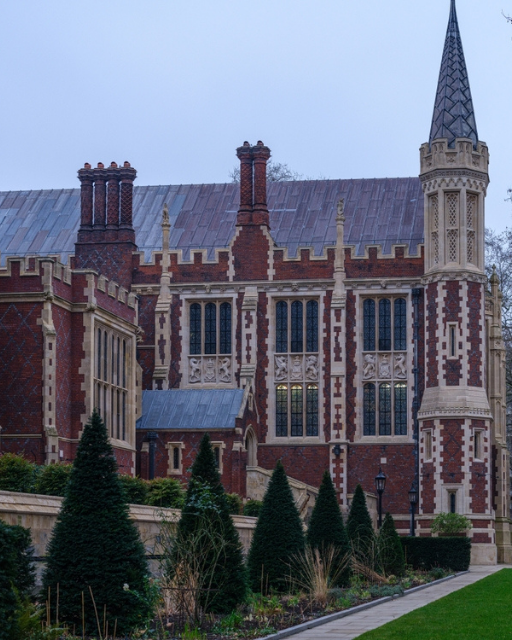
The Inns of Court form a remarkable corner of London: a medieval legal community still in daily use, home to the barristers who argue cases before English courts today, housed in buildings that have stood for 600 years. For anyone visiting London with English family heritage — or simply for anyone who wants to understand how England shaped the English-speaking world — they offer something genuinely unusual.
And almost nobody knows they exist.
🏛️ Free Guide: How to Trace Your English & British Ancestry
Step-by-step: GRO records, census 1841–1921, parish registers, the National Archives (Kew), London Metropolitan Archives, and planning a heritage trip. Completely free.
Get the Free Guide →
Subscribe free at the guide page to receive weekly London heritage stories
What Are the Inns of Court?
London has four Inns of Court: Lincoln’s Inn, Grey’s Inn, Inner Temple, and Middle Temple. Each functions as a professional association for barristers — the trial lawyers of the English legal system. To practise as a barrister in England and Wales today, you must belong to one of these four ancient institutions. That requirement stretches back to the Middle Ages.
The Inns began forming in the 13th and 14th centuries, when legal education in England moved away from the church and towards independent communities of lawyers who clustered near the royal courts at Westminster. These lawyers needed places to eat, sleep, and debate law together. They built halls, planted gardens, raised chapels, and filled libraries. The buildings you can walk through today grew from those roots.
Each Inn occupies its own site, with its own great hall, gardens, chapel, and library. Outsiders can walk into all four — they sit within the public fabric of London rather than behind locked gates — though guided access is sometimes necessary for specific historic rooms. The best news: entry to the grounds is free.
Lincoln’s Inn: The Tudor Gatehouse and William Penn
Lincoln’s Inn makes the strongest first impression on a first-time visitor. Enter from Chancery Lane through the Old Buildings gatehouse — a striking redbrick Tudor archway built in 1518 — and you arrive in a courtyard that feels genuinely medieval. The chapel stands to your left, dating from the 1620s. The New Hall, added in 1845 when the Inn grew too large for its original buildings, seats hundreds for formal dining.
The Inn’s gardens extend to eleven acres: lawns, mature plane trees, and formal planting that the Inn opens to the public on weekday lunchtimes. These gardens rank among the finest open spaces in central London. Almost nobody visits them.
Two names connect Lincoln’s Inn directly to American history. Charles Dickens worked as a clerk in the offices of Lincoln’s Inn Fields — the large square on the Inn’s western edge — when he was a teenage boy. He returned to that time and place again and again in his fiction: Bleak House opens in the Court of Chancery, which sat inside Lincoln’s Inn, and Dickens populated his novel with the frustrations of young men watching their inheritance drain away through years of legal argument.
The more direct American connection belongs to William Penn. Lincoln’s Inn admitted Penn as a student in February 1665. Penn was twenty years old, the son of an English admiral, and his father hoped a legal education might settle him. Penn left without completing his studies, converted to Quakerism, spent time in prison for his beliefs, and in 1681 received a land grant from King Charles II in satisfaction of a debt the Crown owed his late father. Penn named that territory Pennsylvania.
The founder of Pennsylvania walked the cobblestones you walk today. These are the same buildings, the same courtyard, the same arch through which he would have entered.
The Temple: Two Inns and One Ancient Church
Cross the boundary from the City of London into the neighbourhood known as the Temple — between Fleet Street and the Thames Embankment — and you enter ground shared by two of the four Inns: Inner Temple and Middle Temple. Their buildings and gardens interlock in a way that makes it impossible to tell where one ends and the other begins.
The Temple takes its name from the Knights Templar, the medieval military order that held this land from the 12th century until the Pope suppressed the order in 1312. The lawyers who moved in afterwards kept the name. They also inherited the Templars’ church.
Temple Church, consecrated in 1185, has a circular nave modelled on the Church of the Holy Sepulchre in Jerusalem. It sits at the heart of the Temple complex, surrounded by the buildings of both Inns, and the congregation still uses it for regular services. You can visit independently on most weekdays.
Middle Temple Hall, completed in 1573, holds the distinction of hosting the first recorded performance of Shakespeare’s Twelfth Night, on 2 February 1602. The double hammer-beam roof — forty metres long, its timbers still the originals — makes this one of the finest Tudor interiors in England. Elizabeth I dined here. Shakespeare almost certainly attended that 1602 performance. Middle Temple opens the hall to visitors on weekday mornings.
Walter Raleigh, who received the first English charter to explore and settle North America in 1584, had his Middle Temple connections. The papers that underpinned English ambitions in the New World drew on legal forms that lawyers in these halls had devised over centuries.
🏙️ Enjoying this? 3,000 London lovers get stories like this every week. Subscribe free →
Grey’s Inn: Francis Bacon’s Gardens and the Scientific Method
Grey’s Inn sits slightly apart from the others, north of High Holborn, and feels the most secluded of the four. The gardens — which Francis Bacon laid out in the late 16th century, and which the Inn credits to him to this day — run in long walks flanked by pleached lime trees. The Inn opens them to visitors on weekday lunchtimes. Very few people come.
Bacon entered Grey’s Inn as a student in 1576. He rose through its ranks to become a Bencher and eventually Treasurer, while simultaneously building a career as a lawyer, a Member of Parliament, and eventually Lord Chancellor of England. He died in 1626, but not before establishing the principles of inductive reasoning and empirical enquiry that underpin modern science.
He also wrote extensively about English colonisation of the New World. His essay Of Plantations (1625), written the year before his death, argued that England should approach settlement of North America as a serious long-term project rather than a quick commercial venture. The essay circulated widely among the investors and adventurers who were at that moment funding the Virginia Company and the Massachusetts Bay Company.
The Grey’s Inn hall dates from 1556. German bombing in the Second World War destroyed much of it, and workers rebuilt it carefully over the following years. Look for the original 16th-century carved wooden screen at the hall’s southern end — it survived the bombing intact and remains in place.
Why the Inns of Court Matter to American Visitors
The individual names — Penn, Raleigh, Bacon — only hint at the deeper connection between these buildings and the United States.
English common law, the legal tradition that the Inns of Court preserved and transmitted over 700 years, became the foundation of American law. When the Founding Fathers wrote the Constitution and the Bill of Rights, they drew on principles that English lawyers had argued in English courts for centuries. Trial by jury, habeas corpus, the presumption of innocence, the right to legal counsel: all of these trace their origins to the common law that generations of barristers developed in the courts of Westminster — and studied in the halls, libraries, and gardens of these Inns.
Thomas Jefferson read English legal texts. John Adams studied William Blackstone’s Commentaries on the Laws of England — arguably the most influential legal textbook in history, a work that Grey’s Inn shaped and that the Inns of Court tradition produced. When the Founders declared that Americans possessed the rights of Englishmen, they meant the rights that English lawyers had defined across seven centuries of legal argument.
For American visitors with English heritage, the Inns of Court offer something a guidebook destination rarely provides: a sense of genuine continuity. These buildings stand where they stood when English law took its modern form. Barristers in wigs and gowns still walk across the same cobblestones. The libraries still hold the same books. The tradition is unbroken.
Tracing Ancestors Who Trained Here
If your family has English legal heritage, the Inns of Court have kept records for centuries — and much of that information is now publicly accessible.
Lincoln’s Inn published its Admissions Register, covering every person admitted to the Inn from 1420 to 1893, and researchers can access it online. Grey’s Inn, Inner Temple, and Middle Temple published similar registers. If an ancestor worked as an English barrister before the 20th century, their name almost certainly appears in one of these documents. The records include dates of admission, the admitting Inn, and occasionally additional biographical detail.
The Library of Lincoln’s Inn, one of the oldest law libraries in England, holds additional historical materials and is open to researchers who contact the library in advance. The other Inns have comparable archives with varying levels of public access.
For Americans researching English legal ancestry, these Inns of Court records work well alongside the records held by the National Archives at Kew, which holds the archives of the courts where barristers practised. Together, these sources can build a detailed picture of an ancestor’s legal career: where they trained, which courts they worked in, and what cases they argued.
The names in those registers belong to real people who once stood in these courtyards, argued in these halls, and walked back to their chambers under the same London sky.
How to Visit the Inns of Court
All four Inns welcome visitors, and all charge no admission for the grounds.
Lincoln’s Inn opens its grounds and gardens on weekday lunchtimes. Enter from Chancery Lane through the 1518 Tudor gatehouse, or from Lincoln’s Inn Fields on the western side. Special guided tours run periodically — check lincolnsinn.org.uk for the current schedule.
Grey’s Inn opens its gardens Monday to Friday, 12:00 to 14:30. Enter from Grey’s Inn Road or from High Holborn. The hall is accessible during certain events.
Inner Temple and Middle Temple occupy the area between Fleet Street and the Thames Embankment. The grounds are open to pedestrians on most weekdays. Middle Temple Hall is open to visitors on weekday mornings — confirm times at middletemple.org.uk. Temple Church opens Tuesday to Sunday; check templechurch.com for current hours.
The most rewarding way to experience all four Inns is to spend a morning or afternoon walking between them, starting at Lincoln’s Inn on Chancery Lane and working south through the Temple to the Embankment. The walk takes perhaps an hour at a comfortable pace, and it passes through some of the quietest, most beautifully preserved streets in all of central London.
The nearest tube stations are Chancery Lane on the Central line (for Lincoln’s Inn and Grey’s Inn) and Temple on the District and Circle lines (for the Temple Inns).
A London That Most Visitors Never Find
The Inns of Court ask something unusual of visitors. They ask you to slow down, to step through an archway and trust that something worth finding lies on the other side.
There are no queues here. No audio guides. No gift shops. Just cobblestones, old halls, and the occasional barrister crossing the courtyard in a gown — still using these spaces, 700 years on, for precisely the purpose that the original builders intended.
For anyone with English heritage, or for anyone who wants to understand how England shaped the laws and language and habits of the English-speaking world, the Inns of Court reward every minute you give them.
Join 3,000+ London Lovers
Every week, get London’s hidden history, heritage walks, and stories from the city’s remarkable past — straight to your inbox.
Subscribe free — enter your email:
Already subscribed? Download your free London guide (PDF)
Love more? Join 64,000 Ireland lovers → · Join 43,000 Scotland lovers → · Join 30,000 Italy lovers →
Free forever · One email per week · Unsubscribe anytime