
Most people visiting London follow a well-worn route. They tick off Big Ben, walk across Tower Bridge, queue at the British Museum, and take a photo outside Buckingham Palace. That is perfectly reasonable. Those places are famous for good reason.
But London is enormous. There are 32 boroughs and hundreds of distinct neighbourhoods, each with its own character. Sticking only to the tourist trail means missing some of the city’s best parts.
Here are six places visitors almost always skip — and exactly why they deserve your time.
Little Venice
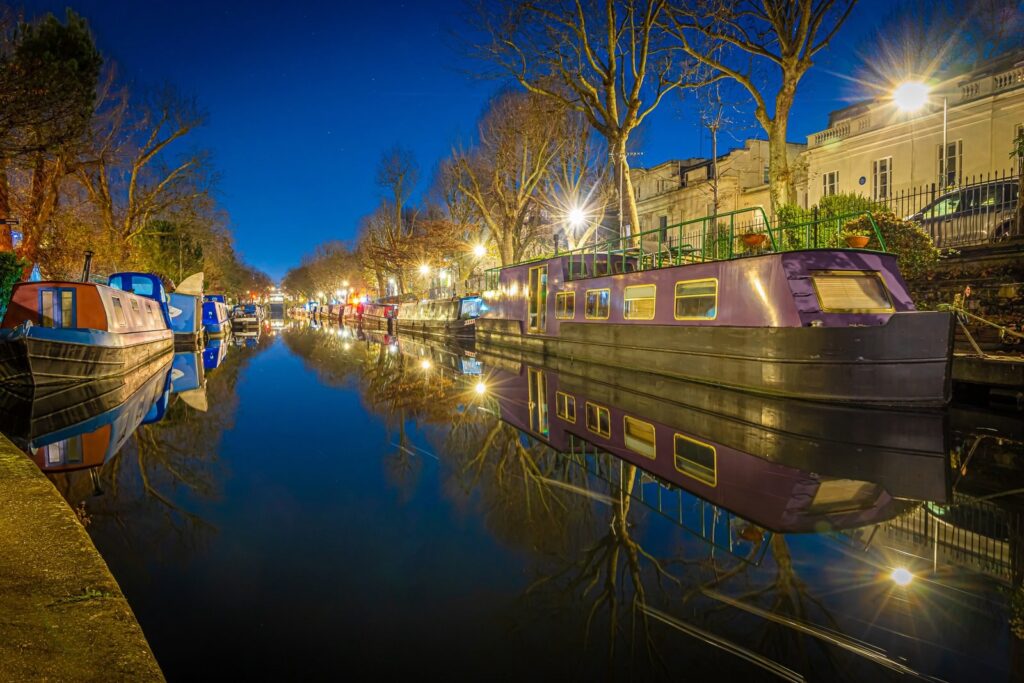
Little Venice sits roughly a mile west of Paddington station. It is a quiet area where two canals meet — the Grand Union and the Regent’s Canal — creating a wide pool filled with narrowboats, many of them lived-in homes decorated with flowers and lanterns.
The streets around Little Venice — particularly Blomfield Road and Maida Avenue — are lined with white stucco townhouses. It looks expensive because it is, but you can walk the canal towpath for free. The Puppet Theatre Barge moors here between October and May and puts on shows for adults and children alike.
From Little Venice, you can walk the towpath east to Regent’s Park and Camden Lock in around 45 minutes. It is a completely different way to move through London — no traffic, no crowds, just water and trees.
Getting there: Warwick Avenue on the Bakerloo line. About 10 minutes’ walk to the canal.
Want more guides like this? Subscribe free to our London newsletter and get the best of the city delivered to your inbox every week.
Bermondsey Street
Bermondsey Street is a 10-minute walk from London Bridge station. Most visitors from that station head straight to Borough Market, which is excellent but usually extremely busy. Bermondsey Street runs parallel and south, and it is noticeably quieter.
The street has a mix of independent cafés, galleries, and restaurants in Victorian railway arches and converted warehouses. The Fashion and Textile Museum is here, as is the White Cube gallery’s Bermondsey outpost — one of the largest contemporary art galleries in Europe, and free to enter.
On Friday mornings, the Bermondsey Antiques Market starts before dawn. Dealers traditionally come early to buy from each other before the public arrives. By 6am it is already in full swing. The market has been held here for decades and is genuinely useful for finding quality antiques at reasonable prices.
Getting there: London Bridge station, then a short walk south along Bermondsey Street.
Leake Street
Leake Street is a pedestrian tunnel running under Waterloo station. It is around 300 metres long and legally designated for graffiti and street art. Artists can paint there without restriction, which means the walls change constantly.
It is easy to walk straight past the entrance — it looks like a service road from the outside. But inside, the scale of the work is impressive. Some pieces are technically outstanding. There is usually someone painting when you visit.
Leake Street connects to a courtyard of bars and a small market at the far end. It is free to enter at all times. Most visitors to the South Bank head straight for Tate Modern and the Millennium Bridge, which means Leake Street stays relatively quiet even when the riverfront is packed.
Getting there: Waterloo station. The tunnel entrance is on Leake Street, just off Lower Marsh.
Eel Pie Island, Twickenham
Eel Pie Island is a small island in the Thames at Twickenham, about 30 minutes from Waterloo by South Western Railway. It is accessible only by a footbridge connecting it to the riverbank.
In the 1960s, the island had a hotel that hosted concerts by the Rolling Stones, The Who, and other bands before they were famous. The hotel burned down in 1971. Today the island is home to a community of artists and craftspeople who live and work in a mix of chalets, boats, and studios.
The island holds open studio days twice a year — usually in spring and autumn — when artists open their doors to visitors. Outside those times, you can walk across the footbridge and explore the island’s paths, though most buildings are private residences.
The area around Twickenham is genuinely undervisited. Marble Hill House — a grand 18th-century Palladian villa — is a few minutes’ walk along the riverbank. Entry is free. The riverside walk connecting Richmond, Twickenham, and Kew is one of the finest in the whole of Greater London.
Getting there: Twickenham station from Waterloo. Eel Pie Island is a 10-minute walk from the station.
Discovering London one neighbourhood at a time? Join our free newsletter for weekly guides to the city’s best-kept spots.
Camden Passage, Islington
Camden Passage in Islington is frequently confused with Camden Market. They are not the same place. Camden Market is in north London, large, and very busy. Camden Passage is in Islington — just south of the Angel tube station — and is a small alley of antique dealers, independent bookshops, and cafés.
Antique stalls trade on Wednesdays and Saturdays. On other days, the permanent shops remain open. The passage runs alongside Upper Street, which has one of the highest concentrations of independent restaurants in London. Islington also has a strong theatre scene — the Almeida and King’s Head Theatre both operate here.
The area around Angel station is worth an afternoon on its own. The London Canal Museum is a short walk away on Regent’s Canal, and the towpath connects west towards King’s Cross and east towards Victoria Park.
Getting there: Angel on the Northern line. Camden Passage is signposted from the main junction.
Woolwich
Woolwich sits on the south bank of the Thames in south-east London. For a long time, getting there from central London required a bus or a change-heavy train journey. The Elizabeth line changed that. Woolwich is now around 20 minutes from Paddington, which has transformed how accessible the area is.
The Royal Arsenal is here — a vast former munitions factory that once employed 80,000 people during wartime. The site has been converted into a mix of homes, restaurants, and a Crossrail museum. The buildings themselves are striking, and the riverside walks are good.
Woolwich also has the free Woolwich Ferry, which crosses the Thames to North Woolwich. It carries pedestrians, cyclists, and vehicles. It is one of the few places you can cross the river at no cost, and the views from the deck are worth the trip alone.
Getting there: Woolwich on the Elizabeth line. Under 20 minutes from Paddington or Bond Street.
Practical Notes Before You Go
None of these places require a full day. Little Venice, Bermondsey Street, and Leake Street can each be visited in a couple of hours. Twickenham and Woolwich are better as half-day trips.
A few things worth knowing before you go:
- Bermondsey Antiques Market is only worth the early start if you arrive before 7am. By 9am many of the better stalls have packed up.
- Camden Passage antique stalls only operate on Wednesday and Saturday. The permanent shops are open throughout the week.
- Eel Pie Island’s open studios are announced each year via the island’s own website. Check dates before making the trip from central London specifically for that.
- The towpath between Little Venice and Camden is a shared path — cyclists use it too, so keep to the right.
London rewards visitors who are willing to take a tube stop they do not recognise and walk for ten minutes without a fixed plan. Most of the city’s genuinely interesting areas are not on the standard tourist map. They are in the neighbourhoods where people actually live.
We cover London like this every week. Subscribe to our free newsletter and never miss a thing.