
There are still more than 8,000 red phone boxes standing across Britain. Walk past one in Covent Garden or along the South Bank and you will notice something odd. The door is open. Nobody is inside making a call.
Look closer and you might find a shelf of paperback novels, a defibrillator mounted to the wall, or a tiny coffee hatch serving espresso through the window.
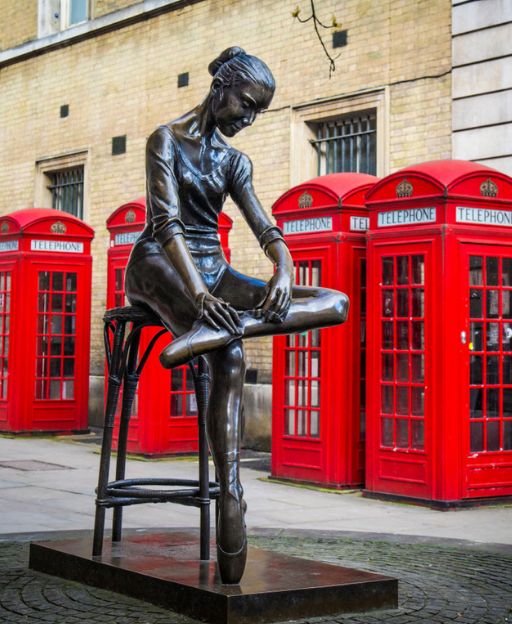
The red phone box is not dead. It has simply changed jobs. And the story of how that happened is one of the most quietly remarkable tales in London’s history.
The Design That Almost Never Was
In 1924, the UK Post Office held a competition to design a standard telephone kiosk for British streets. Several architects entered. Only one design mattered.
Sir Giles Gilbert Scott submitted what became known as the K2 box — a cast-iron kiosk with a distinctive domed roof, generous windows, and bold red paintwork. It was elegant and solid. Built to last centuries rather than decades.
The Post Office initially rejected it.
Officials felt the design was too grand. Too expensive. Too imposing for a street corner. But after a second evaluation — and significant public support — the K2 was approved and rolled out across London from 1926.
Scott was no stranger to large-scale projects. He also designed the Bankside Power Station, which you now know as Tate Modern, and Battersea Power Station on the Thames. The fact that one man shaped three of London’s most recognisable silhouettes — and nearly had the phone box rejected — remains one of the city’s best design stories.
More than a million photographs are taken of red phone boxes every year. The Post Office’s instinct to reject Scott’s design may be the most embarrassing miscalculation in British design history.
Why Red? And What’s That Dome About?
The choice of red was straightforward. Bright colour made the box visible in fog, rain, and the pale grey light of a London winter morning.
But the dome has a stranger origin. Scott based the shape on the tomb of Sir John Soane, the architect who designed the Bank of England. The tomb stands in the churchyard of St Pancras Old Church, just north of King’s Cross.
So every time you look at a red phone box, you are looking at a shape borrowed from a grave. That perhaps explains why the boxes feel permanent in a way that most street furniture does not.
In Scotland, some early versions were painted black and cream. Regional identity sometimes trumped national standards. But the red design eventually prevailed across the whole of Britain, and the dome stayed.
Scott designed several variations over the decades. The K6 model, introduced in 1936 for King George V’s Silver Jubilee, became the most common box still standing today. It is slightly smaller than the original K2 but kept the dome and the distinctive red paint that made the design famous.
The 1984 Crisis That Nearly Ended Everything
British Telecom was privatised in 1984. The new company faced a straightforward commercial problem. Phone boxes were expensive to maintain and, with landlines spreading into homes across the country, increasingly unnecessary.
The plan was to replace the old cast-iron boxes with cheaper, modern alternatives. Glass-and-steel panels. Less maintenance. More profit. It made perfect business sense.
Then the public found out.
The campaign to save the boxes was not led by design organisations or heritage charities. It was led by ordinary people who felt the red phone box belonged to them in a way that most objects simply do not. Historic England eventually granted Grade II listed building status to thousands of K2 and K6 boxes — the same legal protection given to medieval churches and Georgian squares.
Listed status meant they could not be demolished without planning permission. Many of them would stand whether they were useful or not.
Today around 21,000 traditional boxes remain across the UK, down from a peak of roughly 100,000 in the 1980s. In London, several hundred are still active or have been taken over by community groups. The ones with listed status are legally protected indefinitely.
Enjoying this? 3,000+ London lovers get stories like this every week. Subscribe free →
What’s Actually Inside London’s Phone Boxes Now
BT created a scheme called Adopt a Kiosk. For £1, a local council or community group can take over a listed box and decide what to do with it. The results have been genuinely remarkable.
Mini libraries. Small book-swap shelves where anyone can take a book and leave one in return. This is now one of the most common transformations across London. You will find them on residential streets near parks, schools, and village greens. The collections change constantly.
Defibrillators. Over 5,000 red phone boxes across the UK now house public defibrillators, accessed via a code given by emergency services when you call 999. A box designed for emergencies is being used for emergencies again — just a different kind. This may be the most important transformation of all.
Coffee kiosks. Particularly in Shoreditch and Camden, small businesses have converted boxes into single-person espresso bars. The queue typically extends well beyond the door. Most serve flat whites. None of them have room to turn around inside.
Art galleries. Several London neighbourhoods rotate art installations or micro exhibitions through their boxes. Peckham and Brixton have been particularly creative. Some change monthly. Some change weekly. The art is always free to view through the glass.
Flower shops. A handful of florists in central London sell bunches of flowers and posies through the window of a converted box. They open early and sell out by mid-morning.
If you are planning your first visit to London, it is worth building a phone box walk into your trip. You can weave one easily into a three-day London itinerary without going far out of your way.
Where to Find London’s Most Photogenic Red Phone Boxes
Covent Garden is the best single location. A row of five K6 boxes lines the south side of the piazza near James Street. The area has been one of London’s most photographed spaces since the original fruit and vegetable market relocated in 1974, and the phone boxes are among its most striking features.
Westminster Bridge. The view from the south end of the bridge frames a red box against Big Ben and the Houses of Parliament. It is the most reproduced telephone box photograph in London, taken tens of thousands of times each day.
South Bank. Walking east from Waterloo along the Thames path, you pass several traditional boxes between Gabriel’s Wharf and Tate Modern. The river backdrop makes them particularly worth stopping for.
Soho. The narrow streets of Soho contain some of the city’s most interesting converted boxes. Walk along Berwick Street and Old Compton Street in the early evening to see how communities have adapted them for local use.
How many red phone boxes are left in London?
Several hundred traditional K2 and K6 phone boxes remain across Greater London. Many have been decommissioned by BT but retained under listed building protection. A growing number have been adopted by local communities and repurposed as libraries, defibrillator points, or coffee kiosks.
Who designed London’s iconic red phone box?
The K2 phone box was designed by Sir Giles Gilbert Scott and first introduced in 1926. Scott also designed Battersea Power Station and Bankside Power Station (now Tate Modern). The dome on the box was inspired by the tomb of architect Sir John Soane at St Pancras Old Church in north London.
Can you go inside a red phone box in London?
Yes. Many repurposed phone boxes in London are accessible to the public. In Covent Garden, the historic K6 boxes on James Street are open and popular with visitors. Converted boxes used as libraries, defibrillators, or coffee shops welcome anyone. A few functioning BT boxes still accept calls, though most now require a credit or debit card.
What is the best time to photograph London’s red phone boxes?
Early morning on weekdays is ideal. Phone boxes in Covent Garden, Westminster, and along the South Bank are quieter before 9am, and the light is softer. Avoid weekends in peak season when tourist footfall makes clear shots difficult. The Westminster Bridge box is best photographed in the evening when the Houses of Parliament are lit up behind it.
The red phone box outlasted the technology it was built to house. It outlasted the company that originally operated it. It has outlasted every attempt to quietly remove it from the streetscape.
That is what happens when a city genuinely loves something. You do not pull it down. You find it a new purpose and let it carry on doing what it has always done — standing on a corner, bright red against a grey London sky, waiting to be useful.
🇬🇧 25 Hidden Gems of London Most Tourists Never Find
From secret riverside walks to hidden Victorian tunnels, centuries-old pubs to rooftop gardens with skyline views — our free guide reveals the London most visitors never discover. Join 3,000+ London lovers who get it free.
Get Your Free London Hidden Gems Guide →📲 Know someone who’d love this? Share on WhatsApp →
Love more? Join 65,000 Ireland lovers → · Join 43,000 Scotland lovers → · Join 29,000+ Italy lovers →
Free forever · Unsubscribe anytime
Subscribe Free