
There is a street in London where the ghosts of four different worlds live side by side. Walk from one end to the other and you have crossed three centuries, four continents and countless stories of people who arrived with nothing — and left a mark that never faded.
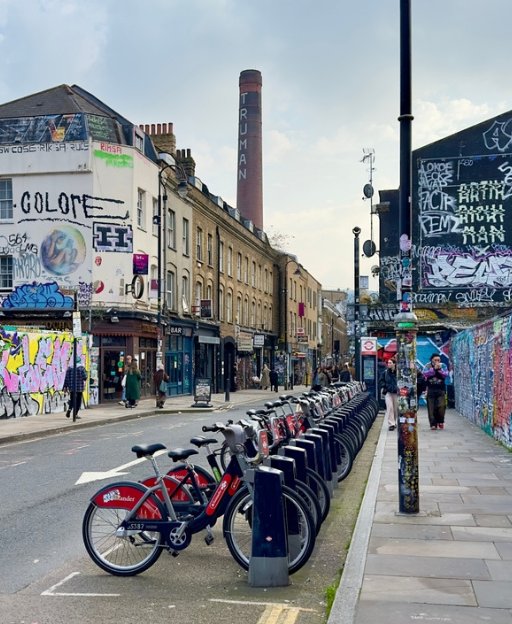
Brick Lane in the East End is not a tourist attraction in the traditional sense. It has no castle, no famous view, no famous monument. What it has is something rarer: a living record of every wave of immigration that has shaped modern London.
Most visitors to London walk through it on the way to Spitalfields Market and barely stop. That is their loss.
When the French Came Running
In 1685, the French king revoked the Edict of Nantes, stripping Protestants of their legal rights overnight. Thousands of Huguenots — skilled silk weavers and craftsmen — fled France and made their way to London’s East End.
🏙️ Love London?
3,000 London lovers get hidden history, street-level stories, and local secrets every week. Free, forever — no spam, unsubscribe any time.
Subscribe free — enter your email:
They were not welcomed everywhere. But they were tolerated here. Within a generation, they had transformed this corner of London into the centre of the British silk trade.
The grand terraced houses they built still stand on Fournier Street, just off Brick Lane. One building on that street tells the whole story. Built in 1743 as a French Protestant church, it became a Methodist chapel in 1809, a synagogue in 1897, and a mosque in 1976. Four faiths. One building. Three centuries.
That building still stands today. If you visit, you can read all four names on the same wall. It is the most quietly extraordinary building in East London.
The Jewish Quarter That London Forgot
From the 1880s onwards, Jews fleeing pogroms in Russia and Poland arrived in their tens of thousands. Many settled in the East End. Brick Lane became the heart of a Jewish city within a city.
The air smelled of fresh bread and smoked fish. Yiddish was spoken on every corner. There were Yiddish theatres, socialist newspapers and tailoring workshops crammed into every available space. An entire civilisation, compressed into a few streets.
The Beigel Bake at the northern end of Brick Lane opened in 1974 and still serves customers 24 hours a day, seven days a week. It is one of the last visible traces of a Jewish Brick Lane that most Londoners have no idea ever existed. The salt beef bagels are extraordinary. The prices have barely changed in decades.
By the 1970s, most of the Jewish community had moved outward — to Essex, Golders Green, and further afield. But the bagel shops stayed. The salt beef stayed. And the building that was once their synagogue was about to welcome its fourth community.
How Bangladesh Arrived on a Street Built for Silk
In the 1970s, Brick Lane changed again. Migrants from Bangladesh — many from the Sylhet region — arrived in large numbers, drawn partly by work in the same textile and garment trade that had defined this street for three centuries before them.
They built a community around the curry houses that earlier South Asian immigrants had established. Restaurants, sari shops and sweet houses spread along the street. The smell of cardamom and slow-cooked lamb replaced the salt beef of the previous generation.
In 2002, the neighbourhood was officially recognised as Banglatown. Street signs went up in both English and Bengali. Today, the area has the highest concentration of Bangladeshi-owned restaurants anywhere in the country. On a warm Sunday afternoon, the street vendors stretch their tables onto the pavement and the smell of freshly made curry fills the air.
Brick Lane’s East End neighbours have their own equally layered past. The story of London’s original Chinatown in Limehouse adds another remarkable chapter to this part of the city.
The Brewery Chimney That Became an Art Gallery
The tall brick chimney you can see from almost anywhere on Brick Lane belongs to the old Truman Black Eagle Brewery. For two centuries it was one of London’s biggest breweries, producing millions of barrels a year for the city. It closed in 1988.
Then something unexpected happened. Artists moved in.
The brewery site became a complex of market stalls, studios and event spaces. Street artists began using the surrounding walls as their canvas. By the early 2000s, Brick Lane had quietly become one of the world’s most famous open-air galleries.
Work by Banksy and dozens of other artists has appeared on these walls over the years. The graffiti changes constantly. Some pieces survive for months. Others are painted over within days. The wall itself is the art — a living record of who was here and what they were thinking when they arrived.
What Brick Lane Feels Like Today
On a Sunday morning, Brick Lane comes alive. The weekly market stretches from the railway arches near Bethnal Green Road all the way down towards Spitalfields.
Vintage clothing stalls stand next to Ethiopian coffee traders. A Bangladeshi sweet shop sits opposite a contemporary art gallery. A former Victorian pub sells craft beer to designers who have moved in from the nearby tech companies of Shoreditch. Every stall and shopfront seems to belong to a slightly different decade.
The Beigel Bake is always open. The queue outside moves slowly and nobody minds. It is chaotic and layered and entirely unlike anywhere else in London.
How to Visit Brick Lane
Sunday morning is the best time to visit. Go before 10am and you will have the market largely to yourself. Walk from Aldgate East tube station and follow the street north towards Bethnal Green Road.
Stop at the Beigel Bake. Look up at the Truman Brewery chimney. Walk down the side streets — Fournier Street, Hanbury Street, Fashion Street — and look closely at the architecture. The Georgian houses are still there, behind the graffiti and the coffee shops. The scale of what has happened on these streets only becomes clear when you slow down.
The nearest tube stations are Aldgate East (District and Hammersmith and City lines) and Shoreditch High Street (Overground). From central London it takes about 20 minutes.
If you are planning your first visit to London, our London planning guide is the best place to start. For help with where to stay, read our guide to the best areas in London.
Every community that arrived on Brick Lane was looking for the same thing — a place to start again. What they found was not just a street but a stage. Their stories are still being written on the walls.
🇬🇧 25 Hidden Gems of London Most Tourists Never Find
From secret riverside walks to hidden Victorian tunnels, centuries-old pubs to rooftop gardens with skyline views — our free guide reveals the London most visitors never discover. Join 3,000+ London lovers who get it free.
Get Your Free London Hidden Gems Guide →Free forever · Unsubscribe anytime