
London’s tube map is famously deceptive. Stations that look close together can be a ten-minute walk apart above ground. And some stations that appear far apart on the map are practically next door when you surface. That mismatch is where accidental discovery begins.
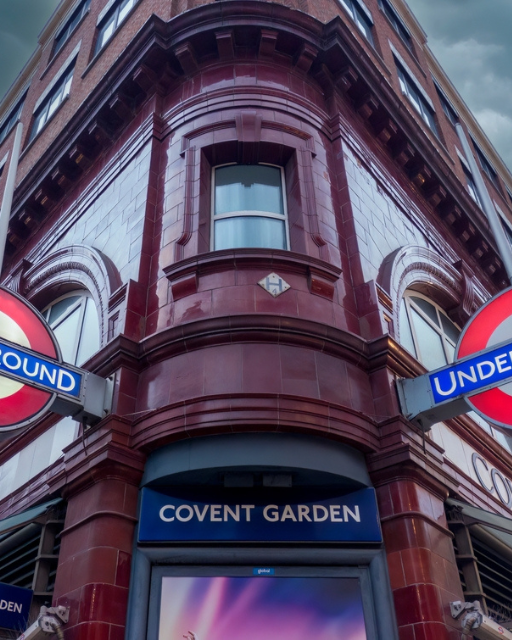
Most visitors stick to the well-known stops: Covent Garden, Westminster, Tower Hill. But some of the city’s best spots sit one stop in the wrong direction from where tourists are heading. Here is what you might find if you stop second-guessing the map and start exploring instead.
Why Getting Off at the Wrong Stop Actually Works
London’s Underground cuts through the city at all kinds of angles. The Circle line runs through Chelsea. The Jubilee line swings through the docklands. The Overground connects areas that feel like different cities. When you get off a stop early or late, you surface in a neighbourhood that wasn’t on your plan. And then you have to walk.
Walking is how you find London. The city was not built for people staring at phones. It was built in layers over 2,000 years, and the interesting parts are often tucked between the obvious ones — a Georgian terrace just off a main road, a churchyard full of history, a street market that only runs on Thursdays. None of that appears on a highlights list. You find it by stumbling past it.
Bermondsey Instead of London Bridge
Most people get off at London Bridge for Borough Market. But if you end up at Bermondsey on the Jubilee line instead, you will find a completely different atmosphere — and arguably a better one for anyone who finds Borough Market a bit overwhelming.
Bermondsey Street runs south from the station and is lined with independent restaurants, a Saturday farmers’ market, and the Fashion and Textile Museum. The White Cube gallery is here too — one of London’s most respected contemporary art spaces, and free to enter. The area was once full of tanneries and leather works, and you can still see the industrial bones in the architecture. It feels less polished than Borough Market and more like a real working neighbourhood that happens to have excellent coffee.
Bethnal Green Instead of Liverpool Street
Liverpool Street is a major interchange and one of the busiest stations in the network. One stop east on the Central line is Bethnal Green, and it feels like a different city.
The Young V&A (formerly the V&A Museum of Childhood) sits right by the station. The building is worth seeing for itself — a Victorian structure originally part of the South Kensington complex, relocated east in 1872 to bring culture to working-class East London. The collection covers design, toys, and childhood from the 17th century to today.
Bethnal Green also has some of the best Vietnamese food in London along Hackney Road, a strong independent bookshop scene, and Columbia Road Flower Market a short walk away (Sunday mornings only, and worth waking up early for).
Vauxhall Instead of Waterloo
Waterloo is the sensible stop for the South Bank. Vauxhall, three stops south on the Victoria line, is not where anyone plans to go — but it rewards a detour.
Vauxhall City Farm sits right behind the station and has been running since 1977. It is free to visit and has goats, horses, pigs, and poultry within ten minutes of central London. On weekdays it is quiet enough that children can actually interact with the animals rather than watching them from a distance behind a crowd.
Bonnington Square, five minutes from the station, is one of those London streets that feels as though it belongs somewhere else entirely. Residents have turned a former bomb site into a community garden with subtropical plants growing against south-facing walls. There is a vegetarian café at number 11 that runs on a largely trust basis. It is a genuinely unusual place.
Latimer Road Instead of Notting Hill Gate
Notting Hill Gate is the obvious stop for Portobello Road. But Latimer Road station, four stops west on the Circle and Hammersmith & City lines, puts you at the quieter, northern end of the market — where the antiques dealers start and the tourist density drops sharply.
The prices in the shops are noticeably lower here than near the main tube entrance, and the sellers are more likely to be specialist dealers than souvenir stands. Golborne Road is a short walk further — a street with strong Portuguese and Moroccan influence, excellent cafés, and a Friday and Saturday market that is genuinely local in character.
Caledonian Road Instead of King’s Cross
King’s Cross has been heavily regenerated over the past fifteen years. Granary Square is worth seeing. But one stop north on the Piccadilly line, Caledonian Road takes you into Victorian North London before the developers arrived in force.
The streets around the station have terraced houses built in the 1860s and 1870s, a proper street market on the main road (the Cally Road Market), and a history as one of London’s early working-class neighbourhoods that has not yet been entirely smoothed away. Keep walking north and you reach the Regent’s Canal towpath, which you can follow east back towards King’s Cross — a route that most visitors miss completely.
Denmark Hill Instead of Brixton
Brixton is rightly popular. But Denmark Hill, reachable by Overground or bus from Brixton, puts you within reach of some of South London’s best public spaces.
Ruskin Park is a 36-acre park with tennis courts, a paddling pool, and a community garden. It was named after the art critic John Ruskin, who lived nearby and who shaped much of Victorian thought on art and public life.
A short walk further gets you to Dulwich Village and the Dulwich Picture Gallery — England’s oldest public art gallery, opened in 1817 to a design by Sir John Soane. The collection includes works by Rembrandt, Rubens, and Gainsborough. Tickets are around £14 for adults, but the first Friday of every month is free. It is the kind of place that would be overwhelmingly visited if it were in Zone 1, but here it remains quietly excellent.
How to Do This on Purpose
If you want to try the wrong-stop approach deliberately, here is how to make it work without wasting the day.
Get a day Travelcard so you are not paying per journey. The worry about wasting a fare is what stops most people from experimenting with the network.
Pick a direction and go one or two stops beyond your planned destination, or get off one stop early. Give yourself thirty minutes to walk around before deciding whether to move on. Keep your phone in your pocket for the first few minutes and look at what is actually in front of you. Find a café and sit outside for ten minutes if there is one — that is usually enough time to work out whether a place has something worth staying for.
The London A-Z map — either the book or the app — is more useful than Google Maps for this kind of exploration. It shows parks, churchyards, and open spaces that Google tends to underplay.
What London Rewards
London is big enough that most visitors only scratch the surface, even on a long trip. It is also old enough that almost every neighbourhood has something — a pub that has been there since the 18th century, a market that survived two world wars, a terrace of houses that should have been demolished in 1960 but wasn’t.
None of that shows up in a highlights reel. You find it by walking past it.
The next time you are on the Underground and the doors open at an unfamiliar station, consider getting off. The worst outcome is that you get back on the next train. The best outcome is that you find the part of London that stays with you long after the obvious sights have faded.