
Your English surname is not just a label. It is a living thread that stretches back through centuries of London life — through smoky workshops, cobbled streets, and crowded parishes where your ancestors were born, married, and buried. If you carry a name like Cooper, Mercer, Aldgate, or Ashton, part of London’s story belongs to you.
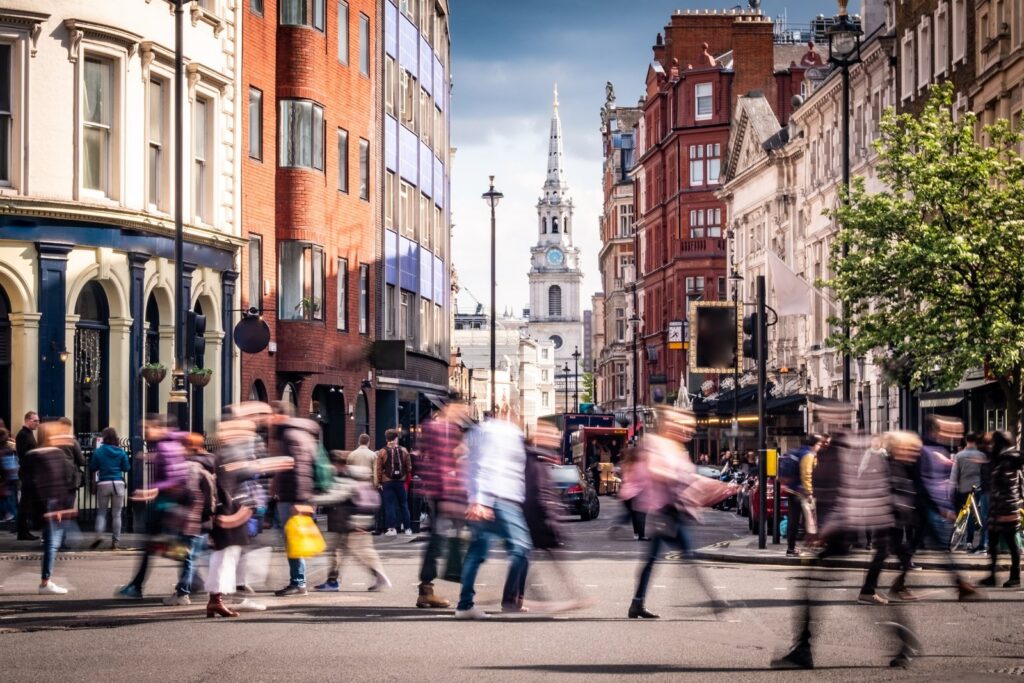
English surnames carry centuries of history inside them, and for Americans with English ancestry, that history often has a London address. Whether your family name points to a street in the old City, a trade practised on the docks, or a village that was eventually swallowed by the growing metropolis, your surname is a starting point for one of the most personal journeys you can take. Many Americans are surprised to discover that their family name can be traced not just to a country, but to a specific neighbourhood, a specific guild, or a specific street that still exists today.
How English Surnames Began
Before the Norman Conquest of 1066, most English people got by with a single name, or a simple identifier like “John the miller” or “William by the wood.” These were descriptions, not fixed family names. They changed from generation to generation, and they were never meant to last.
The Norman Conquest changed everything. When William the Conqueror commissioned the Domesday Book in 1086, his administrators needed a reliable way to record who owned what, who owed taxes, and who belonged to which estate. Families began to be documented more consistently, and names started to stick.
The process was gradual. Over the next few centuries, surnames became more fixed, passing from father to child rather than being reinvented each generation. By the 1400s, most English families in and around London had settled surnames.
The single most important event for genealogy researchers came in 1538, when Henry VIII ordered every church in England to keep written records of baptisms, marriages, and burials. Those parish registers are the primary source for English family history research today. By the 1800s, virtually every English family carried a fixed hereditary surname — and the patterns those names follow tell a remarkable story.
London’s Streets and Places That Became Surnames
Walk through London today and you will pass through neighbourhoods whose names have been carried across the Atlantic in the form of family surnames. Aldgate, Southwark, Holborn, and Cheapside are not just stops on a map — they are surnames that appear in English records going back hundreds of years, belonging to people who lived near enough to those landmarks that the place became their identifier.
The Old English suffix -ham, meaning “village” or “homestead,” appears in surnames like Burnham, Eastham, and Northam — names associated with East London families whose ancestors came from small settlements that have since been absorbed into the city. If your surname ends in -ham, there is a real chance it points to one of those vanished villages on London’s eastern edges.
Directional surnames — East, West, North, South, Eastwood, Norwood — often indicated where a person lived relative to their village centre or in relation to London itself. Norwood, for example, was a real place south of London, and people from that area sometimes carried the name with them when they moved.
Borough is one of the most striking examples: it is both a historic district of South London and a genuine English surname found in old parish records. Names ending in -ley or -leigh — from the Old English word meaning “a clearing in the forest” — are particularly common among families whose ancestors came from the outer villages that were gradually absorbed into London as the city grew outward from the medieval core.
Occupational Surnames From London’s Trades
The largest single category of English surnames comes from the work people did — and since London was England’s greatest trading city for centuries, its occupational surnames are extraordinarily varied. If you carry one of these names, your ancestors were most likely craftsmen, merchants, or labourers who helped build and sustain the city.
Smith is the most common English surname of all, and for good reason. Blacksmiths were essential to every community, and London’s workshops employed enormous numbers of them. The sheer frequency of the name reflects how central metalworking was to daily life.
Cooper — a maker of barrels and casks — was a crucial trade in London’s docklands and breweries. Before modern packaging, almost everything liquid or dry was stored and shipped in wooden barrels. A skilled cooper was never short of work.
Fletcher came from the Old French word flèche, meaning arrow. Arrow-makers were important tradespeople in medieval London, supplying the city’s archers and the armies that passed through. The name is one of the clearest French linguistic fingerprints in the English surname record.
Chandler originally meant a candle-maker — a vital trade in a city that had no electric light and needed candles for every home, church, and workshop. Over time, the word also came to mean a small provisions trader, which is why you still see “ship’s chandler” used today.
Mercer was a cloth and fabric merchant. The Mercers’ Company is one of London’s oldest and most prestigious guilds, founded in the fourteenth century. If your surname is Mercer, your ancestors may well have had connections to the London cloth trade that helped make the city wealthy.
Tanner — a leather worker — points directly to Bermondsey in South London, where the tanneries were famously concentrated for centuries. The smell of those tanneries was a defining feature of that part of the city. The trade left its mark not just on the landscape but on the surname record.
Fuller was someone who cleaned and thickened raw wool cloth — a major and physically demanding London trade. Weaver is another textile surname with a strong East London connection, tied especially to the Huguenot silk-weavers who settled in Spitalfields in the 1600s. And Chapman — meaning a travelling merchant or pedlar — reflects the enormous importance of mobile traders to London’s street economy.
Norman and Saxon — Two Families of English Surnames
🏙️ Enjoying this? 3,000 London lovers get stories like this every week. Subscribe free →
When William the Conqueror took England in 1066, London became home to two quite different naming traditions, and their influence is still visible in the surnames Americans carry today.
Norman surnames arrived with the French-speaking conquerors and their descendants. They often derived from place names in Normandy and northern France, and they tend to carry suffixes like -ville, -fort, or -court. Granville, Hartcourt, and Beaufort are examples — names that signal French origin and a family history that likely began with the Norman settlement of England after 1066.
Saxon surnames are rooted in Old English and tend to follow different patterns entirely. Endings like -wood, -ley, -ford, -ton, and -ham are markers of the Anglo-Saxon world that preceded the Normans. If your surname ends in -ton — meaning “settlement” or “enclosure” — it almost certainly traces to a specific English village. Ashton, Clifton, and Worthington all follow this pattern, each pointing to a real place where your ancestors may have lived.
This distinction matters for genealogy because Norman-origin surnames often indicate ancestors who came to England with or after William the Conqueror, moving into London as part of the new ruling class. Saxon surnames tend to go back even further — to the Anglo-Saxon kingdoms and communities that existed before the invasion and survived through centuries of change. Both traditions are woven together in the London surname record, sometimes within the same family tree.
The East End and Its Surnames
London’s East End has one of the most layered and moving surname histories anywhere in England. For centuries, it was the first landing place for people arriving in London from elsewhere — from France, from Eastern Europe, from the English countryside — and each wave of arrivals left its mark on the local surname record.
From the 1680s onwards, Huguenot Protestant refugees fleeing persecution in France settled in large numbers in Spitalfields. They brought French surnames with them, but as generations passed and families integrated into English life, those names were gradually anglicised. “Beaumont” became “Bowman.” “Lefèvre” — meaning smith in French — sometimes became “Fever” or was simply translated into “Smith.” If you carry a surname that feels faintly French but has an English shape to it, a Huguenot ancestor in Spitalfields is a real possibility worth investigating.
Jewish migration to the East End from the 1880s onwards brought another layer of surnames, many originating in Eastern Europe and Russia. Some families changed their names on arrival in England, either voluntarily or through the well-documented approximations made by immigration officials. The result is a surname landscape in which an English-sounding name sometimes conceals a much more complex origin story.
The East End also produced distinctly English working-class surnames tied to the docks, the cloth trade, and the building trades. Names like Dockrell and Porter speak directly to the labour of the Thames waterfront — generations of men who loaded, unloaded, and carried the goods that flowed through one of the world’s busiest ports. These are surnames that carry the weight of real physical work, and the pride of that work, in every letter.
How to Trace Your London Surname Today
The good news for Americans researching English ancestry is that England has extraordinarily well-preserved records, and a significant portion of them are now available online. The journey from your surname to a specific London address is more achievable than it has ever been.
The National Archives in Kew holds parish records, census data, military records, wills, and court documents going back centuries. It is the single most comprehensive archive for English family history, and its online catalogue allows you to search before you visit.
The General Register Office has recorded all English births, marriages, and deaths since 1 July 1837 — a date that genealogists treat as a kind of bright line in the research process. Records from before that date depend on parish registers; records from after it are in the civil system and are generally easier to access.
FamilySearch.org, run by the Church of Jesus Christ of Latter-day Saints, is completely free and has digitised millions of English parish records. It is one of the most powerful free tools available to genealogy researchers and a natural starting point for anyone working without a budget.
Ancestry.co.uk holds the national census records from 1841 to 1921, which are among the most useful documents in English genealogy. Each census entry shows a person’s name, age, occupation, birthplace, and address — meaning that if your ancestor appears in one of those records, you can find exactly where in London they were living on a specific night in a specific year.
The London Metropolitan Archives holds records specific to the City of London and its parishes — a vital resource if your ancestry points to the historic heart of the city. If your surname appears in any of these records tied to a London address, you can potentially stand on that street today. London is an ancient city, but it is also a remarkably continuous one — many streets from the 1700s still carry their original names and their original lines.
Planning a London Ancestry Trip
There is a particular kind of feeling that comes from standing on the street where your great-great-grandmother was baptised, or walking past the church where your ancestors were married for six generations in a row. London makes that possible in a way that few other cities in the world can match.
The National Archives is in Kew, in southwest London — a thirty-minute journey from central London on the District Line. You do not need an appointment to visit the reading rooms, but you will need to register for a free reader’s card. Bringing a list of the surnames and approximate dates you are researching will make your time there significantly more productive.
Many East End churches still hold original parish record books, and the buildings themselves are worth visiting. Christ Church Spitalfields, designed by Nicholas Hawksmoor and completed in 1729, served the Huguenot community and still stands at the heart of what was once London’s most important immigrant neighbourhood. Walking into it is walking into the same space where Huguenot families once had their children baptised.
Walking tours of Spitalfields, Southwark, and the old City of London specifically focused on genealogy and surnames have become increasingly popular. A good guide can point you to buildings, street names, and landmarks that connect directly to the surname research you have already done at home.
The Museum of London is in the process of moving to a larger, newly renovated home at West Smithfield in 2026. Its collections include extensive exhibits on London migration and family history — the stories of the waves of people who came to London from elsewhere and made it their own, leaving their surnames behind as evidence of their lives.
Frequently Asked Questions
What is the most common English surname and where does it come from?
Smith is the most common English surname. It derives directly from the occupation of blacksmith — someone who worked with metal, particularly iron. Because smiths were essential to every community in medieval England, the name became extraordinarily widespread. London’s many workshops and manufacturing districts meant that the city had a particularly high concentration of smiths, and the surname reflects that history directly. Today, Smith remains the most frequently occurring surname in England and Wales.
How can I find out which London neighbourhood my ancestors lived in?
The most reliable route is through the English census records, which are available on Ancestry.co.uk for the years 1841 to 1921. Each census lists a full address alongside the name and occupation of everyone in the household on the night of the count. If you can identify your ancestor in even one census, you will have a specific London street address. From there, you can work backwards using parish records to find earlier generations. The London Metropolitan Archives and the National Archives in Kew both hold records that can extend your research further back, before the civil registration era that began in 1837.
Are there free resources to research English surnames online?
Yes — and some of the best ones cost nothing at all. FamilySearch.org has digitised millions of English parish records and is completely free to use. The National Archives website allows you to search their catalogue without charge, though some document downloads carry a small fee. The FreeBMD project at freebmd.org.uk has indexed births, marriages, and deaths from the civil registration records beginning in 1837, and access is free. For surname origin research specifically, the Internet Surname Database at internet-surnames.com provides free historical background on thousands of English surnames, including their geographic and occupational roots.
Your Surname Is an Address in History
Your surname is more than a name. It is an address written in the language of a city that has been continuously inhabited for two thousand years. Every time you sign your name, you are carrying forward the identity of a blacksmith in Southwark, a cloth merchant near Cheapside, a Huguenot weaver in Spitalfields, or a dockworker by the Thames — someone who lived a real life in a real place and left their mark in the form of a name that eventually crossed the Atlantic and became yours.
London is waiting for you. The streets are still there. The records are still there. And your family’s story, written in parish registers and census pages and the stones of churches that have stood for five hundred years, is still there too — ready to be read.
🇬🇧 25 London Places Most Visitors Miss
From secret riverside walks to hidden Victorian tunnels, centuries-old pubs to rooftop gardens with skyline views — our free guide reveals the London most visitors never discover. Join 3,000+ London lovers who get it free.
Get Your Free 25-Places Guide →Already subscribed? Download your free London guide (PDF)
Free forever · One email per week · Unsubscribe anytime