
Most Americans with English ancestry never stop to ask a simple question: what does my last name actually mean?
The answer is usually fascinating. English surnames weren’t invented randomly. They were given — or taken — for very specific reasons. And many of them trace directly back to London and its surrounding counties, to trades plied in medieval markets, to villages that still exist on the map today, and to the ancestors who built a life in one of the world’s oldest cities.
If you have English heritage, your surname is a clue. This guide will help you decode it.
When Did English People Get Surnames?
For most of English history, people used only a single name. A man might be known as William, and if you needed to distinguish him from another William, you’d add a description: William the Smith, William of Middlesex, William the Red-Haired.
By the 13th and 14th centuries, these descriptions began to stick. They passed from father to son. What had been a casual label became a family name — a surname.
The process wasn’t uniform. Wealthy Norman families had hereditary surnames before the Conquest in 1066. Common English people followed over the next two centuries. By the 1400s, most English families had a fixed surname, though spelling varied wildly until printing standardised things in the 16th century.
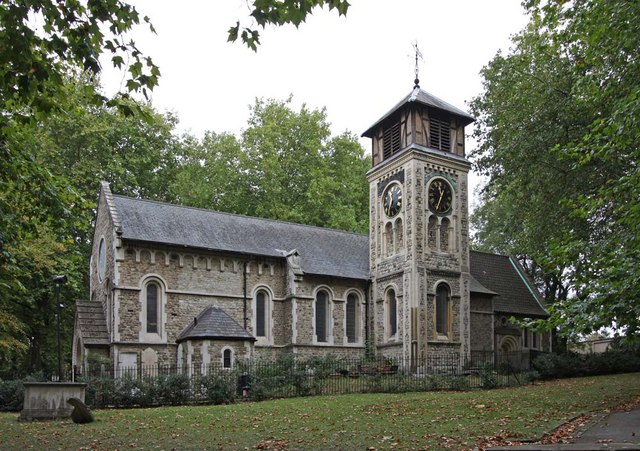
The Domesday Book of 1086 and later parish records — kept in churches like St Pancras Old Church, one of England’s oldest places of worship — are where researchers today find the first appearances of surnames that millions of people carry right now.
Occupational Surnames: Your Ancestor Had a Trade
The single largest category of English surnames comes from occupations. If your surname falls into this group, your ancestors were identifiable by their work — often because that work was essential to a medieval community.
Smith is the most common surname in England. A smith worked metal — iron, primarily. Every village needed one. Every town had dozens. London had hundreds. The word comes from the Old English smið, meaning someone who strikes with a hammer. Blacksmith, goldsmith, silversmith, coppersmith — all shared the root. If your name is Smith, your ancestors were almost certainly metalworkers, likely for many generations.
Fletcher comes from the Old French flechier — an arrow maker. In the era of the longbow, fletchers were crucial to England’s military power. London had an entire district associated with them: the area around Fetter Lane and Fleet Street still carries traces of this trade history. If the name Fletcher runs in your family, your ancestors likely supplied arrows to English armies.
Cooper is someone who made barrels and casks. Before glass and plastic, wooden barrels stored everything from ale to salt fish to gunpowder. A skilled cooper was indispensable in any port town — and London was the greatest port in England. The surname Cooper remains common throughout the Thames Valley and the old docklands districts.
Thatcher describes someone who laid thatch roofs. Before tile and slate became affordable, thatch covered most English buildings. A good thatcher was in constant demand. The surname is particularly common in counties south of London — Surrey, Kent, and Sussex — where thatched buildings remained typical into the 18th century.
Walker has nothing to do with walking. A walker was someone who worked cloth — literally treading on it with their feet to clean and thicken the fibres, a process called “fulling.” The cloth trade was one of medieval London’s most important industries, centred around what is now Cheapside and Cannon Street. Walker is one of the most common surnames in the old cloth-producing districts of England.
Other occupational surnames to look for in your family tree: Baker, Butcher, Chandler (candle maker), Clark or Clarke (a clerk or scholar), Mason (stone worker), Taylor (tailor), Turner (someone who worked a lathe), Webb or Weaver (cloth worker), and Wright (a craftsman — wheelwright, wainwright, shipwright).
🏙️ Enjoying this? 3,000 London lovers get stories like this every week. Subscribe free →
Locational Surnames: Where Your Family Came From
The second major category of English surnames is locational. These names tell you where a family lived, or where they came from when they moved somewhere new.
Richmond comes from the town of Richmond in North Yorkshire, which was named by Norman settlers from Richemont in Normandy. The name means “strong hill.” When families from Richmond moved to London seeking work or opportunity, they were often called “the family from Richmond” — and the name stuck. Richmond is also the name of the royal borough in south-west London, and many families with this surname have roots in that area.
Clifford means exactly what it sounds like: “ford by the cliff.” There are several places in England called Clifford, including villages in Herefordshire and West Yorkshire. A family who arrived in London from Clifford would likely be recorded as “de Clifford” — the “de” eventually dropping as surnames became more fixed.
Windsor comes from Windles-ofer in Old English, meaning “riverbank with a windlass” — essentially a riverbank where goods were winched up from boats. The town of Windsor on the Thames gave its name to the famous castle, and later to the royal family itself. If Windsor is your surname, your ancestors lived near or in that town, or worked there in royal service.
Many locational surnames in London came from people who migrated into the city from surrounding counties. A family named Kent likely came from Kent. Essex came from Essex. Norfolk from Norfolk. In a city that was constantly drawing workers from across England, your locational surname can point directly to the county your family left behind, often centuries ago.
Other locational surnames worth exploring: Ashford, Burton, Dunmore, Hale, Hatfield, Langley, Leigh, Marsh, Morton, Preston, Stanton, Sutton, and Thornton.
Patronymic Surnames: Your Ancestor’s Father’s Name
Patronymic surnames come from a father’s given name. In England, this was typically done by adding “-son” to the name: Robert’s son became Robertson; John’s son became Johnson.
Johnson is one of the most common surnames in England and America. It simply means “son of John.” John was one of the most popular male names in medieval England, drawn from the biblical figure, and the surname Johnson appears in records across every English county. If Johnson is your name, your ancestor was the son of a man named John — a man so common that millions of families carry the same surname today.
Richardson means “son of Richard.” Richard was a Norman name introduced after 1066 and became extremely popular throughout England. There were so many Richards that their sons and grandsons created one of England’s most enduring surnames. Richardson is particularly common in Yorkshire and the north of England, but appears throughout London records from the medieval period onwards.
Williamson means “son of William.” William was the most common male name in Norman England — the Conqueror’s name, carried by kings and commoners alike. The surname Williamson is common across northern England and appears frequently in London guild records from the 14th century.
Other patronymic surnames: Anderson (son of Andrew), Davidson (son of David), Harrison (son of Harry or Henry), Jackson (son of Jack — a pet form of John), Robinson (son of Robin — a pet form of Robert), Simpson (son of Simon), Thompson (son of Thomas), and Wilson (son of Will).
Characteristic Surnames: What Your Ancestors Looked Like
Some English surnames came from physical or personal characteristics. These can be among the most revealing — and sometimes the most unexpected — clues to family history.
Brown is the second most common surname in England after Smith. It likely described a person’s colouring: dark hair, dark eyes, or a tanned complexion. In a population where most people had similar builds and features, physical differences were noted and remembered. Brown was a practical description that became a permanent name.
Short described someone of notably small stature. Long described someone tall. Strong or Armstrong described physical power — someone who had an arm “strong as a forge,” as one medieval description put it. Swift described speed. Hardy described courage or endurance.
Colour surnames go beyond Brown. White described a pale complexion or white hair — often given to elderly men or to men with a notably fair colouring. Black described dark colouring. Grey or Grey described grey hair or a grey complexion. Reid or Reed in its English form described red hair — more commonly found in the north, where there was more Celtic influence.
Personal character also made it into surnames. Moody originally meant “brave” or “bold” (the word “moody” had a positive connotation in Old English). Sharp meant quick-witted. Wise meant what it still means. Savage, startling as it seems, described someone fierce or untameable — not necessarily a compliment, but memorable enough to become a permanent surname.
Norman Surnames: The French Connection
The Norman Conquest of 1066 had a permanent effect on English surnames. The Norman aristocracy brought French names with them, and many of those names filtered down through English society over the following centuries.
Surnames with the prefix de (meaning “of” or “from”) almost always have Norman French origins. de Clare, de Vere, de Montfort — these were the great Norman families who received land grants after the Conquest. Over time, the “de” dropped or was retained only by aristocratic branches, while common people carrying the same surname lost the prefix.
Some Norman surnames are still recognisable as French. Beaumont means “beautiful hill.” Bellamy means “good friend.” Bassett means “rather short.” Courtenay comes from a French place name. Montgomery comes from Sainte-Foy-de-Montgomery in Normandy.
If your surname sounds vaguely French but has been in your family for centuries as an “English” name, the Norman Conquest may well be the reason why.
How to Trace Your English Surname in London Records
Understanding your surname is the starting point. Actually tracing your family line requires records — and England has some of the best-preserved records in the world.
Parish records are the first place to look. From 1538, Church of England parishes were required to record baptisms, marriages, and burials. These records survive in extraordinary numbers. The church of St Pancras Old Church in London, for example, has records dating to 1539 — making it one of the oldest continuous record sources in the city. The London Metropolitan Archives holds hundreds of thousands of such records from churches across Greater London.
The General Register Office holds civil registration records from 1837 onwards, when the government began requiring the registration of all births, marriages, and deaths in England and Wales. These records are searchable online through the GRO Index.
Census records from 1841 onwards give you entire household snapshots — who lived together, what they did for work, where they were born. The 1881 census in particular has been fully transcribed and indexed, making it one of the most accessible resources for tracing English ancestry.
The National Archives at Kew in west London holds military records, wills, court records, and thousands of other document types that can fill in details beyond the basic vital records. If your ancestor had a trade, a property dispute, a military career, or died with assets worth recording, there is likely a document about them at Kew.
FindMyPast and Ancestry both have extensive digitised London collections. The International Genealogical Index, maintained by the Church of Jesus Christ of Latter-Day Saints, is free and covers millions of English records.
Visiting London as an Ancestry Tourist
If you have English ancestry and you’re visiting London, there are places that bring the research to life in a way that no database can replicate.
The London Metropolitan Archives on Northampton Road in Clerkenwell is the main repository for historical London records. You can book a research visit and look at original documents — baptism registers, rate books, guild records — that date back centuries. There is something deeply affecting about holding a ledger that recorded the birth of an ancestor four hundred years ago.
The Guildhall Library in the City of London holds records related to the ancient city guilds. If your ancestors had an occupational surname — Smith, Cooper, Fletcher — they may have been members of a guild, and their names may appear in the guild rolls that survive at Guildhall.
St Paul’s Cathedral and the surrounding area of the old City of London is where much of London’s medieval commercial life took place. Walking through Cheapside, Poultry, and Bread Street — street names that still record the trades once conducted there — gives you a tangible sense of the world your ancestors inhabited if they worked in London’s historic centre.
The Tower of London holds records related to royal service and the Tower’s own garrison, which employed thousands of people over the centuries. If your family had any connection to royal service or military history, the Tower’s records may contain their names.
Huguenot-related sites in Spitalfields are worth visiting if your surname has French origins that don’t trace to the Norman period. Tens of thousands of French Protestant refugees — Huguenots — settled in London after 1685, establishing themselves in the silk weaving trade in Spitalfields. Their records are held at the Huguenot Library in Bloomsbury.
A Few Surnames Worth Investigating
Here is a quick reference for some common English surnames and their likely origins:
Allen / Alan — from the Breton name Alan, brought by Normans after 1066. Common throughout England.
Barnes — someone who lived near or worked in a barn; or from the place Barnes in Surrey.
Cole — from the Old English personal name Cola, meaning “coal-black”; or someone who sold charcoal.
Ellis — from the Hebrew name Elias (Elijah), common in medieval England through biblical influence.
Ford — someone who lived near a ford across a river. Common throughout the Thames Valley and surrounding counties.
Grant — from the Norman French grand, meaning tall or large. Likely a characteristic surname for a notably large ancestor.
Hall — someone who lived or worked in the great hall of a manor or estate. One of the most common locational-type surnames in England.
Hunt / Hunter — someone who hunted game. In the Middle Ages, hunting was a significant occupation both for sport and for food supply.
King — confusingly, this rarely meant someone of royal blood. More often it described someone who played the king in a pageant or drama, or who worked in a royal household. It could also be ironic — given to someone with pretensions above their station.
Mills / Miller — someone who operated a mill. Every village needed a mill, and the miller was one of the most economically important members of any community.
Page — a young servant or attendant, typically in a noble household.
Parker — someone who kept or managed a park — in the medieval sense, an enclosed hunting ground belonging to a lord.
Potter — someone who made clay pots. An ancient and essential trade in any settlement.
Reed / Reid — someone with red hair, or someone who lived near reeds by a river or marsh.
Stone — someone who lived near a notable stone or boundary marker, or a stonemason.
Warren — from the Norman French warrenne, a game preserve. A family who managed or lived near a rabbit warren or hunting ground.
Young — typically the younger of two people with the same given name in a community, distinguishing him from an elder with the same name.
Your Surname Is a Map
Whatever your English surname is, it is not an accident. It was given for a reason — and that reason connects you to a specific person, a specific place, a specific trade, or a specific moment in English history.
The Smiths of London hammered iron in workshops that no longer exist on streets that have been rebuilt four times over since the medieval period. The Fletchers supplied arrows to armies that fought on English fields eight hundred years ago. The Coopers built the barrels that carried ale down the Thames. The Walkers trod cloth in workshops near Cheapside when it was the commercial heart of one of the world’s greatest cities.
Your last name is a thread back to all of that. Pull it gently — and see where it leads.
🇬🇧 25 Hidden Gems of London Most Tourists Never Find
From secret riverside walks to hidden Victorian tunnels, centuries-old pubs to rooftop gardens with skyline views — our free guide reveals the London most visitors never discover. Join 3,000+ London lovers who get it free.
Already subscribed? Download your free London guide (PDF)
Love more? Join 65,000 Ireland lovers → · Join 43,000 Scotland lovers → · Join 30,000 Italy lovers →
Free forever · Unsubscribe anytime
Subscribe Free