
Five days is a great amount of time for a first visit to London. This 5-day London itinerary gives you a clear daily plan covering the must-see landmarks, great local markets, and a few spots most tourists walk right past. Whether you’re flying in from New York, Chicago, or Los Angeles, the planning process is the same. This guide tells you exactly where to go, in what order, and what to know before you arrive.
How to Use This 5-Day London Itinerary
Each day in this guide is built around a central area of the city. London is large — trying to cross it repeatedly wastes hours. By grouping nearby sights together, you cover more ground with less effort. You’ll need an Oyster card for the Underground (the Tube). Pick one up at the airport or any Tube station on arrival. You can also tap in with a contactless debit or credit card directly.
Before you start, make sure you’ve read our complete transport guide for US visitors — it explains every option, from Heathrow Express to the night bus, and will save you time on day one.
Day 1 — Westminster, the South Bank, and Borough Market
Morning: Westminster and Parliament Square
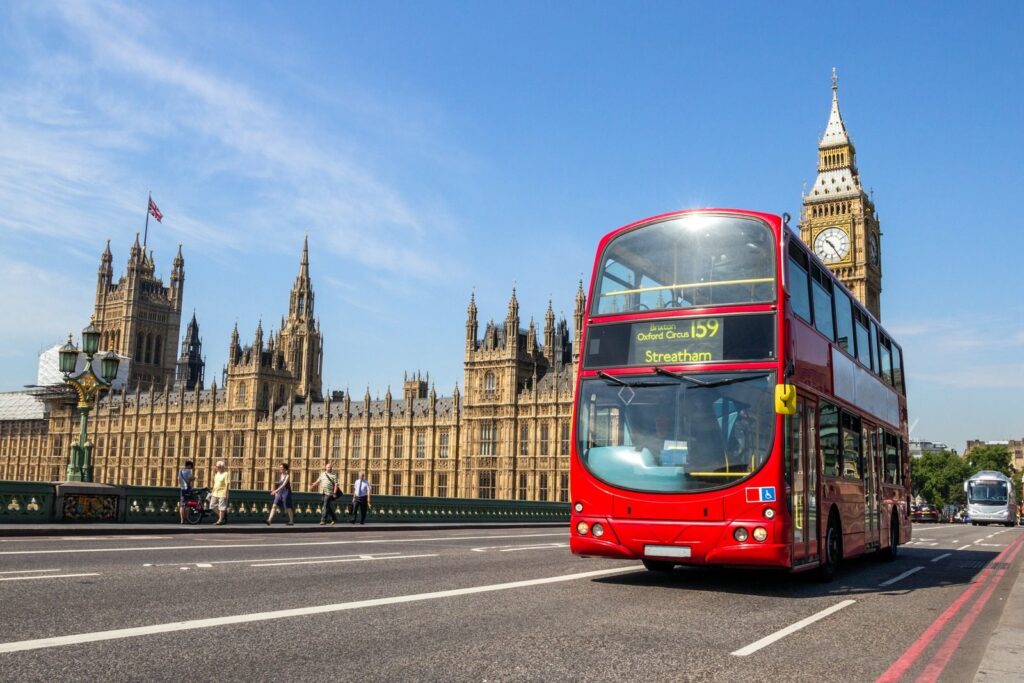
Start at Westminster. This is the historic heart of London and the right place to begin. Walk along the Embankment from Westminster Bridge for the classic view of the Houses of Parliament and Big Ben. Cross the bridge and stand at the spot where millions of first-time visitors take the same photograph. It never gets old.
Westminster Abbey is just a short walk from Parliament Square. Book tickets online before you arrive — it’s worth it. The abbey has been the coronation church for English and British monarchs since 1066 and is genuinely one of the most remarkable buildings in the world. Budget at least 90 minutes.
St James’s Park is next door. It’s free, calm, and a lovely place to decompress after the early morning travel. Walk through the park towards Buckingham Palace if you want to see the exterior — but don’t feel obliged to queue for the Changing of the Guard on day one. Save that for later in the trip if it interests you.
Afternoon: The South Bank Walk
Cross back over the Thames and head east along the South Bank. This is one of London’s best free walks. The path runs from Westminster Bridge all the way past the Tate Modern, the Globe Theatre, and Borough Market. It takes about an hour at a comfortable pace with a few stops.
The Tate Modern is free to enter. It occupies a converted power station on the Thames and is worth stepping inside even if you’re not a regular gallery visitor — the building itself is extraordinary. The viewing platform on the tenth floor gives one of the best free views over the city.
Evening: Borough Market
End your first day at Borough Market. It’s one of London’s oldest food markets, open from Monday to Saturday. The evening atmosphere is relaxed. Pick up cheese, bread, charcuterie, and olives for a simple riverside dinner, or try the hot food stalls if you prefer a proper meal. Southwark Cathedral sits right next to the market — it’s free to enter and usually quiet after 5pm.
Day 2 — Tower of London, Tower Bridge, and Shoreditch
Morning: The Tower of London
Book your Tower of London tickets online before you arrive. They’re cheaper online and the queue for walk-up tickets can be long. Budget two to three hours. The Crown Jewels are the centrepiece — you’ll queue to see them on a moving walkway, which prevents congestion, but the queue itself can stretch to 40 minutes in summer. The free Beefeater tours run throughout the morning and last about an hour. They’re entertaining and give you the key history without needing to read every information board.
Afternoon: Tower Bridge and the City
After the Tower, walk out along the riverside to Tower Bridge. It’s free to walk across. Tower Bridge is not actually an old stone structure — it was built between 1886 and 1894 using a steel frame clad in Cornish granite and Portland stone to match the Tower of London next door. Most visitors don’t know that. You can pay to walk the high-level glass walkways, but the bridge itself is worth seeing from the ground first.
Walk back through the City of London — the original Roman settlement and now the financial district. It’s quieter at weekends. Leadenhall Market is a beautiful Victorian covered market nearby. It also served as a filming location in the Harry Potter films, doubling as Diagon Alley. Worth a quick stop.
Evening: Shoreditch
Head east to Shoreditch for dinner. This neighbourhood has some of the best street art in Europe and a wide range of restaurants. Brick Lane is five minutes on foot and is known for its curry houses and bagel shops. The area has changed significantly over the past 20 years but still has an energy you won’t find in central London.
Day 3 — South Kensington Museums, Hyde Park, and Notting Hill
Morning: The Natural History Museum or the V&A
South Kensington has three world-class museums within five minutes of each other: the Natural History Museum, the Victoria and Albert Museum, and the Science Museum. All three are free to enter. The Natural History Museum is best for families and first-timers. The V&A suits anyone interested in art, design, fashion, or decorative arts. Pick one and go deep rather than rushing through two.
London’s free museum access is one of the great things about visiting the city. Our complete guide to London’s free museums covers every major institution and tells you which are worth the extra time.
Afternoon: Hyde Park and Kensington Palace
Walk through Hyde Park after the museum. The park covers 142 hectares and feels like a genuine escape from the city. Rent a deckchair near the Serpentine if the weather allows. Kensington Palace sits at the western edge of the park — entrance to the public gardens is free, though there’s a charge to enter the State Rooms. The Sunken Garden, which was redesigned as a tribute to Princess Diana in 2017, is one of the most peaceful spots in London.
Evening: Notting Hill and Portobello Road
Notting Hill is a short walk or Tube ride from Kensington. Portobello Road Market runs on Saturdays, but the antique stalls and food vendors operate on weekdays too. The neighbourhood’s pastel-coloured terraced houses are best photographed in the morning, but the evening restaurants and wine bars are worth the visit in their own right.
🇬🇧 25 London Places Most Visitors Miss
From secret riverside walks to hidden Victorian tunnels, centuries-old pubs to rooftop gardens with skyline views — our free guide reveals the London most visitors never discover. Join 3,000+ London lovers who get it free.
Get Your Free 25-Places Guide →Day 4 — Greenwich and the Royal Observatory
Morning: The Prime Meridian and the Observatory
Greenwich takes about 25 minutes by Tube or 40 minutes by river bus from central London. The river route is more enjoyable if the weather is good. Greenwich Hill gives you one of the best views over London, with the Canary Wharf towers visible to the east and the City skyline to the west.
The Royal Observatory sits at the top of the hill. You can stand on the Prime Meridian — the line that divides the eastern and western hemispheres — at zero degrees longitude. The Meridian Line itself is free to stand on from outside; you pay for entry to the Observatory buildings and the planetarium.
Afternoon: The Old Royal Naval College and Greenwich Market
The Old Royal Naval College is free to enter. The Painted Hall — sometimes called the “Sistine Chapel of the UK” — was recently restored to its original splendour and is one of the most impressive painted ceilings in the world. Most visitors to Greenwich walk past without going in. Don’t make that mistake.
Greenwich Market sits just below the hill, near the river. It has food stalls, craft goods, and antiques. Good for lunch and a relaxed browse before heading back to central London. The market has been trading since 1737 — it was already established before the United States declared independence.
Day 5 — Camden, Regent’s Park, and Covent Garden
Morning: Camden Market
Camden Market opens at 10am daily. Stables Market and Camden Lock are the two main areas — a mix of street food, vintage clothing, and independent craft stalls. Go early to avoid the crowds, especially at weekends. The canal runs alongside the market and makes a pleasant walking route from Primrose Hill if you want to arrive on foot.
Afternoon: Regent’s Park and Primrose Hill
Walk south through Regent’s Park after Camden. One of London’s eight Royal Parks, Regent’s Park is beautifully maintained and free to enter. The rose gardens near the Inner Circle are at their best between late May and July. Primrose Hill is a short walk north of the park. From the top, you get one of the best free views of the London skyline — clear on most days, with St Paul’s, the Shard, the BT Tower, and Canary Wharf all visible.
Evening: Covent Garden and the West End
End your five days in Covent Garden. Street performers work the central piazza every afternoon and evening — the acts range from classical opera singers to acrobats and comedians. The covered market hall has shops, restaurants, and bars. The surrounding streets lead you into the heart of the West End theatre district. If you want to see a show, book tickets a few days before you arrive. Same-day discount tickets are available at the TKTS booth on Leicester Square.
Practical Tips for US Visitors
Getting Around London
The Tube covers most of central London and runs until around midnight, with Night Tube services on some lines on Fridays and Saturdays. Buses are useful for shorter distances and for seeing the city at street level. Black cabs are reliable but expensive. Ride-sharing apps also work well.
Walking is faster than you might expect for many central journeys. Leicester Square to Covent Garden is a five-minute walk — not worth taking the Tube for. Our full London transport guide explains how to use every option and how to avoid the most common mistakes.
Where to Stay
Westminster, South Bank, and Covent Garden are the best central areas for first-time visitors. They keep journey times short and put you within walking distance of the main sights. Shoreditch and Bethnal Green are worth considering if you’d prefer to be based in East London. Avoid hotels on the far edges of the Tube map — journey times add up over five days.
How Much Does Five Days in London Cost?
London is one of the more expensive European cities. Budget around £100–£150 per person per day for meals, transport, and entrance fees. You can reduce costs significantly by eating at markets rather than restaurants, using London’s free museums, and buying a multi-day Travelcard if you’re using the Tube frequently. See our full cost breakdown for US travellers for specific figures across accommodation, food, and activities.
It’s also worth checking what time of year you’re visiting. Spring and early autumn offer the best combination of weather and manageable crowds. Our best time to visit London guide breaks down every month so you can plan around the conditions that suit you.
Frequently Asked Questions
Is 5 days enough to see London?
Five days gives you a solid introduction to London. You’ll cover the essential landmarks and experience several different neighbourhoods. You won’t see everything — no visit of any length would allow that — but most first-time visitors find that five days leaves them wanting to return. That’s usually a good sign.
What is the best way to get around London as a first-time visitor?
The London Underground is the fastest way to travel between areas. Use an Oyster card or tap in with a contactless card. Buses are slower but give you a view of the streets. Walking is often the best option for short distances within the same neighbourhood. Avoid peak hours on the Tube (8–9am and 5–6:30pm weekdays) if you can.
Do I need to book attractions in advance for a London visit?
For the Tower of London and Westminster Abbey, yes — book online before you travel. Tickets are cheaper online and you skip the walk-up queue. For London’s free museums (the Natural History Museum, British Museum, V&A, Tate Modern), no advance booking is needed for general admission, though some temporary exhibitions require timed entry tickets. The Harry Potter Studio Tour near Watford requires advance booking weeks or months ahead.
Join 3,000+ London Lovers
Every weekday morning, get London’s local secrets, little-known places and travel inspiration — the kind you won’t find in any guidebook.
Subscribe free — enter your email:
Free forever · Unsubscribe anytime