
Getting around London is easier than most American visitors expect — but it does require a bit of preparation. London has one of the world’s best public transport networks, and once you understand how it works, you can get almost anywhere in the city quickly and cheaply. This guide covers everything you need to know about getting around London: the Tube, buses, the Elizabeth line, taxis, and how to pay for it all.
Before your trip, it helps to understand the layout of the city. London is large — much larger than most visitors realise — and spread across dozens of distinct neighbourhoods. If you haven’t already picked where to base yourself, check our guide to the best areas to stay in London. Where you stay affects which transport options you’ll use most, and how far you are from the major sights.
Getting Around London: Your Options at a Glance
London’s transport system is run by Transport for London (TfL). It covers the Underground (the Tube), buses, the Elizabeth line, the Overground, river boats, and more. For most visitors, you’ll rely on four main options:
🏙️ Love London?
3,000 London lovers get hidden history, street-level stories, and local secrets every week. Free, forever — no spam, unsubscribe any time.
Subscribe free — enter your email:
- The Underground (Tube) — fastest for longer journeys across the city
- Buses — slower but cheaper, great for short hops and seeing the city
- The Elizabeth line — newer, faster cross-city rail line
- Walking — many central London sights are closer than they appear on the map
The London Underground (The Tube)
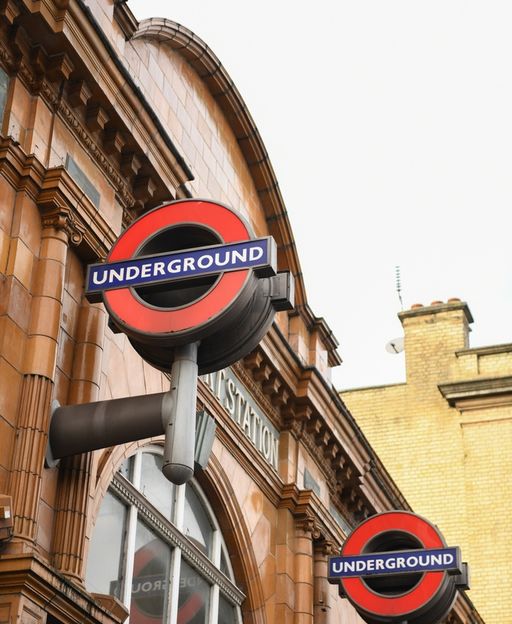
The Tube is the backbone of London’s transport network. It runs across the city on 11 colour-coded lines, connecting most major attractions, neighbourhoods, and mainline railway stations.
The Tube is fast, frequent, and reliable during peak hours. On most lines, trains run every two to four minutes during the day. The network runs from around 5am to midnight on most lines, with a 24-hour Night Tube service on selected lines at weekends.
Reading the Tube Map
The London Tube map is one of the most famous design icons in the world. It was designed in 1933 by Harry Beck, who drew it as a circuit diagram rather than a geographical map. This makes it very easy to read, but it distorts distances considerably. On the map, Oxford Circus and Covent Garden look close together — but on foot, they’re only a 10-minute walk. Always check if walking is faster before taking the Tube for one or two stops.
Download the TfL Go app before you travel. It shows live departures, step-free access information, and journey planning for all modes of transport across the city.
When to Avoid the Tube
The Tube gets very crowded during rush hour — between 7.30am and 9.30am, and again between 5pm and 7pm on weekdays. If you can, travel outside these times. Central London stations like Bank, Victoria, and King’s Cross get particularly busy. Platforms can be hot in summer, as most lines were built before air conditioning was common.
The Oyster Card vs Contactless Payment
You cannot use cash to pay for a Tube journey. All fares are paid electronically, using either an Oyster card or contactless payment. This is one of the most important things to know before you arrive.
Contactless Payment (Recommended)
If your US credit or debit card has contactless capability (shown by the Wi-Fi-style symbol), you can use it directly on Tube ticket readers and bus readers. You simply tap in and tap out. The system automatically calculates the cheapest fare for your journeys each day and applies a daily price cap, so you never pay more than a set amount no matter how many trips you make.
Most American visitors find this is the easiest option. Check with your bank before you travel to confirm your card works with contactless overseas. Apple Pay and Google Pay also work on London’s transport network.
Oyster Card
An Oyster card is a reusable plastic card that you load with credit at any Tube station or ticket machine. It works in the same way as contactless — tap in at the start of your journey, tap out at the end. The fares are the same as contactless, and the daily price cap applies.
Oyster cards require a £7 deposit, which you can claim back when you return the card at the end of your trip. If you’re unsure whether your card works with contactless abroad, an Oyster card is a reliable back-up. You can pick one up at any Tube station on arrival.
Always Tap Out
Whether you use Oyster or contactless, you must tap your card on the reader at the start of every journey and again at the end. If you forget to tap out, the system charges you the maximum possible fare for that line. This catches many first-time visitors out — always tap out when you leave the station.
London Buses
London’s red double-decker buses are one of the most enjoyable ways to see the city. They’re slower than the Tube, but they run above ground, which means you see London as you travel. A ride on the upper deck of a bus through Westminster, along the Embankment, or through Soho gives you a view of the city that a Tube journey never can.
Bus fares are a flat rate regardless of how far you travel, making short hops particularly good value. Like the Tube, buses are cashless — you need to tap in with Oyster or contactless when you board. Bus stops display a map of the route and a list of stops, and the TfL Go app shows live bus arrival times.
Night Buses
After the Tube closes at midnight, London’s Night Bus network takes over. Night buses run all night on key routes and are identified by an “N” prefix — the N29, the N19, and so on. They’re slower than the Tube and buses can get crowded late at night, but they’re a reliable and cheap way to get home after an evening out.
The Elizabeth Line
The Elizabeth line opened in 2022 and has transformed east-west travel across London. It runs from Reading and Heathrow in the west through central London — stopping at Paddington, Bond Street, Tottenham Court Road, Farringdon, Liverpool Street, and Canary Wharf — and out to Shenfield and Abbey Wood in the east.
The Elizabeth line is worth knowing about for two reasons. First, it’s significantly faster than the Tube for cross-London journeys. Second, it’s the direct rail link from Heathrow Airport into central London, reaching Paddington in around 15 minutes. It uses the same Oyster and contactless payment system as the Tube and buses.
Getting from the Airport to Central London
Most US visitors arrive at Heathrow or Gatwick. Both have direct rail links into central London.
From Heathrow
The Elizabeth line is the fastest and cheapest way into central London from Heathrow. Trains run frequently and the journey to Paddington takes around 15 minutes. From Paddington, you can connect to the rest of the Tube network. Pay with contactless or Oyster as you would on any other TfL journey.
The Heathrow Express is a faster but more expensive non-stop service to Paddington, taking around 15 minutes. It’s pricier than the Elizabeth line and doesn’t offer the same value unless you’re in a hurry and need to book in advance. The Tube’s Piccadilly line also serves Heathrow, though the journey to central London takes around 45 to 60 minutes.
From Gatwick
The Gatwick Express runs directly from Gatwick Airport to London Victoria in around 30 minutes. Thameslink trains also run from Gatwick to London Bridge, Blackfriars, Farringdon, and St Pancras, which can be more useful depending on where you’re staying. Fares vary — book in advance for the best prices.
Taxis and Ride-Hailing Apps
London’s black cabs (properly called Hackney Carriages) are metered, licensed, and driven by cabbies who have passed the Knowledge — one of the most demanding taxi licensing tests in the world. Drivers must memorise every street, road, and landmark within a six-mile radius of Charing Cross. They’re reliable, but not cheap.
Uber is widely available in London and often less expensive than black cabs. Bolt is another app-based option. Both are worth having on your phone for late-night journeys or when you have luggage. If you use Uber in the US, it works exactly the same way here.
Walking in London
One of the best-kept secrets about London is how walkable the central areas are. On the Tube map, many stations appear to be a long distance apart — but on foot, the same journey often takes 10 to 15 minutes. The walk from Covent Garden to the South Bank, from Westminster to Buckingham Palace, or from Soho to Fitzrovia are all easy and enjoyable on foot.
Walking lets you discover the parts of London that the Tube skips entirely — the backstreets, the market alleys, the hidden squares, the cafés. If you have a three-day itinerary or longer, build in time to walk between sights whenever the distance allows it. You’ll see far more of the real city.
Cycling in London
London has a public cycle hire scheme called Santander Cycles, often called “Boris Bikes” after the former mayor who launched them. You’ll find docking stations throughout central London. Hire is pay-as-you-go via the Santander Cycles app or at docking stations using a credit card. The first 30 minutes of each journey is included in the base hire fee, making short hops between stations very affordable.
Cycling in central London requires confidence on busy roads. There are dedicated cycle lanes on many routes, but traffic can be heavy. That said, quieter routes along the Thames Embankment and through parks like Regent’s Park and Hyde Park are well suited to visitors.
Practical Transport Tips for US Visitors
A few things that catch American visitors off guard:
- Stand on the right on escalators. London’s Underground escalator etiquette is strict — stand on the right, walk on the left. Locals take this seriously.
- Traffic comes from the right. When crossing the road, look right first. Many central London pedestrian crossings have “LOOK RIGHT” painted on the pavement — use them.
- Don’t drive. Driving in central London is expensive (Congestion Charge, ULEZ charge, parking), complicated, and slow. Public transport is almost always faster.
- Validate every journey. Always tap in at the start and tap out at the end. One missed tap means a penalty fare.
- Check travel costs before you go. Our London travel budget guide covers average daily transport costs and how to keep spending down.
If you’re still in the planning stages, our complete guide to planning a trip to London from the US covers flights, visas, what to pack, and everything else you need before you arrive.
Getting Around London: Summary
London’s public transport network is genuinely excellent. With an Oyster card or contactless payment, you can move across the entire city quickly and at a fixed daily cost cap. The Tube handles longer journeys. Buses are cheap and scenic for shorter hops. The Elizabeth line makes Heathrow arrivals simple. And walking between the central sights is often the best option of all.
The key is preparation — understand the basics before you land, load your card or check that contactless works, download the TfL Go app, and you’ll find getting around London one of the easiest parts of your trip.
🇬🇧 25 Hidden Gems of London Most Tourists Never Find
From secret riverside walks to hidden Victorian tunnels, centuries-old pubs to rooftop gardens with skyline views — our free guide reveals the London most visitors never discover. Join 3,000+ London lovers who get it free.
Get Your Free London Hidden Gems Guide →Free forever · Unsubscribe anytime