
On the morning of 20 June 1837, a teenage girl was woken before dawn at Kensington Palace. Two men stood in her bedroom doorway: the Archbishop of Canterbury and the Lord Chamberlain. They carried urgent news.
She was Queen of England. She was 18 years old. And within hours, she would do something she had been forbidden from doing her entire life: sleep in a room of her own.
Born Here, Never Truly Free
Victoria was born at Kensington Palace on 24 May 1819, the daughter of the Duke of Kent and Princess Victoria of Saxe-Coburg-Saalfeld. Her father died when she was just eight months old, leaving her in the care of her mother and an ambitious Irish advisor named John Conroy.
Together, they devised something historians later called the Kensington System. The rules were strict and comprehensive. Victoria was never to be alone — not for a single moment of her childhood.
She slept in her mother’s room every night. She was forbidden from walking downstairs without holding an adult’s hand. She could not speak to any person without a chaperone present. She had no friends her own age. She was denied ordinary conversation with anyone outside a tightly controlled circle.
She was, in almost every practical sense, a prisoner — inside one of London’s royal palaces, surrounded by staff, profoundly isolated. She described her childhood, later in life, as “rather melancholy.”
The System Built to Control a Queen
The purpose of the Kensington System was not hard to see. Conroy and the Duchess of Kent intended that when Victoria eventually took the throne, she would be entirely reliant on them. A young queen who had never made a decision alone would need advisors. They planned to be those advisors.
In the years before her 18th birthday, Conroy made several attempts to get Victoria to sign documents appointing him as her personal secretary — a role that would have given him extraordinary influence over the new monarch. Victoria refused every time.
According to historical accounts, some of these requests came when she was ill — when her resistance might be lowest. She refused those too.
Her governess, Baroness Lehzen, was the one person who consistently defended Victoria’s interests. While Conroy applied pressure, Lehzen quietly encouraged Victoria’s sense of self. The Kensington System had made Victoria dependent on almost everyone around her. But it had also, without intending to, taught her how to endure.
The Morning That Changed Everything
King William IV died in the early hours of 20 June 1837. News reached Kensington Palace before dawn. Victoria was woken at around five o’clock in the morning.
For the first time in her life, she insisted on receiving the Archbishop of Canterbury and the Lord Chamberlain alone. No mother. No Conroy.
Later that morning, she held her first Privy Council meeting. She received the senior ministers of state. She conducted herself, by all accounts, with a composure that surprised almost everyone in the room.
That evening, she wrote in her journal: “Since it has pleased Providence to place me in this station, I shall do my utmost to fulfil my duty towards my country.”
Her first personal request as Queen was simple. She asked for a room of her own.
The Escape She Had Always Planned
Victoria moved her bed out of her mother’s room that same night.
Within weeks, the court relocated to Buckingham Palace. The Duchess of Kent was given apartments at Kensington — as far from Victoria’s rooms as the building could manage. Conroy was removed from court entirely. Baroness Lehzen was appointed to a position of trust at Victoria’s side.
Victoria never lived at Kensington Palace again.
What the Kensington System had produced, in the end, was not an obedient and dependent monarch. It had produced a young woman who had spent 18 years quietly watching, learning, and waiting. Someone who understood power precisely because she had never been allowed to hold it.
She went on to reign for 63 years — the longest reign in British history at that point. She gave her name to an era, an empire, and a style of architecture that still defines much of London today. She started it all by moving her bed.
What You Will Find at Kensington Palace Today
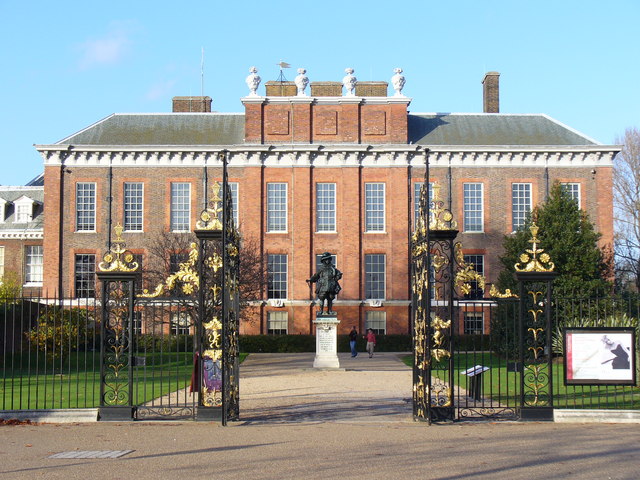
Kensington Palace sits at the western edge of Hyde Park, its red-brick facade largely unchanged since the 17th century. It is a working royal residence — the Prince and Princess of Wales live here — and also a museum open to visitors throughout the year.
The State Rooms offer a walk through the interiors where Victoria grew up. There is a permanent exhibition on her life and reign, including objects from her childhood at the palace. The rooms are intimate rather than grand — more lived-in than palatial — and that intimacy is what makes them moving.
The palace also holds a display dedicated to Princess Diana, another Kensington resident who understood something about being watched. The Sunken Garden, redesigned as a tribute to Diana, blooms with white flowers each spring and is open free of charge, all year round.
Nearby, Kew Palace inside Kew Gardens offers another quiet corner of royal history that most visitors walk right past. For a full guide to planning your time across London’s royal landmarks, the London planning hub covers itineraries, opening times, and how to make the most of every visit.
Is Kensington Palace free to visit?
The palace gardens and grounds are free to enter all year round. The State Rooms and interior exhibitions require a paid ticket — adults typically pay around £21–£24. Advance booking discounts are available via the Historic Royal Palaces website.
How do you get to Kensington Palace?
The nearest Tube stations are High Street Kensington (Circle and District lines) and Queensway (Central line), both around a 10-minute walk away. The palace is also reachable on foot through Hyde Park from Hyde Park Corner or Lancaster Gate stations.
What can you see inside Kensington Palace?
The State Rooms include Victoria’s childhood bedroom, the King’s Gallery, and exhibitions on her life and reign. There is also a dedicated Princess Diana display featuring her iconic dresses. The Sunken Garden — now a Diana memorial — is accessible separately at no charge.
Where did Queen Victoria live after she became Queen?
Victoria moved to Buckingham Palace within weeks of becoming Queen in June 1837 and never lived at Kensington again. She later commissioned a statue of herself that still stands outside the palace — a woman marking the place she grew up, without ever wanting to return.
🇬🇧 25 Hidden Gems of London Most Tourists Never Find
From secret riverside walks to hidden Victorian tunnels, centuries-old pubs to rooftop gardens with skyline views — our free guide reveals the London most visitors never discover. Join 3,000+ London lovers who get it free.
Get Your Free London Hidden Gems Guide →Love more? Join 65,000 Ireland lovers → · Join 43,000 Scotland lovers → · Join 29,000+ Italy lovers →
Free forever · Unsubscribe anytime

Subscribe Free