
On a Sunday morning in East London, something extraordinary happens to a quiet Victorian street. Before 8am, the vans arrive. By 9am, the pavements have disappeared beneath buckets of tulips, armfuls of sunflowers, and towers of potted bay trees. By noon, Columbia Road looks less like a street and more like a moving, shouting, fragrant garden.
Nobody who has ever been here forgets it.
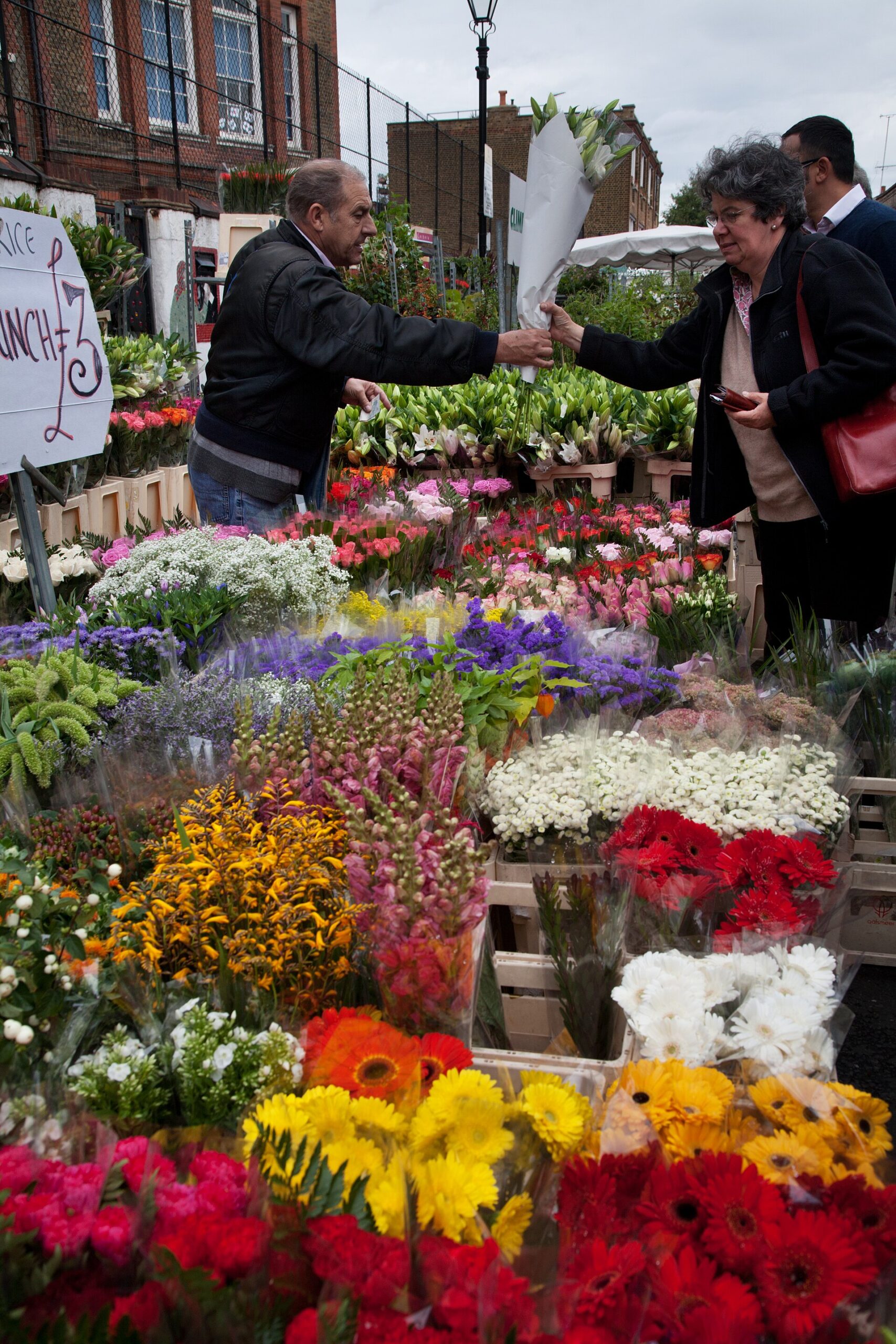
A Market With 150 Years of History
Columbia Road in Bethnal Green has been a place of trade since the 1860s. The Victorian philanthropist Baroness Burdett-Coutts originally developed the area with a covered market in mind. She wanted to provide affordable food for the local poor. But it was flower selling that took root and never let go.
By the early 20th century, the market had become a fixture of East London life. Working families bought cheap bunches to brighten up cramped terraced houses. Street traders called out prices in Cockney banter. The tradition carried through two world wars and the upheaval of the Blitz.
Today, around 60 stallholders trade here every Sunday. Many are second- or third-generation flower sellers. The shouts still have that old-market energy, even as the surrounding neighbourhood has changed beyond recognition. Columbia Road has outlasted every trend, every recession, and every attempt to modernise it away.
What connects the Victorian costermongery with today’s market is something simple: Londoners have always wanted flowers. Even in the most difficult times, they kept buying them.
How the Market Actually Works
The market runs every Sunday from roughly 8am to 2pm. There is no entry fee, no ticket system, and no need to book. You simply turn up and walk in.
The stalls stretch along the length of the road — about a third of a mile — and spill into the side streets. Plants, cut flowers, bulbs, seeds, and potted trees crowd every pavement. Prices are usually well below what you would pay at a supermarket or garden centre, particularly as the morning goes on.
Here is the secret regulars know: if you arrive after 11am, the stallholders begin calling out drastically reduced prices. A bunch of tulips that cost £3 at 9am might go for 50p at 12:30. A potted olive tree that started the day at £25 might leave for a tenner.
The trade-off is straightforward. Early arrival means the best selection. Late arrival means the best bargains. Most people settle the argument by arriving mid-morning and accepting that they will pay a fair price for the flowers they actually want.
Bring cash — many stallholders still prefer it, though card payments are increasingly common. Bring bags too. The flowers you buy will be heavy, and paper wrapping does not always survive the journey home.
More Than Just Flowers
Columbia Road Market is not only about what you carry home. The street around it has quietly become one of London’s best Sunday morning destinations in its own right.
Small independent shops line both sides of the road, and many only open on market day. You will find vintage homewares, hand-thrown ceramics, botanical prints, and handmade jewellery. There are independent cafés serving proper coffee and pastries, which people carry into the market crowd and drink slowly.
A particular pleasure is ducking into the side streets. Arnold Circus, just a short walk away, is a hidden Victorian gem — a bandstand on a raised mound, ringed by Arts and Crafts cottages. Few visitors find it. Fewer still know it was built on rubble cleared from one of London’s worst 19th-century slums, the Old Nichol rookery.
The neighbourhood has changed enormously over the past 30 years. Galleries, studios, and design shops have moved in. But market day has a way of slowing things down. People stop. They smell things. They argue gently about which variety of hydrangea to buy. For a few hours each Sunday, Columbia Road is London at its most genuinely unhurried.
If you enjoy London’s market culture, you might also want to read about Greenwich Market, which has been trading since before America existed. The two markets offer a fascinating contrast between East and South London’s trading traditions.
When to Arrive and What to Expect
Columbia Road is in Bethnal Green, East London. The nearest Overground station is Hoxton, about ten minutes’ walk. Bethnal Green on the Central line is also around ten minutes away. Several bus routes stop close by.
The market gets genuinely busy between 10am and noon on dry spring and summer Sundays. The road is narrow and the crowds are real. If you dislike confined spaces, plan to arrive early. If you enjoy people-watching and the hum of a working market, the busy hours are actually the best time to be there.
Dogs are welcome and frequently seen. Children tend to love it. The atmosphere is good-natured, and the vendors are used to questions, comparison shopping, and prolonged deliberation over a bunch of dahlias. Asking about prices is not just acceptable — it is expected.
If you want to build a full Sunday morning from it, Brick Lane is a twenty-minute walk and adds a completely different flavour. Borough Market in South London is further but also well worth combining into a longer food and market day. Our guide to what to eat in London has useful suggestions for building a day around London’s best food experiences.
Why This Market Has Lasted
Other cities have flower markets. Paris has its Marché aux Fleurs on the Île de la Cité. Amsterdam has its famous floating market. But few have anything quite like Columbia Road.
Part of what makes it special is the scale — you are surrounded by flowers entirely for the length of a street. Part of it is the noise. Vendors here do not wait for you to approach. They project. They call out. They compete with one another in a performance that is theatrical and entirely genuine at once.
Part of it is the setting: Victorian buildings, independent shops, an East London morning that in spring can have an extraordinary quality of light. And part of it is the mix of people — long-time East Enders, young families, tourists from every country, professional florists stocking up for the week ahead.
Columbia Road is not trying to be a heritage attraction. It has simply kept going. That is exactly what makes it one of London’s most alive Sunday experiences. For first-time visitors wanting to plan a full London trip, our London travel planning hub covers everything you need to know before you arrive.
Frequently Asked Questions
What time should I arrive at Columbia Road Flower Market?
Arrive between 8am and 9:30am for the best selection of flowers and plants. If bargains matter more than choice, come after 11am — sellers start reducing prices significantly as closing time approaches.
Is Columbia Road Flower Market free to enter?
Yes, completely free. There are no tickets, no charges, and no reservations needed. The market runs every Sunday, roughly 8am to 2pm. Just turn up and walk in.
How do I get to Columbia Road Flower Market by public transport?
Take the Overground to Hoxton station (about ten minutes’ walk) or the Central line to Bethnal Green (also around ten minutes). Several bus routes stop on or near the road itself.
What can I buy at Columbia Road besides flowers?
The shops along the road sell ceramics, vintage homewares, botanical prints, handmade jewellery, and quality coffee. Many shops only open on market day, so Sunday morning is the only time to catch them.
🇬🇧 25 Hidden Gems of London Most Tourists Never Find
From secret riverside walks to hidden Victorian tunnels, centuries-old pubs to rooftop gardens with skyline views — our free guide reveals the London most visitors never discover. Join 3,000+ London lovers who get it free.
Get Your Free London Hidden Gems Guide →Love more? Join 65,000 Ireland lovers → · Join 43,000 Scotland lovers → · Join 29,000+ Italy lovers →
Free forever · Unsubscribe anytime
Subscribe Free