
The gates of Regent’s Park look familiar to every Londoner. The broad paths. The park benches. The distant sound of geese on the water. But most people who walk through the main entrance never reach what sits at its very heart. Those who do almost never leave without stopping to take a photograph.
Regent’s Park covers 395 acres of north-central London. It is one of eight Royal Parks in the capital, and it is free to enter. But many visitors who spend a morning here never leave the outer ring of paths — and so they never discover the Inner Circle, or the garden inside it, or the reason that people who visit once tend to come back again and again.
The Park That Was Built for a Prince Who Never Moved In
In 1811, the architect John Nash drew up plans to transform a stretch of Crown Estate farmland in north London. The client was the Prince Regent — the man who would eventually become King George IV.
The vision was ambitious: dozens of private villas, a formal canal running along the park’s boundary, and at the very centre, a private pleasure garden reserved for the Crown. Nash designed a crescent of terraces around the park’s edges. You can still see them today — white stucco elegance overlooking the open grass.
The Prince Regent never moved in. Only eight of the planned 56 villas were ever built. The private garden at the park’s heart — the Inner Circle — sat unused by royalty. Eventually it was handed to the public. And in 1932, the Royal Botanic Society planted something inside it that changed the character of this park for ever.
Queen Mary’s Rose Garden: 12,000 Roses and No Entry Fee
Most people approaching the Inner Circle don’t notice it until they’re almost inside. The entrance is framed by hedges, low-key, easy to miss if you don’t know where to look. There is no ticket booth.
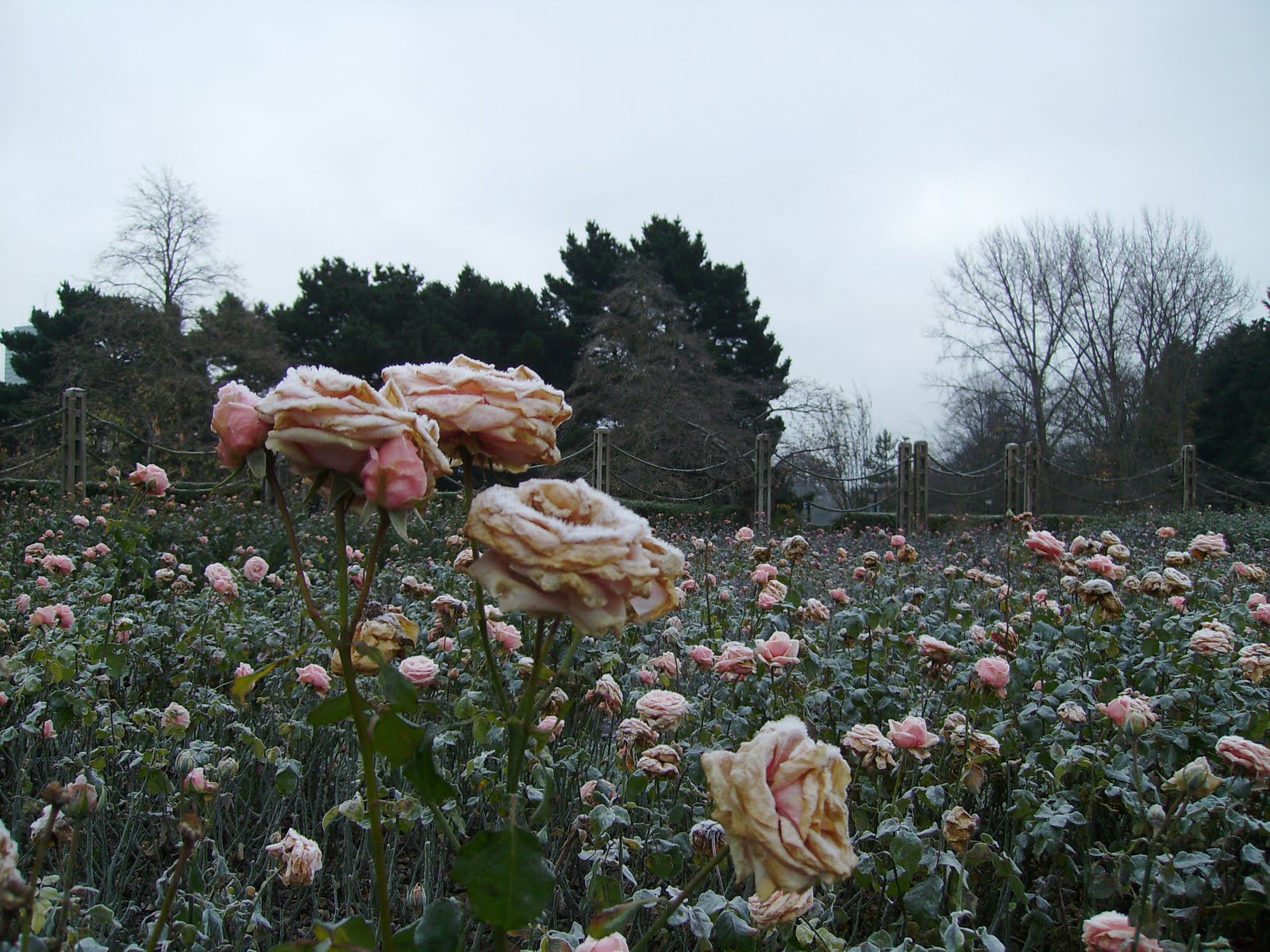
Inside, the scale becomes clear. Queen Mary’s Rose Garden — named for Queen Mary, wife of King George V — contains more than 12,000 roses growing in approximately 85 varieties. In June and July, when the blooms reach their peak, the scent hits you before you see the flowers.
The beds are arranged in formal, geometric patterns. Heritage roses share space with modern hybrids. Pale pink climbing varieties trail over iron frames. Deep red blooms stand in neat rows beside cream and butter yellows. Every variety is labelled. There is a central fountain, and benches scattered throughout — most of them occupied on a warm afternoon by people who sat down to rest for five minutes and stayed for an hour.
Entry is free, as it always has been.
Enjoying this? 3,000+ London lovers get stories like this every week. Subscribe free →
Open Air Theatre: Shakespeare Under London’s Sky
The Inner Circle holds something else entirely unexpected: the Open Air Theatre, one of London’s most unusual and well-loved venues.
It has been running here since 1932. Every summer — typically May through September — it stages Shakespeare productions, musicals, and family shows. The seating is tiered, the sight lines are good, and staff bring food and drinks to your seat during the interval. The audience tends to arrive with blankets and enthusiasm in equal measure.
If it rains lightly, performances continue. If there is thunder and lightning, the production stops and refunds are issued. On warm evenings in June, with the sky still pale above the stage and swifts cutting the air overhead, there is no theatre experience in London quite like it.
Tickets sell out weeks in advance for popular productions. Booking early is strongly advisable.
What Else to Find in the Park
The rest of Regent’s Park rewards those who move through it slowly.
The boating lake sits in the southern section, covering around seven acres. In warmer months, rowing boats and pedalos are available for hire. Early in the morning, before the families arrive with their packed lunches, the lake is almost entirely still and the light on the water is worth the early start.
London Zoo occupies the park’s northern corner. Founded in 1828, it is the world’s oldest scientific zoo — gorillas, giraffes, and Komodo dragons all living within a park that is otherwise entirely free to enter. A family can spend a full morning exploring the grounds, the towpath, and the rose garden without spending a pound, then treat London Zoo as a separate, ticketed experience in the afternoon.
Running along the northern boundary of the park is the Regent’s Canal. The canal walk connects Camden Lock to Little Venice, passing through a stretch of parkland where narrowboats drift slowly past and grey herons stand motionless at the water’s edge. It is one of the quietest routes through this part of the city.
On the northern edge, the park gives way to Primrose Hill — the neighbourhood that has somehow kept its village feel despite being ten minutes from central London. From the top of the hill, the views across the skyline are among the best anywhere in the city. Most visitors to Regent’s Park combine the two into a single afternoon.
Planning a Visit
Regent’s Park is straightforward to reach. The closest Tube stations are Baker Street (Jubilee, Metropolitan, Circle, Hammersmith & City, and Bakerloo lines) and Regent’s Park (Bakerloo line). Both are a five-minute walk from the park gates.
The park opens at 5am daily. In summer it closes at 9pm; in winter at dusk. Queen Mary’s Rose Garden keeps broadly the same hours.
June and July are the months for roses. September and October bring autumn colour to the avenues — golden and copper, the kind of light that makes even a park bench look worth photographing. For visitors planning a wider London trip, the 3-day London itinerary covers how to build Regent’s Park into a visit without rushing anything else.
What is Queen Mary’s Rose Garden and where is it?
Queen Mary’s Rose Garden is a free formal garden inside the Inner Circle of Regent’s Park in north-central London. Planted in 1932, it contains over 12,000 roses in approximately 85 varieties, and is named in honour of Queen Mary, wife of King George V. It is open year-round with no admission charge.
When is the best time to visit Regent’s Park?
June and July are the peak months for Queen Mary’s Rose Garden, when the blooms are at their fullest and most fragrant. Autumn — September through November — brings exceptional colour to the tree-lined avenues. The park is quietest before 9am, particularly during the week, when the rose garden is often almost empty.
Is Regent’s Park free to enter?
Yes — entry to Regent’s Park, including the Inner Circle and Queen Mary’s Rose Garden, is completely free. London Zoo, which sits inside the park’s northern boundary, charges an admission fee. The Open Air Theatre also requires advance tickets, available to book online at the theatre’s website.
London has parks that tourists visit because they appear on every map. And then it has this — a garden built for a prince who never arrived, given instead to whoever takes the time to find it. Twelve thousand roses. No queue. No charge. No good reason not to go.
🇬🇧 25 London Places Most Visitors Miss
From secret riverside walks to hidden Victorian tunnels, centuries-old pubs to rooftop gardens with skyline views — our free guide reveals the London most visitors never discover. Join 3,000+ London lovers who get it free.
Get Your Free 25-Places Guide →📲 Know someone who’d love this? Share on WhatsApp →
Love more? Join 65,000 Ireland lovers → · Join 43,000 Scotland lovers → · Join 29,000+ Italy lovers →
Free forever · Unsubscribe anytime
Subscribe Free