
On the evening of 8 May 1945, an estimated one million people flooded the streets around Trafalgar Square. They climbed lamp posts, waded into the fountains and hugged strangers. Nobody had organised it. The square simply became what it always does: the place Londoners go when they need to be together.
Built for a Hero Nobody Survived to Celebrate
The Battle of Trafalgar was won on 21 October 1805. Admiral Horatio Nelson was killed during the fighting, never knowing the outcome. The victory secured British naval supremacy for a generation — but the man at the centre of it never came home.
The square built in his honour took decades to actually appear. The site had been the Royal Mews — the monarch’s stables — for centuries. Clearing it, designing it and building it became a long, complicated argument between architects, politicians and an impatient public.
Nelson’s Column wasn’t completed until 1843 — 38 years after the battle it commemorates. The statue at the top stands 17 feet tall and is carved from sandstone. It sits 185 feet in the air. Most visitors never look up long enough to realise how enormous it actually is.
The Four Lions That Took 24 Years to Arrive
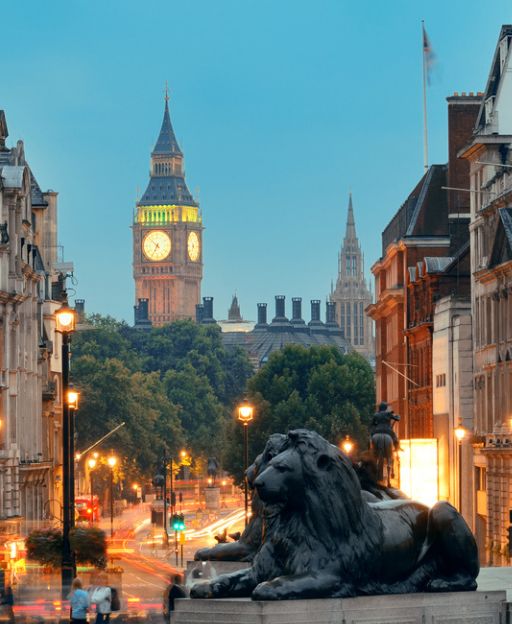
Nelson’s Column stood without its famous guardian lions for more than two decades after its completion. The commission went to Sir Edwin Landseer, the most celebrated animal painter in Victorian England. There was one problem: he had never sculpted anything before.
Landseer kept delaying. He requested dead lions from London Zoo so he could study the anatomy properly. He reworked designs repeatedly. By the time the lions were finally unveiled in 1867, the public impatience had tipped into mockery.
Critics said the lions looked asleep rather than vigilant. Punch magazine suggested they might wake up one day if startled. They’ve been part of London’s identity ever since — and the jokes haven’t quite stopped.
Each lion is cast from a slightly different angle. If you walk the perimeter of the plinth slowly, you’ll notice they don’t all look quite the same. This was apparently deliberate, though Landseer was never fully convincing about why.
A Space That Never Did What London Planned
Trafalgar Square was imagined as a grand formal civic space — somewhere to display British power and commemorate great victories. Londoners had other ideas almost immediately.
The Chartists gathered here in 1848, demanding voting rights. Suffragettes held rallies beside the fountains. After the Second World War, the square became the default gathering point for protests of every kind — anti-apartheid vigils outside South Africa House, CND marches, candlelight ceremonies for AIDS victims, and in 2003 the starting point for a march that drew 750,000 people through central London.
Trafalgar Square turned out to be impossible to own. Not even by the people who commissioned it. Every generation has claimed it for something the designers never anticipated, and the square has absorbed all of it without apology.
Enjoying this? 3,000+ London lovers get stories like this every week. Subscribe free →
The Pigeons — and the War That Removed Them
For most of the twentieth century, Trafalgar Square meant pigeons. Vendors sold birdseed from metal pails along the south side. Tourists photographed themselves covered in birds. Postcards celebrated the tradition. By the 1990s, estimates put the resident pigeon population at around 35,000.
In 2003, Mayor Ken Livingstone banned the sale of birdseed in the square. The outcry was immediate. Wildlife photographers, tourists and long-time Londoners argued that the pigeons were part of what Trafalgar Square was — part of its character, its mess, its democracy.
The pigeons lost. A team of Harris Hawks now flies regular patrols above the square to deter them. The birds are largely gone. Whether this counts as an improvement is still a matter of lively disagreement in certain London pubs.
The Fourth Plinth — the Empty Space That Became London’s Best Art Gallery
Three of the four plinths at the corners of the square carry permanent statues: King George IV on the north-east corner, and generals Sir Charles Napier and Sir Henry Havelock on the south side. The fourth plinth — at the north-west corner — was left empty in 1844. It was intended for an equestrian statue of King William IV that was never funded.
For 150 years it stood blank. Some proposals were made. None came to anything. Then in 1999, the Fourth Plinth began hosting rotating contemporary art commissions, each chosen by the Mayor of London. Installations stay for roughly 18 months before a new one arrives.
Past works have included a giant blue rooster, a recreation of a temple in Mosul destroyed by ISIS, a golden sculpture of a pregnant disabled woman, and a thumbs-up gesture in bronze honouring disabled veterans. Each piece provokes argument. Each eventually provokes affection. The pattern holds.
The empty plinth turned out to be more interesting than any permanent statue could ever have been. What began as a funding failure became one of the most creative spaces in British public life.
What to Do When You Visit
The square is always free and open. But the time of day matters enormously.
Early morning — before 9am — the space is nearly empty. The fountains are running, the light is clean, and the whole square feels different to how it does at noon. This is when you understand why someone decided London needed a place like this.
The National Gallery
Free to enter and looking directly down onto the square from the north, the National Gallery holds one of the world’s great art collections — Caravaggio, Vermeer, Turner, Van Gogh. An hour here rewards considerably more than the same time spent in most paid attractions.
St Martin-in-the-Fields
The church on the north-east corner runs free lunchtime concerts regularly — check their programme before you go. The Café in the Crypt below serves decent food in a genuinely unusual setting: candlelit tables beneath centuries-old stone vaulting.
If you want to plan your wider London trip around a visit here, the perfect 3-day London itinerary covers the key areas and timings. And if you’ve spotted the recently installed King Charles III statue in the square, there’s a full story behind its arrival worth reading.
Frequently Asked Questions
Is Trafalgar Square free to visit?
Yes, Trafalgar Square is completely free and open at all hours. The adjacent National Gallery is also free to enter, as are the grounds of St Martin-in-the-Fields church beside it.
What are the lions at Trafalgar Square made from?
The four lions were cast in bronze, using metal from French cannons captured during the Napoleonic Wars. They were designed by Sir Edwin Landseer and unveiled in 1867 — 24 years after Nelson’s Column was completed.
What is the best time to visit Trafalgar Square?
Early morning before 9am is the best time — the square is quiet, the light is good and the fountains are running. Weekday mornings are calmer than weekends. Avoid lunchtime, when the area around the National Gallery becomes very busy.
What is on the Fourth Plinth at Trafalgar Square?
The Fourth Plinth hosts rotating contemporary art commissions from the Mayor of London. Installations change roughly every 18 months. Check the Mayor of London’s Culture website for whatever is currently on display.
The square has been a backdrop to victory, grief, outrage and pure joy. The pigeons are largely gone, but the lions remain. Nelson still stands 185 feet above it all, watching a city that has never quite stopped arguing about what Trafalgar Square is for — and who it belongs to. The answer, as it turns out, is everyone.
🇬🇧 25 Hidden Gems of London Most Tourists Never Find
From secret riverside walks to hidden Victorian tunnels, centuries-old pubs to rooftop gardens with skyline views — our free guide reveals the London most visitors never discover. Join 3,000+ London lovers who get it free.
Get Your Free London Hidden Gems Guide →📲 Know someone who’d love this? Share on WhatsApp →
Love more? Join 65,000 Ireland lovers → · Join 43,000 Scotland lovers → · Join 29,000+ Italy lovers →
Free forever · Unsubscribe anytime