
In the heart of the City of London, tucked between glass office towers and the hum of financial trading floors, there is a place that stops people in their tracks. Stone arches draped in ivy. Gothic windows open to the sky. A wooden bench sitting in silence beneath walls that no longer have a roof. This is St Dunstan-in-the-East — a church that was bombed into ruin during the Second World War, and then left that way on purpose.
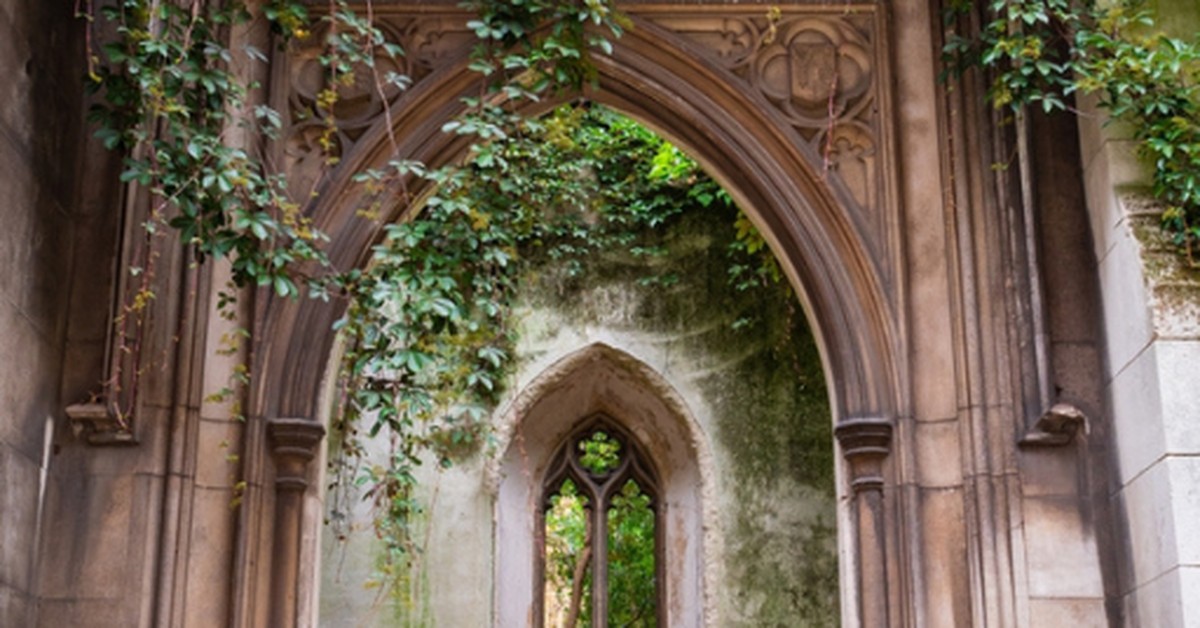
Today it is a public garden. Free to enter. Open most days of the year. And almost completely unknown to the tourists who walk past it on their way to Monument or the Tower of London. If you have never heard of it, you are not alone. That is exactly what makes it worth finding.
A Church That Survived the Fire — But Not the Bombs
The story of St Dunstan-in-the-East begins long before the Second World War. A church has stood on this site since at least the 12th century, making it one of the oldest places of worship in the City of London. For hundreds of years it served the merchants, sailors, and tradespeople who lived and worked in the heart of medieval London.
Then came the Great Fire of London in 1666. The fire swept through the city for four days, destroying more than 13,000 houses and 87 parish churches. St Dunstan-in-the-East was badly damaged, but not entirely destroyed. The tower and walls survived. Sir Christopher Wren — the architect responsible for rebuilding much of London after the fire, including St Paul’s Cathedral — added a new Gothic steeple to the existing structure in the 1690s. It was an unusual choice for Wren, who typically favoured classical architecture, but the result was striking. The steeple became one of his most admired works.
The church was repaired and expanded over the following centuries. By the time the 20th century arrived, St Dunstan-in-the-East was a working parish church in a city that had changed almost beyond recognition. The streets around it were no longer medieval lanes but Victorian thoroughfares. The congregation had shifted. But the church carried on.
The Night the Bombs Came
In the autumn of 1940, the German Luftwaffe began bombing London. What followed became known as the Blitz — eight months of near-nightly air raids that killed more than 30,000 Londoners and left vast areas of the city in ruins. The docks along the Thames were a primary target. So was the City of London itself.
St Dunstan-in-the-East was hit during the raids of 1940 and 1941. The nave — the main body of the church where the congregation sat — was gutted by fire and bombing. The interior was destroyed. The roof collapsed. What remained were the outer walls, the tower, and Wren’s 17th-century steeple, all still standing but enclosing nothing but open sky and rubble.
After the war, the City of London faced an enormous rebuilding task. Dozens of bombed churches had to be assessed: which ones could be restored, which ones should be demolished, and which ones might serve a different purpose. St Dunstan-in-the-East fell into a rare third category. The structure was not suitable for full restoration as a working church. But it was too beautiful and too historically significant to tear down. In 1967, the City of London Corporation made a decision that seems, in hindsight, quietly inspired. They would leave the ruins standing and turn the space inside into a public garden.
🏙️ Enjoying this? 3,000 London lovers get stories like this every week. Subscribe free →
What the Garden Looks Like Today
The garden opened in 1971 and has been quietly enchanting visitors ever since. Walking in through the entrance on St Dunstan’s Hill, the first thing you notice is the silence. The City of London is one of the noisiest places on earth during the working week, with thousands of people and vehicles moving through a dense street grid. But inside the walls of St Dunstan-in-the-East, that noise becomes a distant backdrop. The stone absorbs it. The ivy softens it.
The Gothic arches of the nave walls are still there, open to the air, with climbing plants working their way up the stonework. Fig trees grow from soil that was once a floor. A fountain sits in the centre of what was once the nave, surrounded by benches. In spring and summer, the garden is lush and green. In autumn, the ivy turns golden. Even on a grey winter morning, there is something atmospheric about standing in the shell of a building that has survived fire, bombing, and three and a half centuries of London history.
Wren’s steeple still stands above the tower at the western end. It is one of only two surviving Wren steeples added to pre-existing medieval towers — a detail that matters to architectural historians, though visitors tend to be more struck by the way it looks against a blue sky than by its technical classification. The steeple is solid and elegant, a reminder of what the church once was.
Why So Few People Know It Is There
St Dunstan-in-the-East does not appear on most tourist maps of London. It is not managed by a major heritage organisation. There is no entrance fee, no gift shop, no audio guide. A small sign outside identifies it, and that is about it. The result is a place that feels genuinely discovered rather than presented.
On a weekday lunchtime, City workers come here to eat their sandwiches in peace. On weekends, it tends to be quieter still — the surrounding streets empty of their usual crowds. Photographers find it regularly, drawn by the way light falls through the open arches onto the stone and greenery below. But for most visitors to London, it remains off the itinerary.
This is partly geography. St Dunstan-in-the-East sits on St Dunstan’s Hill, a short street off Lower Thames Street. It is not far from the Monument to the Great Fire, or from London Bridge station, or from the Tower of London. But it is slightly set back from the main routes, and unless you are looking for it, you walk straight past. Many people who work nearby have never stepped inside.
The History That Surrounds It
The area around St Dunstan-in-the-East has its own layers of London history worth exploring. The church takes its name from St Dunstan of Canterbury, a 10th-century archbishop who was also a skilled metalworker and musician — a combination that made him the patron saint of blacksmiths. Medieval London was full of churches dedicated to saints whose stories are largely forgotten today, and St Dunstan is one of them.
Lower Thames Street, the road running below the church, follows the line of the old Roman waterfront. Two thousand years ago, this was the edge of the Thames. The city has grown outward since then, with land reclaimed from the river over the centuries, but the street itself is one of the oldest routes in London. Walking along it, you are following a path that Roman traders, medieval merchants, and Victorian dock workers all used before you.
The Monument to the Great Fire of 1666 stands a few minutes’ walk away on Monument Street. Built to Wren’s design, it marks the spot where the fire began in a bakery on Pudding Lane. The height of the monument — 202 feet — equals the distance from its base to the bakery where it all started. Standing beside it and then walking to St Dunstan-in-the-East gives you a clear sense of the scale of the destruction the fire caused, and how much of this part of London was shaped by what came after.
How to Find It and What to Know Before You Go
St Dunstan-in-the-East is free to visit and generally open during daylight hours, though it is managed by the City of London Corporation and opening times can vary. The nearest underground stations are Monument (Central/District lines) and Tower Hill (District/Circle lines), both a short walk away.
The garden is small — you can walk through it in five minutes — but most visitors stay longer than they plan to. There is something about the combination of history, quiet, and unexpected beauty that makes it hard to leave quickly. Take a seat on one of the benches. Look up at the open sky through the arch above you. Think about what this place has seen.
If you are visiting with children, the ruins have a quality that tends to spark imagination in a way that polished museums sometimes do not. This is a real building, with real damage from a real war. The ivy growing up the walls has been there for decades. The fountain was placed where people once knelt to pray. These details are not presented as a performance — they are simply what is there.
A Lesson in How London Heals
There is a particular kind of London place that tells you something true about the city — not the London of tourist brochures, but the real one, the one that has been destroyed and rebuilt so many times that its residents have developed a distinctive relationship with loss. St Dunstan-in-the-East is one of those places.
The decision to preserve the ruins rather than demolish or restore them was not sentimental. It was practical and, as it turned out, visionary. The City of London needed green space in a dense urban environment. The ruins provided beautiful, ready-made walls at no construction cost. The result serves both purposes: a working garden that is also an act of historical memory.
The Blitz destroyed vast amounts of what London had built over centuries. But it also, in strange ways, created things. Bomb sites became community allotments during the war. Ruins became gardens after it. The city found ways to use what remained. St Dunstan-in-the-East is perhaps the most beautiful example of that process — a place where destruction and growth share the same walls.
If you visit London and you have an hour to spare, add this to your list. Take the ten-minute walk from Monument station, turn onto St Dunstan’s Hill, and step through the gate into one of the city’s genuine secrets. You will not see it in any glossy travel guide. That is rather the point.
Frequently Asked Questions
Is St Dunstan-in-the-East free to visit?
Yes, the garden is free to enter. It is managed by the City of London Corporation as a public open space. There is no ticket, no booking required, and no gift shop. Simply walk in through the gate on St Dunstan’s Hill.
When is St Dunstan-in-the-East open?
The garden is generally open during daylight hours throughout the year, though hours can vary by season and for maintenance. It is typically accessible on weekdays and weekends. The nearest underground stations are Monument and Tower Hill, both within a 10-minute walk.
Why was the church not rebuilt after the Blitz?
After the Second World War, the City of London assessed all the bombed churches and made individual decisions about each one. St Dunstan-in-the-East was deemed unsuitable for full restoration as a working parish church, but too architecturally significant to demolish. In 1967, the decision was made to preserve the ruins and open them as a public garden, which happened in 1971. The Wren steeple and outer walls were retained as they stood.
🇬🇧 25 Hidden Gems of London Most Tourists Never Find
From secret riverside walks to hidden Victorian tunnels, centuries-old pubs to rooftop gardens with skyline views — our free guide reveals the London most visitors never discover. Join 3,000+ London lovers who get it free.
Get Your Free London Hidden Gems Guide →Already subscribed? Download your free London guide (PDF)
Love more? Join 65,000 Ireland lovers → · Join 43,000 Scotland lovers → · Join 30,000 Italy lovers →
Free forever · Unsubscribe anytime