
Notting Hill London is one of the city’s most distinctive neighbourhoods. US visitors come here for the iconic colourful houses, the world-famous Portobello Road Market, and a connection to the beloved 1999 romantic film. But Notting Hill offers far more than photo opportunities. This guide covers everything you need to plan a brilliant visit — from the best time to arrive at the market to where to eat, shop, and explore.
What Makes Notting Hill Worth Visiting
Notting Hill sits in west London, in the Royal Borough of Kensington and Chelsea. It has a village feel with genuine city energy. Independent bookshops, antique dealers, coffee shops, and restaurants pack into a small, entirely walkable area. Most visitors spend between two and four hours here.
The main attractions are Portobello Road Market, the famous painted houses, and the independent boutiques along Ledbury Road and Westbourne Grove. If you have more time, the area rewards slow exploration. It is one of the few parts of London that feels genuinely lived-in while still being a destination in its own right.
How to Get to Notting Hill
Notting Hill Gate Tube station is the closest stop. It sits on the Central, District, and Circle lines. The journey from central London takes around 10 minutes.
From Paddington station, you can walk to Notting Hill in about 20 minutes. From Hyde Park Corner, it is a pleasant 25-minute walk through Kensington Gardens. Our getting around London guide covers the full Tube system, bus options, and practical tips for US visitors.
Portobello Road Market: What You Need to Know
Portobello Road Market runs along Portobello Road from Notting Hill Gate southwards. It is one of the most famous markets in the world, and it genuinely deserves the reputation. The market has distinct sections, each with a different character.
The antiques section sits at the southern end, near Chepstow Villas. Dealers sell silverware, jewellery, vintage prints, ceramics, clocks, and maps. Prices are real. This is where serious collectors shop, not just tourists. You can find genuine antiques here if you know what you are looking for.
Further north, the market shifts to fruit and vegetables, street food, vintage clothing, and second-hand records. The street food is good and affordable. Jerk chicken, crepes, and fresh juices are all regulars.
What You Can Buy
Antiques dealers set up from around 5:00am on Saturdays. The best pieces sell early. Regular visitors arrive before 9:00am. Arriving at lunchtime means the prime stock is gone.
Vintage clothing stalls offer excellent value. British and European pieces from the 1960s, 70s, and 80s are common. Prices are generally lower than similar markets in central London.
For homeware, prints, and maps, walk the southern section slowly. Many dealers wrap pieces carefully for travelling — just ask before you buy. Most accept cash, and some prefer it.
Best Day and Time to Visit Portobello Road
Saturday is the main market day. The antiques section only operates on Saturdays. Friday is good for fresh produce and some street food stalls. From Monday to Thursday, the market is much quieter, with fewer stalls open.
For the best experience, arrive by 9:30am on a Saturday. Crowds build significantly from 11:00am onwards. By early afternoon in summer, Portobello Road can feel uncomfortably packed. Arriving early means better stock, more space, and a more enjoyable experience overall.
🇬🇧 25 Hidden Gems of London Most Tourists Never Find
From secret riverside walks to hidden Victorian tunnels, centuries-old pubs to rooftop gardens with skyline views — our free guide reveals the London most visitors never discover. Join 3,000+ London lovers who get it free.
Get Your Free London Hidden Gems Guide →The Iconic Painted Houses of Notting Hill
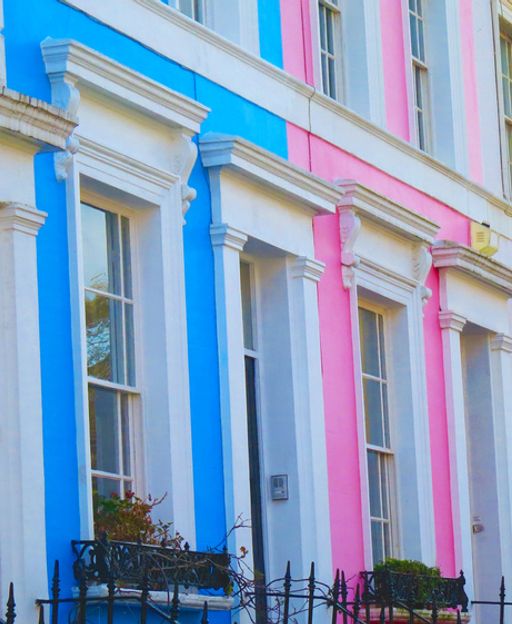
The most photographed spots in Notting Hill are not on Portobello Road. They are the rows of brightly painted Victorian terraced houses on streets such as Lancaster Road, Westbourne Park Road, and the smaller streets running off them.
The houses are painted in blues, pinks, yellows, and greens. The contrast between the bright paint and the white stucco columns creates the look that has appeared in hundreds of films and magazines. The houses are residential. Please be respectful if you stop to take photographs.
You do not need a guide to find them. Walk north from Notting Hill Gate station along Pembridge Road, then turn left onto any of the side streets. The most photogenic rows tend to be on Colville Terrace, Westbourne Park Road, and Lancaster Road.
The Notting Hill Film Connection
Most US visitors know Notting Hill from the 1999 film starring Julia Roberts and Hugh Grant. The travel bookshop from the film is based on a real shop — now called The Notting Hill Bookshop — at 13 Blenheim Crescent. It has changed slightly from its on-screen appearance, but it is still worth a visit.
The shop sells travel writing, fiction, and children’s books. It welcomes the steady stream of visitors who arrive because of the film. The staff have heard every film reference imaginable, and they are good-humoured about it.
The blue door from the film was at 280 Westbourne Park Road, not at the bookshop. The owners have changed the colour since the film was made, but the address still draws visitors.
Where to Eat and Drink in Notting Hill
Westbourne Grove and Ledbury Road have some of London’s best independent restaurants and cafés. The area is wealthy, which keeps standards high and prices elevated. Plan accordingly.
Ottolenghi (63 Ledbury Road) is one of London’s most celebrated delis. The food is outstanding. Expect a queue at lunchtime. It is worth the wait. The salads, pastries, and cakes are all exceptional.
Hereford Road (3 Hereford Road) is a relaxed British restaurant using seasonal ingredients. It is excellent for a long lunch. Prices are reasonable for the quality.
The Ledbury (127 Ledbury Road) is one of London’s most highly rated restaurants. A meal here requires advance booking and a significant budget. If you want a truly special dinner, this is one of the city’s finest options.
For coffee, walk along Westbourne Grove or Portobello Road itself. Independent cafés are plentiful. The independent options are consistently better than the chains.
Shopping in Notting Hill
Notting Hill rewards independent shopping. The main streets are Westbourne Grove, Ledbury Road, and Portobello Road itself.
Books: The Notting Hill Bookshop on Blenheim Crescent is the obvious choice. Lutyens and Rubinstein on Kensington Park Road is smaller and excellent for fiction.
Vintage clothing: The Saturday market is the best option for vintage pieces. Several permanent vintage shops also line Portobello Road throughout the week.
Antiques and prints: Beyond the Saturday market, permanent antique dealers operate along Portobello Road. Several specialise in maps, prints, and vintage photography.
Homeware and design: Westbourne Grove has a cluster of interiors and design shops. Prices are high but the quality is excellent.
Bring some cash. Many market stalls prefer it, and some smaller shops accept only cash.
Notting Hill Carnival
The Notting Hill Carnival takes place every August Bank Holiday weekend — usually the last weekend in August. It is the largest street festival in Europe, drawing around two million visitors over two days.
The carnival celebrates Caribbean culture, particularly Trinidadian traditions. Sound systems play along multiple routes. Enormous floats move through the streets. The food stalls are excellent — jerk chicken, patties, fried plantain, and rum punch dominate.
If you are in London during this weekend, the carnival is an unmissable experience. Arrive early in the morning. Wear comfortable shoes. Keep your phone and valuables in a front pocket or secure bag.
Notting Hill with Children
Notting Hill works well for families. The market has enough colour and variety to hold children’s attention. The street food is easy to navigate with children. The painted houses are photogenic even for younger visitors.
Holland Park is five minutes south on foot. It has a café, a Japanese garden, woodland walks, and a good playground. For more open green space, Kensington Gardens and Hyde Park are around 20 minutes away on foot. Our London with kids guide covers the best family options across the city.
How Much Does Notting Hill Cost?
The neighbourhood itself costs nothing to explore. Walking the market is free. You can spend two enjoyable hours here without buying anything.
Food stalls on Portobello Road typically charge £5–10 per dish. A coffee at an independent café costs £3–5. Sit-down lunch at a mid-range restaurant runs around £18–28 per person.
Antiques and vintage clothing vary enormously. Budget pieces start at around £5. Genuine antiques can cost hundreds of pounds.
For a full picture of what to expect to spend across your whole trip, read our London travel budget guide.
Where to Stay Near Notting Hill
Notting Hill has several good hotels, though prices are higher than other parts of London. The Portobello Hotel is charming and well located. The Pembridge Court Hotel is smaller and better value for the area.
If you want to stay in west London without paying Notting Hill prices, look at Bayswater or Paddington. Both are one or two stops on the Tube from Notting Hill Gate station. For a full overview of where to stay, our London neighbourhoods guide covers all the main areas with honest advice on location and price.
Practical Tips for US Visitors
When to go: Notting Hill is worth visiting at any time of year. The market is at its best on Saturday mornings. If you want the carnival, plan your trip around the August Bank Holiday weekend.
How long to spend: Two to three hours covers the main sights. A half-day is comfortable if you want to shop, eat, and explore properly.
What to wear: Comfortable, flat shoes. The streets near the market are uneven. In summer, bring a light layer — British weather is unpredictable at any time of year.
Best time to arrive: On Saturdays, aim to arrive before 10:00am. This gives you the best market experience before the crowds build.
Payment: Most shops and restaurants accept cards. Market stalls often prefer cash. A small amount of sterling is useful.
Frequently Asked Questions About Notting Hill London
What is the best day to visit Portobello Road Market in Notting Hill London?
Saturday is the best day. The antiques section — the most famous part of the market — only operates on Saturdays. Arrive before 10:00am for the best selection. For a quieter visit with fewer crowds, Friday mornings are good for fresh produce and street food, though the antiques stalls are not present.
How do I get to Notting Hill from central London?
Take the Tube to Notting Hill Gate station, which is on the Central, District, and Circle lines. The journey from central London takes around 10 minutes. From Paddington, it is a pleasant 20-minute walk. Buses also serve the area from many parts of central and west London.
Is Notting Hill worth visiting for first-time visitors to London?
Yes, especially on a Saturday morning. The combination of the market, the iconic painted houses, and the excellent independent shops makes it one of the most distinctive areas in the city. Plan for a half-day visit and combine it with a walk through Kensington Gardens or Hyde Park, which are nearby.
When is the Notting Hill Carnival?
The Notting Hill Carnival takes place every August Bank Holiday weekend, usually the last weekend in August. It runs across Saturday, Sunday, and Monday. It is the largest street festival in Europe and draws around two million visitors. Book accommodation well in advance if you plan to visit during carnival weekend.
Join 3,000+ London Lovers
Every week, get London’s hidden gems, local secrets, and travel inspiration — the kind you won’t find in any guidebook.
Subscribe free — enter your email:
Love more? Join 64,000 Ireland lovers → · Join 43,000 Scotland lovers → · Join 30,000 Italy lovers →
Free forever · One email per week · Unsubscribe anytime
Ready to Plan Your London Trip?
Subscribe to Love London and get weekly inspiration, insider tips and hidden gems — free every week.
Join Free →