
Kew Gardens London is one of the world’s great botanical gardens. It spreads across more than 300 acres in southwest London, packed with glasshouses, ancient trees, rare plants, and spectacular seasonal displays. For US visitors planning a trip, Kew Gardens makes a perfect half-day or full-day escape from the city centre. You’ll find yourself walking through tropical rainforests, Victorian glasshouses, and Japanese landscapes — all within easy reach of central London.
This guide covers everything you need to plan your visit: how to get there, what to expect from tickets and opening times, what to see in each season, and how to make the most of your time inside.
What Is Kew Gardens?
The Royal Botanic Gardens, Kew — universally known as Kew Gardens — is a UNESCO World Heritage Site. It has been one of the world’s leading centres for botanical science since it was formally established in 1759. Today it holds one of the most diverse collections of living plants on the planet.
For visitors, Kew Gardens is far more than a science museum. It is a living landscape to walk through, with glasshouses the size of cathedrals, treetop walkways, wildflower meadows, and kitchen gardens. Every season brings something entirely different.
Why Is Kew Gardens a UNESCO World Heritage Site?
UNESCO granted Kew World Heritage status in 2003. The designation recognised Kew’s role in botanical science. It also recognised the garden’s unique landscape design. Kew holds seed banks and plant collections. Active research programmes work to protect thousands of plant species from extinction. The garden is, in that sense, doing important work while also being beautiful to visit.
Getting to Kew Gardens from Central London
Kew Gardens is straightforward to reach on public transport. The complete guide to getting around London explains your transport options in detail. For Kew specifically, the best routes are:
- By tube: The District line stops at Kew Gardens station. From central London (Westminster or Embankment), the journey takes around 30–40 minutes. The station exit is a short walk from the main Victoria Gate entrance.
- By Overground: Kew Bridge station on the London Overground is also close to the garden. It’s served by trains from Waterloo and London Bridge.
- By river: Between April and October, Thames Clipper river boats run from Westminster Pier to Kew Pier. The journey takes around 90 minutes but is a scenic way to arrive, especially in summer. Check timetables before you travel — services are not year-round.
Driving is not recommended. Parking near the garden is limited, and central London’s ULEZ (Ultra Low Emission Zone) and Congestion Charge apply to some routes. Tube or river boat are both far easier.
Tickets and Opening Times
Kew Gardens charges admission. Adult tickets typically cost around £20–25, with reduced prices for children aged 4 to 16 and free entry for under-4s. Prices vary slightly by season, so always check the Kew Gardens website for current rates before visiting.
Annual membership is available and offers good value if you plan to visit more than once, or if you are staying in London for several weeks. Members also receive free entry to Wakehurst, Kew’s sister site in Sussex.
The garden opens daily, including weekends. Opening times vary by season — Kew stays open later on summer evenings and closes earlier in winter. The main entrance is at Victoria Gate on Kew Road. There is also a Lion Gate entrance on Liongate Lane and a Brentford Gate entrance.
Booking tickets in advance online is strongly recommended. Walk-up tickets are usually available, but during peak seasons — particularly summer and the Christmas light trail — the garden can sell out.
What to See at Kew Gardens
The Palm House
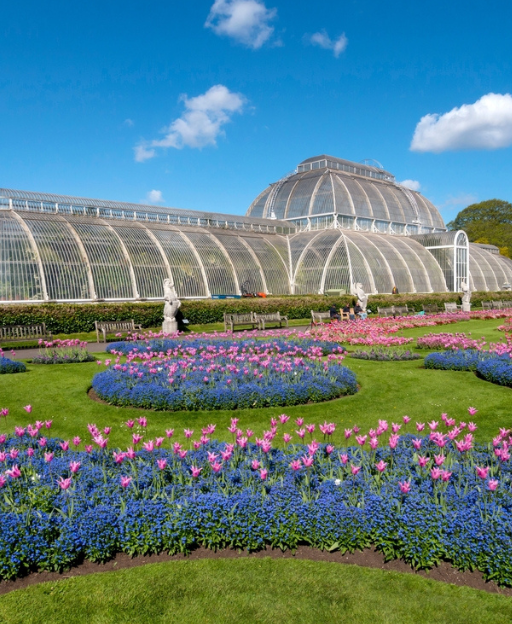
The Palm House is the most iconic building at Kew. This vast glasshouse was built between 1844 and 1848. It stands today as one of the finest examples of Victorian ironwork in the world. Inside, it houses tropical plants from rainforest regions across the globe.
Walking through the Palm House is a full sensory experience. The air is warm and humid. Giant palms rise towards the glass roof. Tree ferns, banana plants, and cocoa trees grow at every level. A spiral staircase leads to a walkway around the upper gallery. From there you look down into the tropical canopy.
The Temperate House
The Temperate House is the largest surviving Victorian glasshouse in the world. Restorers completed a five-year project, and it reopened in 2018. The building covers nearly 5,000 square metres. Inside, plants grow from the Americas, Africa, Asia, Australia, and the Pacific.
One resident is the Eastern Cape cycad. This is thought to be the world’s oldest pot plant in cultivation. It came to Kew in 1775 and has lived here ever since.
The Treetop Walkway
The Treetop Walkway rises 18 metres above the ground. It winds through the canopy of a woodland section of the garden. Views across Kew from the top are excellent. The walkway is accessible to most visitors, including those with pushchairs. Children love it.
Kew Palace
Kew Palace is a small red-brick royal palace inside the garden grounds. King George III and Queen Charlotte loved it in the late 18th century. The rooms reflect how the royal family lived in the early 1800s. Entry to the palace is included in the main Kew Gardens ticket during the months it is open.
The Japanese Landscape Garden
The Japanese Landscape Garden is one of Kew’s quieter corners. It has a Japanese gateway, a stone lantern, and neat plantings. Cherry blossom usually peaks from late March to mid-April. It turns this part of the garden into something special.
Exploring London? Get weekly travel stories free.
Join 3,000+ London lovers and get hidden gems, local secrets, and travel inspiration delivered every week.
Kew Gardens by Season
Kew changes dramatically with the seasons. Each time of year offers something distinct. If you have the flexibility to choose when to visit, this section will help you decide.
Spring at Kew Gardens (March–May)
Spring is the most popular season at Kew. Bluebells carpet the woodland areas from mid-April. Cherry blossoms peak in late March and early April around the Japanese garden and throughout the grounds. Magnolias and daffodils flower across the main landscape from March. The flower beds in front of the Palm House are particularly colourful during this period.
If you are visiting London in spring, Kew Gardens should be near the top of your list. Spring weekends can be very busy — arrive when the gates open to get the best of it.
Summer at Kew Gardens (June–August)
Summer brings lush green landscapes and long opening hours. The outdoor spaces are at their most inviting. The kitchen gardens and rose gardens reach their peak in June and July. The Hive is a large outdoor sculpture of a honeycomb. It responds to actual bee activity inside Kew’s beehives, and summer is when it’s most alive.
Summer is also the busiest season. School holidays in July and August mean larger crowds. Booking your ticket in advance and arriving early both help.
Autumn at Kew Gardens (September–November)
Autumn colour at Kew can be outstanding. The woodland areas around the Treetop Walkway turn gold and red from October. Crowds are noticeably smaller than in summer, and the garden is more peaceful. Fungi begin to appear in the woodland sections in October — Kew runs fungus-spotting events during this time.
Winter at Kew Gardens (December–February)
In winter, the glasshouses become the star of the show. On cold days, the warmth of the Palm House feels very welcome. Kew’s annual Orchid Festival runs in February and early March. It fills the Princess of Wales Conservatory with tropical orchids.
Christmas at Kew is a separate evening illuminations event that runs from mid-November to early January. It requires a separate ticket from the daytime garden admission and sells out far in advance. If you want to attend, book as early as possible.
Practical Tips for US Visitors to Kew Gardens
How long to spend: Allow a full day if you want to see everything. Three to four hours is the minimum to cover the main glasshouses and one or two outdoor areas. If you only have half a day, focus on the Palm House, the Temperate House, and a walk through the Japanese garden.
What to wear: Comfortable walking shoes are essential. The garden paths are good, but you will cover a lot of ground. A light waterproof layer is sensible in any season — London weather can change quickly.
Food and drink: Several cafes and restaurants operate inside Kew Gardens, ranging from light snacks to a full restaurant meal. Prices are reasonable for London. You can also bring your own food — picnics are welcome in most outdoor areas.
Budget planning: Kew Gardens is a notable expense in a London visit. Factor the ticket cost into your overall London travel budget. Many of London’s central museums and galleries are free, so balancing a paid attraction like Kew with free alternatives elsewhere in the city is sensible planning.
Combining with a day trip: Kew Gardens fits naturally into a day trip from central London. After visiting Kew, you can take the river boat back toward Richmond or Westminster, or combine the visit with a walk along the Thames towpath.
Children: Kew Gardens is excellent for families. The Treetop Walkway, the Climbers and Creepers play area, and the splash pad (in summer) all give younger visitors active things to do. Entry for children under 4 is free.
Frequently Asked Questions About Kew Gardens London
Is Kew Gardens worth visiting from central London?
Yes, absolutely. Kew Gardens is one of London’s top attractions for good reason. The glasshouses alone are worth the journey — the Palm House and Temperate House are genuine architectural wonders. Add the seasonal displays, the palace, and the sheer scale of the garden, and Kew makes for an outstanding half or full day out. The 30–40 minute District line journey from central London is straightforward and direct.
How long does it take to see Kew Gardens?
Most visitors spend three to five hours at Kew Gardens. If you want to see everything — all the major glasshouses, the Treetop Walkway, the Japanese garden, Kew Palace, the Lake, and the woodland walks — allow a full day. If you have limited time, the Palm House and Temperate House take around 90 minutes to visit properly and are the absolute highlights.
What is the best time to visit Kew Gardens?
Spring (March to May) is widely considered the best time to visit Kew Gardens. Cherry blossom, bluebells, daffodils, and magnolias all flower during this period. However, spring weekends are very busy. If you visit on a weekday in spring, you’ll find the garden quieter and just as beautiful. Summer is the most popular season overall, but autumn offers outstanding colour with far fewer crowds.
Is Kew Gardens free to visit?
Kew Gardens charges an entry fee. It is not one of London’s free attractions. Check the Kew Gardens website for the current adult ticket price — it varies slightly by season. Children aged 3 and under enter free. Annual memberships are available and worth considering if you plan multiple visits or an extended London stay. London’s free museums guide covers the many major attractions in London that cost nothing to enter.
Join 3,000+ London Lovers
Every week, get London’s hidden gems, local secrets, and travel inspiration — the kind you won’t find in any guidebook.
Subscribe free — enter your email:
Love more? Join 64,000 Ireland lovers → · Join 43,000 Scotland lovers → · Join 30,000 Italy lovers →
Free forever · One email per week · Unsubscribe anytime
