
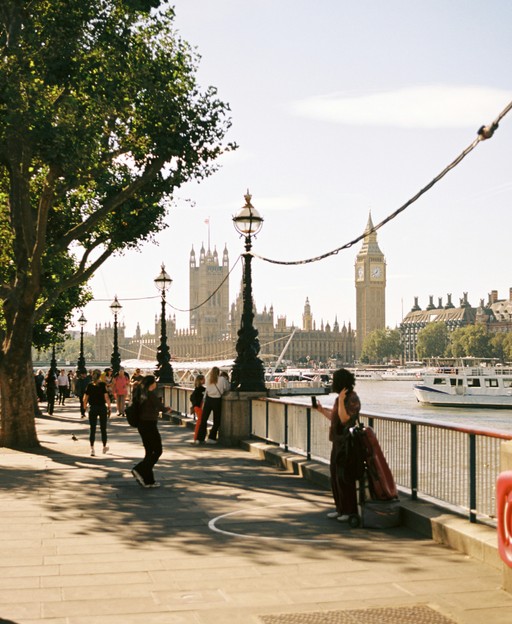
South Bank London is one of the city’s most rewarding stretches of riverside for visitors from the United States. It runs along the south side of the Thames between Waterloo Bridge and London Bridge. In under a mile, you find world-class art galleries, Shakespeare’s famous theatre, one of London’s best food markets, and unbeatable river views. Much of it costs nothing to enjoy.
What Is South Bank London?
The South Bank sits on the southern bank of the River Thames, directly opposite the City of London. Most visitors enter the area near Waterloo Station or walk across one of the river bridges from the north. The whole stretch is car-free and pedestrian-friendly, which makes it ideal for exploring on foot.
The area runs roughly from the London Eye in the west to Borough Market and London Bridge in the east. It takes about 30 to 40 minutes to walk from one end to the other at a relaxed pace, though most people take much longer because there is so much to stop and see along the way.
The South Bank became a cultural hub after the Festival of Britain in 1951. That event transformed a run-down stretch of riverside into a showcase for British arts and design. The Southbank Centre and the National Theatre grew out of that vision. Both still draw large audiences every week.
How to Get to the South Bank
Getting to the South Bank is simple. The nearest Tube stations are Waterloo (Jubilee, Northern, Bakerloo, and Waterloo & City lines), Southwark (Jubilee line), and London Bridge (Jubilee and Northern lines). From central London, you will rarely need more than two stops on the Underground.
You can also walk there easily. From the Embankment on the north side, cross Hungerford Bridge or Waterloo Bridge and you arrive directly on the riverside path. From London Bridge station, walk west along the river to reach Borough Market and Tate Modern within ten minutes.
For full details on Oyster cards, day travelcards, and the best travel options for US visitors, see our complete guide to getting around London.
Top Attractions on the South Bank
The South Bank packs a huge amount into a short distance. These are the highlights worth building your visit around.
Tate Modern
Tate Modern is one of the world’s most visited modern art galleries. It occupies a converted power station on Bankside, and the old turbine hall greets you the moment you step inside. Admission to the permanent collection is free, which makes it one of London’s great bargains for travellers on any budget.
The viewing gallery at the top of the Blavatnik Building offers one of the best free views of the London skyline. You look directly across the Thames to St Paul’s Cathedral and the towers of the City of London. It is one of the finest free panoramas in the city, and very few visitors know about it. Our guide to the best views in London covers other vantage points worth knowing.
Major temporary exhibitions at Tate Modern carry an entry fee, typically between £18 and £26. Book online in advance to secure a timed slot, especially during school holidays or peak summer weeks.
Shakespeare’s Globe Theatre
The Globe sits a few minutes’ walk from Tate Modern, right on the Thames. This is a faithful reconstruction of the open-air theatre where Shakespeare staged his plays in the late 16th century. Tours run throughout the year, and performances take place from April to October.
The cheapest tickets at the Globe are for standing in the yard, right in front of the stage. These cost around £5. Seated tickets start from about £25. The atmosphere during an outdoor performance on a summer evening is genuinely special — there is nothing quite like it in London.
To understand how deeply Shakespeare’s world connects to this part of London, read our Shakespeare’s London walking guide. It covers Bankside, the surviving landmarks, and the streets he walked every day.
The Southbank Centre
The Southbank Centre is a cluster of arts venues that includes the Royal Festival Hall, the Queen Elizabeth Hall, and the Hayward Gallery. Free events take place here on a near-daily basis — from live music in the foyer to weekend markets and outdoor film screenings in summer.
The second-hand bookshop under Waterloo Bridge is a London institution. It operates from stalls under the arches and sells used books at fair prices. Even if you do not buy anything, it is worth a browse — regulars pick up unusual finds here that rarely turn up elsewhere.
BFI Southbank
The British Film Institute (BFI) sits on the river next to Waterloo Bridge. It runs a rotating programme of classic and contemporary films, often with Q&A sessions with directors and actors. The bar and café inside the building offer good river views, and you do not need a film ticket to use them.
Borough Market
Borough Market sits at the eastern end of the South Bank walk, near London Bridge station. It is one of London’s oldest food markets and one of its best. Traders sell bread, cheese, charcuterie, fresh produce, street food, and speciality ingredients from across Britain and Europe.
The market fully opens on Thursdays, Fridays, and Saturdays. A smaller number of traders operate on Mondays, Tuesdays, and Wednesdays. It closes on Sundays. Arrive early on Saturdays to beat the largest crowds, which build from mid-morning onwards.
Most hot food stalls charge between £5 and £12 per dish, which is good value by London standards. For a full breakdown of what to budget for meals, transport, and attractions, see our London travel budget guide.
Walking the South Bank Riverside Path
The Queen’s Walk runs along the river from Westminster Bridge to London Bridge. This is one of London’s best free activities. The path is wide, even, and fully accessible. Along the way, you pass the London Eye, the Southbank Centre, the National Theatre, Tate Modern, and the Millennium Bridge before reaching Borough Market.
The Millennium Bridge connects Bankside directly to St Paul’s Cathedral on the north side of the river. It opened in 2000 and was famously wobbly for its first two years. Engineers fixed it and it has been solid ever since. The crossing takes about three minutes. The view of St Paul’s from the bridge is one of London’s most photographed shots.
Evening is a particularly good time to walk the South Bank. The City skyline reflects in the Thames, and the view east towards Tower Bridge at dusk is remarkable. The path stays busy into the evening but never feels cramped the way central London streets can.
Where to Eat and Drink on the South Bank
The South Bank has eating and drinking options at every price point.
For quick and affordable food, Borough Market and the outdoor food stalls between Waterloo and Blackfriars Bridge offer the best value. Look for paella, pulled pork sandwiches, wood-fired pizza, and grilled halloumi wraps. Most dishes cost under £12.
For a sit-down meal, the riverside restaurants at the OXO Tower and Sea Containers deliver more formal dining with river views. Expect to pay £20 to £40 per main course at these venues. Book a table in advance if you plan to visit at the weekend.
The Benugo cafés inside Tate Modern and the BFI serve reasonably priced food and drinks in a relaxed setting. The Tate café on the riverside terrace works well for a coffee break on a fine day.
For traditional pub food and real ales, the Anchor Bankside stands on the riverfront near Borough Market. It dates to the 18th century and carries a strong claim to being one of London’s oldest riverside pubs. It fills up on Friday evenings, so arrive early if you want a table. For more recommendations across the city, see our guide to London’s best pubs.
Practical Tips for US Visitors
The South Bank is one of the most accessible parts of London. The riverside path is flat with no steps. Most major attractions provide step-free access throughout the building.
Most of the South Bank’s biggest draws cost nothing. Tate Modern’s permanent collection is free. The Southbank Centre runs free events throughout the year. The riverside walk itself costs nothing. You can have a full day here for very little money if you bring food from Borough Market and skip the sit-down restaurants.
Allow at least three to four hours if you plan to visit Tate Modern and walk the full riverside path. A full day lets you take in the Globe, Borough Market, and a Southbank Centre event as well.
For families with children, the South Bank is one of London’s most child-friendly areas. Street performers gather near Waterloo Bridge on weekends. The turbine hall at Tate Modern is a favourite with younger visitors. More family activities across the city appear in our London with Kids guide.
Many of the world-class venues on the South Bank appear in our complete guide to London’s free museums and galleries, which covers entry costs, opening times, and what to see first.
Join 3,000+ London Lovers
Every week, get London’s hidden gems, local secrets, and travel inspiration — the kind you won’t find in any guidebook.
Subscribe free — enter your email:
Love more? Join 64,000 Ireland lovers → · Join 43,000 Scotland lovers → · Join 30,000 Italy lovers →
Free forever · One email per week · Unsubscribe anytime
Frequently Asked Questions
How do I get to the South Bank from central London?
Take the Jubilee or Northern line to Waterloo or Southwark station, or walk across Waterloo Bridge, Hungerford Bridge, or Millennium Bridge from the north side of the Thames. Most journeys from central London take under ten minutes by Tube.
Is the South Bank free to visit?
The riverside walk is completely free. Tate Modern’s permanent collection costs nothing. The Southbank Centre runs free events throughout the year. You pay for Globe performances, temporary exhibitions at Tate Modern, and food and drink from the market stalls and restaurants.
How long should I spend on the South Bank?
A minimum of three to four hours covers the full riverside walk and one main attraction. A full day works if you want to explore Tate Modern in depth, take a Globe tour, browse Borough Market, and stop for lunch or dinner by the river.
What is the best time to visit the South Bank?
The South Bank is enjoyable year-round, but late spring and summer (May to September) suit the riverside walk and outdoor events best. Weekday mornings are quieter than weekends. Saturday afternoons at Borough Market get very crowded, so aim to arrive before 11am if you plan to shop.