
London’s Historic Pubs with Food: The Best Traditional Pub Dining in the City
London’s historic pubs with food offer something you cannot get in a restaurant: five centuries of atmosphere served alongside a proper plate of British cooking. These are places where the beams above your head are genuinely old, the fire in the grate has warmed people through hundreds of winters, and the food on your table follows traditions that pre-date the Industrial Revolution. For visitors who want to eat well and feel the full weight of London’s history, the city’s great pub dining rooms are the right destination.
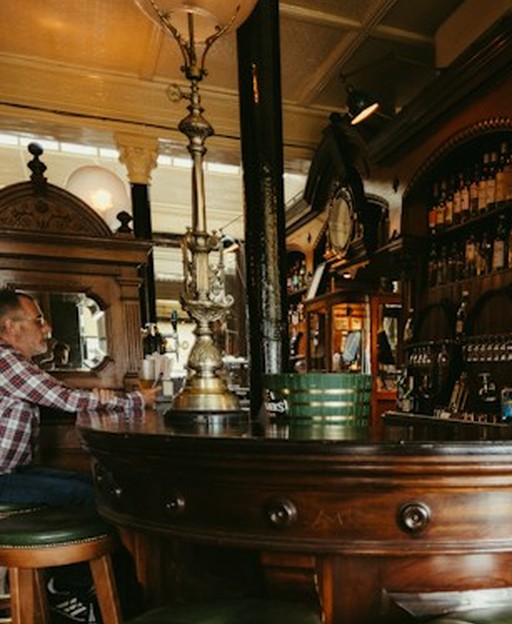
London has more historic pubs than almost any city on earth. Many of them have served food and drink on the same site for three, four, or even five hundred years. They survived the Great Fire, two world wars, urban redevelopment, and the rise of the chain restaurant. They are still here, and most of them still pull an excellent pint.
What Makes a London Pub Worth Eating In
Not every pub in London serves good food. But the city’s best historic pubs have evolved into what Londoners call gastropubs — places that take the kitchen as seriously as the bar. The food is almost always British, seasonal, and made from scratch. You will find Sunday roasts, pies, fish and chips, and seasonal specials that change with the market. What you will not find is a frozen chicken-in-a-basket or a laminated menu with photographs.
The physical environment matters too. Eating in a pub that has stood since the seventeenth century is a different experience from eating in a modern restaurant. Low beams, uneven floors, fireplaces wide enough to walk into, and walls hung with the accumulated clutter of centuries — these things create a particular kind of comfort that has nothing to do with luxury and everything to do with authenticity. No interior designer has managed to replicate it successfully, because the real thing took five hundred years to develop.
The Sunday Roast Tradition
The Sunday roast is Britain’s most important meal, and the pub is where many Londoners eat it. A proper Sunday roast means slow-roasted beef, lamb, or chicken; roast potatoes cooked in the meat juices; Yorkshire pudding; seasonal vegetables; and a dark, glossy gravy made from the pan drippings. The whole thing arrives at the table at once, in generous portions — the centrepiece of the afternoon rather than a quick bite before something else.
London’s historic pubs take the Sunday roast with great seriousness. The competition among North London gastropubs alone — from Hampstead to Islington to Highgate — means that any pub charging reasonable prices for a Sunday lunch has to get the fundamentals right or lose its regulars. This is good news for visitors. The Sunday roast at a well-regarded London pub is typically better, and considerably cheaper, than the equivalent at a restaurant.
The Spaniards Inn, Hampstead
The Spaniards Inn stands on Spaniards Road in Hampstead, NW3, on the edge of Hampstead Heath. It has served food and drink at this spot since approximately 1585 — making it one of London’s oldest surviving pubs. The name comes from the Spanish ambassador to the court of James I, who reportedly lived here in the early 1600s, though a rival theory suggests two Spanish brothers ran it and fought a fatal duel over a woman. London’s oldest pubs tend to accumulate competing legends.
The most remarkable chapter in its history came in 1780, during the Gordon Riots. Anti-Catholic mobs swept through London, burning as they went. One mob set out for Kenwood House nearby, the home of Lord Chief Justice Mansfield. The landlord of the Spaniards invited the rioters in, offered free beer, and sent for the Horse Guards. By the time the soldiers arrived, the mob could barely stand. The guards dispersed them and Kenwood House survived — it still stands today, housing one of the finest small art collections in Britain.
Literary History at the Spaniards
John Keats, who lived nearby in Keats Grove, visited the inn regularly and reportedly spent long hours in the garden. Charles Dickens wrote the Spaniards Inn into The Pickwick Papers — it is the inn where the tea gardens witness Mrs Bardell’s arrest. Bram Stoker used the pub in Dracula, placing key scenes at the inn as characters try to piece together the mystery of Lucy’s illness. Lord Byron and Percy Bysshe Shelley reportedly drank here during the Romantic era, when Hampstead Heath drew London’s intellectual circles away from the drawing rooms of Mayfair.
Today the Spaniards Inn operates as a gastropub. The Sunday roast draws diners from across North London. The bar stocks a good selection of cask ales, the garden fills up on summer weekends, and the fireplaces warm the low-beamed interior through the winter. The combination of outstanding food and five centuries of continuous history makes it one of the most satisfying places to eat in the city.
Ye Olde Cheshire Cheese, Fleet Street
Ye Olde Cheshire Cheese on Fleet Street is the pub that Dr Samuel Johnson called his local. It rose again after the Great Fire of 1666 and has poured drinks at Wine Office Court, just off Fleet Street, EC4, for over 350 years. Charles Dickens came here, as did Mark Twain, Alfred Lord Tennyson, and Arthur Conan Doyle. The novelist behind Sherlock Holmes spent enough time at the Cheshire Cheese that the pub features in his private correspondence.
The building itself consists of a warren of low-ceilinged rooms spread across multiple floors, each with its own character. The sawdust on the floors and the blackened beams overhead are not a tourist affectation — they reflect the way the pub actually looked and felt when these writers drank here. The food follows the traditional pub model: pies, roasts, and British classics done properly. It is not a gastro-destination in the modern sense, but it is genuine and it is good.
The George Inn, Southwark
The George Inn on Borough High Street in Southwark is the last surviving galleried coaching inn in London. This type of building once dotted the city — three or four storeys of wooden galleries looking down on a central yard, where coaches pulled in from the road and travellers climbed down after the long journey from the north or west. The George is the only one that survives. The National Trust now owns it, which tells you something about its architectural importance.
Shakespeare drank at the inns of Southwark — the Globe Theatre stood a short walk away, and the neighbourhood in the sixteenth century was the entertainment district outside the city walls. Whether Shakespeare drank at the George specifically cannot be confirmed, but he certainly knew this part of London intimately. The pub today serves food in the traditional style. Eating in the yard on a summer afternoon, with the galleries above, gives you a genuine physical sense of what London’s coaching inns felt like when they defined long-distance travel.
The Mayflower, Rotherhithe
The Mayflower stands on the south bank of the Thames in Rotherhithe, SE16, on the site where the Pilgrim Fathers moored their ship before sailing to America in 1620. The original pub carried the name The Shippe, and it served the sailors and dockers of the riverside community long before the Mayflower’s voyage brought historical significance to the location. The current building dates mainly from the eighteenth century, though the site’s connection to the river and to trade goes back much further.
The Mayflower sits right on the Thames, with a deck over the water that offers views across the river. Getting there involves walking through streets that have changed relatively little since the Victorian era — terraced houses, cobbled lanes, and the occasional glimpse of the great river between the buildings. The pub serves food in the traditional pub style. The combination of river setting, genuine history, and the relative obscurity of Rotherhithe among visitors makes the Mayflower one of the best pub lunches in London that most tourists never find. Our London food guide covers more of the city’s best eating options across all neighbourhoods.
The Black Friar, Blackfriars
The Black Friar on Queen Victoria Street in Blackfriars, EC4, near Blackfriars station, earns its place on this list not for its age but for its architecture. The interior is one of the finest examples of Arts and Crafts design in London — bronze bas-reliefs of fat friars drinking and feasting line the walls, marble arches frame the bar, and copper and mosaic details cover nearly every surface. It looks like no other pub in the city, and it took a campaign led by John Betjeman to save it from demolition in the 1960s.
The food at the Black Friar is solid pub cooking — the kind of British classics that suit the surroundings and do not try to compete with the decor for attention. Come for the building, stay for the beer, eat because the kitchen does it properly. It is also one of the most atmospheric pubs in London for a rainy afternoon.
What to Eat at a London Pub
If you have never eaten in a British pub before, the menu can look simpler than you expect. This is a feature, not a flaw. British pub food at its best is about doing fundamental things correctly — sourcing good ingredients, cooking them with care, and serving them in generous portions. Here is what to look for.
Fish and Chips at the Bar
A proper plate of fish and chips at a London pub means battered fish — usually cod or haddock — with chips cooked in beef dripping or a good oil until they develop a proper crust. Mushy peas, tartare sauce, and a wedge of lemon complete the plate. This is the dish that sustained working London for two centuries. Done well, it is exceptional. Done badly, it is flabby and forgettable. The difference is almost entirely in the batter and the frying temperature.
At the historic pubs listed here, the fish and chips tends to be done well. The kitchen takes the rest of the menu seriously enough that the signature British dish would not survive on the menu if it consistently failed. Order it on a weekday when the kitchen is less rushed, and ask for the vinegar on the side.
Steak and Kidney Pie
The steak and kidney pie is one of British cooking’s great achievements and one of its most misunderstood dishes. The kidneys, which alarm some visitors, provide a depth of flavour that beef alone cannot match. Slow-cooked with onions, stock, and a splash of Worcestershire sauce, then enclosed in suet or shortcrust pastry and baked until the top turns golden, this is a dish that rewards patience both in the cooking and in the eating. It is heavy food, designed for cold weather and hard work.
Most London gastropubs offer a pie of some kind, and the quality varies considerably. At a pub that makes its own pastry and slow-cooks the filling from scratch, the difference from a frozen product is immediately obvious. The pastry holds its shape, the filling is rich and glossy rather than watery, and the whole thing stays warm to the last bite.
Getting to London’s Historic Pubs
All the pubs mentioned here sit within easy reach of the London Underground. The Spaniards Inn requires a twenty-minute walk from Hampstead station on the Northern line, but the walk across the heath is part of the experience. Ye Olde Cheshire Cheese is a short walk from Temple or Blackfriars stations. The George Inn is next to Borough station on the Jubilee line. The Mayflower is walkable from Rotherhithe station on the Overground. The Black Friar stands immediately beside Blackfriars station.
For visitors exploring London’s neighbourhoods, each of these pubs anchors a different part of the city. The Spaniards Inn anchors Hampstead and the heath. Ye Olde Cheshire Cheese anchors the old Fleet Street newspaper district. The George anchors Southwark and the South Bank. The Mayflower anchors Rotherhithe and the working-class riverside. The Black Friar anchors the western edge of the City. Between them, they cover five centuries and five very different parts of London.
Booking and Timing
Sunday lunch at any of these pubs is busy and should always be booked in advance. Weekday lunchtimes are considerably quieter and offer the best opportunity to appreciate the architecture and atmosphere without the weekend crowd. Bank holiday weekends bring the largest numbers. If you visit London between May and September, the pub gardens at the Spaniards Inn and the Mayflower’s Thames-side terrace fill up by noon on a sunny Saturday — arrive early or book a table.
Most of London’s historic gastropubs do not require formal dress. Arriving in walking clothes after a morning on Hampstead Heath is entirely normal at the Spaniards Inn. The standard is smart-casual at most, and the emphasis is on comfort rather than formality. This is, after all, a pub.
Frequently Asked Questions
What is the most historic pub in London?
Several London pubs claim the title of oldest or most historic. Ye Olde Cheshire Cheese on Fleet Street dates to 1667 (rebuilt after the Great Fire) and connects to Dr Johnson, Dickens, and Conan Doyle. The Spaniards Inn in Hampstead dates to approximately 1585 and links to Dick Turpin, Keats, and Bram Stoker. The George Inn in Southwark is the last surviving galleried coaching inn in the city. The Mayflower in Rotherhithe sits on the site where the Pilgrim Fathers set sail for America. All four make strong cases for being among London’s most historically significant pubs.
Where is the best Sunday roast in London?
The Spaniards Inn in Hampstead consistently earns high marks for its Sunday roast, with diners ranking it among the best in North London. The approach involves slow-roasted meats, properly made Yorkshire puddings, roast potatoes cooked in dripping, and a rich gravy from the pan. For Sunday roasts in central London, the gastropubs around Borough Market and Southwark also attract strong reviews, particularly in autumn and winter when the cold makes proper roast food feel especially right.
Is pub food in London expensive?
Pub food in London ranges considerably in price. At the historic gastropubs described here, expect to pay between £15 and £25 for a main course, which puts them broadly in line with mid-range restaurants. Sunday roasts typically run between £18 and £28 depending on the pub and the protein. Fish and chips tends to come in at the lower end of the range. These prices are higher than a fish-and-chip shop or a kebab house, but significantly lower than a restaurant of comparable food quality. For the setting and the experience, the historic pubs represent good value.
How do I find a good pub for food in London?
The most reliable method is to look for pubs that describe themselves as gastropubs and that have traded from the same location for at least fifty years. A pub that has survived that long in London has built a local following, and locals do not tolerate poor food for long. The pubs listed in this article — the Spaniards Inn, Ye Olde Cheshire Cheese, the George Inn, the Mayflower, and the Black Friar — all meet this standard and all serve food worth travelling for. Book ahead for Sunday lunch at all of them.
When is the best time to visit a London pub for food?
A weekday lunch between Tuesday and Thursday gives you the quietest atmosphere and the most relaxed service at any London gastropub. Sunday lunch is the traditional high point of the pub food week in Britain, but it is also the busiest session — book at least a week in advance for popular pubs. Winter and autumn suit the interior atmosphere best, when fireplaces are lit and the long menus of slow-cooked dishes feel exactly right. Summer brings the outdoor seating and gardens to life, particularly at the Spaniards Inn and the Mayflower’s riverside terrace.
Join 3,000+ London Lovers
Every week, get London’s hidden gems, local secrets, and travel inspiration — the kind you won’t find in any guidebook.
Subscribe free — enter your email:
Love more? Join 64,000 Ireland lovers → · Join 43,000 Scotland lovers → · Join 30,000 Italy lovers →
Free forever · One email per week · Unsubscribe anytime