
What Is Afternoon Tea — and Why Does It Matter?
Afternoon tea stands as one of Britain’s most recognisable traditions — and in London, hotels and tea rooms have elevated it into a genuine art form. Finger sandwiches, freshly baked scones with clotted cream and jam, delicate pastries, and a pot of the finest loose-leaf tea: this is a ritual that says everything about how the British approach pleasure. Slowly, deliberately, and with a great deal of care about which way the cream goes on first.
The tradition began in the 1840s, reportedly started by Anna Maria Russell, the 7th Duchess of Bedford. Feeling what she described as a “sinking feeling” in the late afternoon — the long gap between an early lunch and a dinner that might not arrive until eight or nine in the evening — she began requesting a tray of tea, bread and butter, and cakes to be brought to her private chambers. She began inviting friends to join her, and the custom spread quickly through London’s aristocratic society.
Today, venues ranging from five-star hotel dining rooms to neighbourhood tea rooms all serve afternoon tea, and it has become one of the most-searched experiences for visitors to London. For good reason. Done well, it is one of the most civilised hours you can spend in this city.
The Classic Afternoon Tea: What to Expect
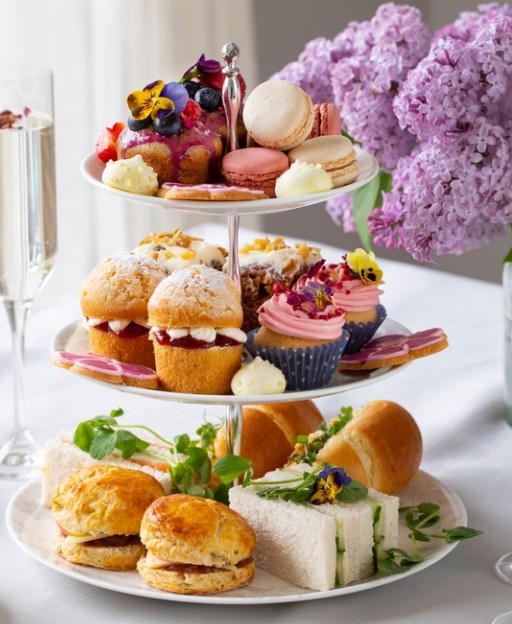
A traditional afternoon tea arrives on a tiered cake stand, working from savoury at the bottom to sweet at the top. The structure is almost always the same:
- Finger sandwiches — cucumber with cream cheese, smoked salmon, egg mayonnaise, and coronation chicken are classics. No crusts. Always cut into fingers or small triangles.
- Warm scones — served with clotted cream and strawberry jam. The great debate (cream first or jam first?) divides the nation. In Cornwall, jam goes first. In Devon, it’s cream first. In London, most people do whatever they like and argue about it afterwards.
- Pastries and cakes — the top tier brings the colour: miniature eclairs, fruit tarts, macarons, Victoria sponge slices, and whatever the kitchen is currently proud of.
- A pot of tea — served with milk on the side, and a small strainer if you’re going loose-leaf.
Champagne afternoon tea adds a glass (or two) of fizz — popular for celebrations and birthdays. Some hotels also offer savoury afternoon tea with no sweet tier, or themed versions tied to exhibitions, seasons, or literary events.
Where to Have Afternoon Tea in London: The Best Options by Style
London has so many afternoon tea options that narrowing it down can feel genuinely difficult. Here are the main categories, each representing a different kind of experience.
The Grand Hotel Experience
If you want the full, historic experience, London’s great hotels set the standard. The Ritz on Piccadilly is the most famous — the hotel has served afternoon tea since 1906 and the Palm Court remains one of the most beautiful dining rooms in London. Book well in advance; the Ritz fills its afternoon tea slots weeks ahead. A smart dress code applies: no jeans, no trainers, and gentlemen should wear a jacket.
Claridge’s in Mayfair is another institution. The art deco dining room, the precise service, the exceptional quality of the pastries — tea at Claridge’s feels like stepping back into a London that has very deliberately refused to change. The Dorchester and Brown’s Hotel are also worthy of the effort, particularly for special occasions.
The Museum Café Route
Several of London’s great museums serve afternoon tea, which allows you to pair culture with cake. The V&A in South Kensington has a beautiful café set inside a Victorian cast-iron room — afternoon tea here feels appropriately scholarly. Bea’s of Bloomsbury, with branches near the British Museum, offers excellent value with a relaxed, neighbourhood feel that suits those who find grand hotels slightly intimidating.
Views with Your Tea
Afternoon tea becomes a different proposition when the backdrop is London’s skyline. Aqua Shard on the 31st floor of The Shard in Southwark delivers one of the most dramatic views in the city — the Thames bending away to the east, Tower Bridge below, and the City glittering in the distance. SushiSamba in Heron Tower also offers a high-altitude version for those who want something more contemporary.
The Neighbourhood Tea Room
Not every afternoon tea needs to cost £60 per person or require a jacket and tie. London has dozens of independent tea rooms, particularly in areas like Notting Hill, Richmond, and Kensington, where smaller establishments deliver excellent quality at considerably lower prices. The Orangery at Kensington Palace is a particularly good option — a royal setting at a more accessible price point, popular with visitors who want history without the formality of a grand hotel. You can pair it with a walk through some of London’s lesser-known corners nearby.
Afternoon Tea Etiquette: The Unwritten Rules
Afternoon tea comes with a few conventions worth knowing — not because anyone will tell you off for getting them wrong, but because understanding the ritual is part of enjoying it.
- Work from the bottom tier up. Start with the savoury sandwiches, move to the scones, and finish with the pastries. This isn’t a strict rule, but it’s the intended progression.
- Stir your tea in a figure-of-eight, not in circles. This apparently prevents splashing. It is the kind of detail the Ritz still cares about.
- Milk in after the tea. This debate has raged for generations. The argument for milk first was largely about cheaper cups cracking in the 18th century. Today, most people add milk second so they can judge the strength of the tea first.
- Take your time. Afternoon tea is not a quick stop. Plan for at least 90 minutes; two hours is better. Hotels staff their afternoon tea rooms for a leisurely pace and it would be a shame to rush the experience.
- Book ahead. The best venues fill up, particularly at weekends. A midweek afternoon tea is often easier to book and slightly less crowded.
What’s the Difference Between Afternoon Tea and Cream Tea?
A cream tea is a simpler version: tea, scones, clotted cream, and jam. No sandwiches, no cake tier. It originates from the West Country and is enormously popular at National Trust properties, village tea rooms, and garden centres across England. You’ll find it widely in London too, at lower prices than a full afternoon tea.
High tea is something else entirely — and a common point of confusion for visitors. Despite the name sounding more prestigious, high tea historically referred to the working-class evening meal, eaten at a high (dining) table rather than a low (sitting room) table. It was a proper hot meal: pies, cheese, cold meats, bread. Not what most London hotels serve when they say “afternoon tea.”
If a venue advertises “high tea,” read the menu carefully. Some use the term correctly to mean a light early supper. Others use it as a synonym for afternoon tea, which isn’t historically accurate but has become common practice.
How to Book Afternoon Tea in London
Most grand hotel afternoon teas require advance booking, often weeks ahead for weekend slots at the most popular venues. The Ritz, Claridge’s, and The Savoy consistently sell out their weekend sittings. Weekday afternoons are considerably easier to book and sometimes slightly cheaper.
Afternoon tea at the major hotels typically runs between £55 and £90 per person in 2026, with champagne versions running higher. Museum and neighbourhood tea rooms generally fall between £25 and £45 per person.
If you’re visiting London for the first time and want a classic experience without the full grand hotel price, The Orangery at Kensington Palace or Fortnum & Mason’s Diamond Jubilee Tea Salon on Piccadilly represent excellent value — the setting and quality are exceptional, and both are easier to book than The Ritz. Fortnum’s also lets you browse the extraordinary food halls before or after, which is worth an hour on its own.
For a broader view of London’s food scene beyond afternoon tea, the existing London food guide for US visitors covers everything from market street food to Michelin-starred restaurants. And if you’re planning a full day in central London, the Westminster and South Bank walk pairs well with an afternoon tea in the area.
Afternoon Tea Beyond the Hotel: Unusual Options Worth Knowing
London’s afternoon tea scene has expanded well beyond the traditional hotel dining room. A few alternatives stand out for visitors who want something different:
- On the Thames — several boat operators run afternoon tea cruises along the river, giving you a completely different view of the city alongside your scones. The Bateaux London is a well-regarded option.
- Themed afternoon teas — the city’s hotels frequently run limited-edition versions tied to exhibitions, fashion weeks, or cultural moments. The Sketch in Mayfair is particularly good at this, and its dining rooms are worth seeing regardless.
- Tea blending experiences — Fortnum & Mason and Postcard Teas in Mayfair offer tea tastings and blending sessions that teach you significantly more about what’s in your cup than a standard service will.
- Garden afternoon tea — in summer, several venues including the Orangery and the tea gardens at Kew offer outdoor settings that transform the experience entirely.
Join 3,000+ London Lovers
Every week, get London’s hidden gems, local secrets, and travel inspiration — the kind you won’t find in any guidebook.
Subscribe free — enter your email:
Love more? Join 64,000 Ireland lovers → · Join 43,000 Scotland lovers → · Join 30,000 Italy lovers →
Free forever · One email per week · Unsubscribe anytime
Frequently Asked Questions About Afternoon Tea in London
How much does afternoon tea cost in London?
Prices in 2026 range from around £25–45 per person at independent tea rooms and museum cafés, to £55–90 per person at the grand hotels. Champagne afternoon tea typically adds £20–30 per person on top of the standard price. The Ritz and Claridge’s are at the higher end; The Orangery at Kensington Palace and Bea’s of Bloomsbury offer excellent quality at lower price points.
Do I need to book afternoon tea in advance in London?
Yes — particularly for the major hotels and at weekends. The Ritz often books out six to eight weeks ahead for weekend sittings. Claridge’s, The Savoy, and Fortnum & Mason are also popular and benefit from advance booking. For weekday afternoon teas at less famous venues, same-week booking is usually fine, but calling ahead is always sensible.
Is there a dress code for afternoon tea in London?
The grand hotels maintain smart dress codes. The Ritz requires smart casual as a minimum — no jeans, no trainers, and gentlemen must wear a jacket. Claridge’s and The Savoy have similar expectations. Most other venues are considerably more relaxed. If in doubt, check the venue’s website before you go — dress code information is almost always listed.
Can you get afternoon tea in London with dietary requirements?
Yes — all reputable venues offer vegetarian options as standard, and most now cater for vegan, gluten-free, and nut-free requirements with advance notice. When booking, inform the venue of any dietary needs. The quality of allergen-free alternatives varies, so it is worth reading recent reviews if this is a significant concern.
What time is afternoon tea served in London?
Most venues serve afternoon tea between 12:00 and 17:30, with sittings often allocated in 90-minute to two-hour slots. The classic time is between 3pm and 5pm, though many hotels serve from noon onwards to accommodate different schedules. Booking a slot between 15:00 and 16:00 gives you the most traditional experience.