
If you want to eat like a Victorian Londoner, skip the upmarket restaurants and head to a pie and mash shop. These plain-tiled dining rooms have been feeding working-class Londoners for over 150 years, and a handful of them are still open today. Pie and mash London is one of the capital’s most distinctive food traditions — and one that most visitors walk past without a second glance.
That is a mistake. A meal at one of London’s surviving pie shops costs less than a coffee at most tourist cafés, tastes genuinely good, and connects you to the city’s East End history in a way that no museum can replicate. Add it to your London itinerary and you will leave with a story most visitors never get to tell.
What Is Pie and Mash?
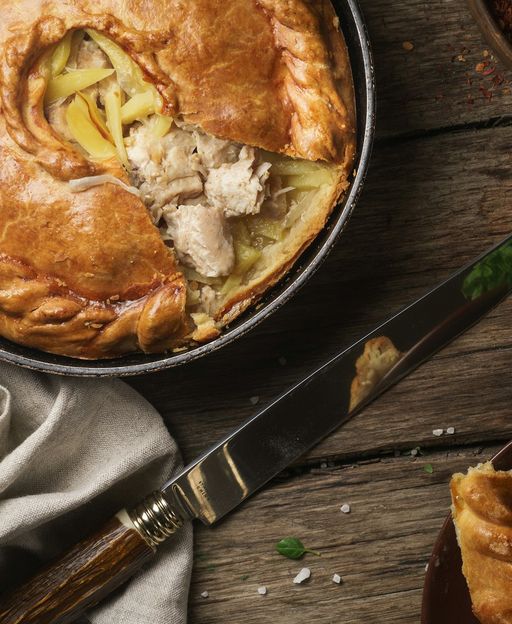
Pie and mash is exactly what it sounds like: a minced beef pie, a scoop of mashed potato, and a ladle of liquor — a bright green parsley sauce that is completely unique to this tradition. The combination is salty, filling, and deeply flavourful.
Traditionally, the menu also included jellied eels and stewed eels. Working-class Londoners caught these cheaply from the Thames and sold them at penny-a-portion stalls throughout the East End. Many shops still serve them today, though younger Londoners tend to stick to the pie.
A single portion — one pie, mash, and liquor — costs roughly £3 to £5 in most shops. Two pies with double mash and extra liquor rarely cost more than £10. You will not find better value cooked food anywhere in central London.
The Victorian Origins of London Pie and Mash Shops
Pie and mash shops emerged in the East End of London in the mid-1800s. The city was growing fast, factories and docks were expanding, and working people needed a quick, hot, cheap meal that required no cooking equipment at home.
The first pie shops sold eel pies — made from eels Londoners caught in the Thames, which was still a working river teeming with wildlife before industrialisation polluted it. As beef became cheaper and more available towards the end of the century, minced beef pies replaced eel pies as the default menu item, though jellied eels stayed on as a side dish.
The shops themselves had a distinctive look. Marble-topped tables. White ceramic tiled walls. Wooden benches. No carpet. The owners chose every surface because they could scrub it clean between sittings. The design was functional, not decorative — but a century on, that plainness has become the aesthetic.
At their peak in the early twentieth century, hundreds of pie and mash shops operated across East London and South London. The Manze family alone ran dozens of outlets across the city. Families visited every week. The pie shop was a social institution as much as a restaurant.
Most closed as food habits changed after World War Two, as the East End docks shut down, and as the communities that sustained them moved to outer London or beyond. What remains is a small group of original shops, most of them still family-run, most in the same buildings where they have stood for more than a hundred years.
The Best Pie and Mash Shops to Visit in London
London has fewer than a dozen original pie and mash shops still operating. Here are the four best for visitors, listed by how easy they are to reach from central London.
Goddard’s at Greenwich (SE10)
Goddard’s is probably the most accessible pie and mash shop for visitors to London, sitting near the centre of Greenwich and trading since 1890. The interior still has the original tiled walls and wooden benches that generations of Londoners have sat at.
The menu at Goddard’s is straightforward: pie, mash, and liquor. Stewed eels are available if you want to try something more adventurous. The portions are generous and the prices remain low. You can eat well here for under £8 per person.
Greenwich is already worth a visit for the Cutty Sark, the Royal Observatory, and the market. Goddard’s fits naturally into a morning in the area. Our Greenwich London guide covers the full area in detail, including how to get there and what else to see nearby.
M. Manze on Tower Bridge Road (SE1)
M. Manze on Tower Bridge Road in Bermondsey is the oldest surviving pie and mash shop in London. It opened in 1902 and the Manze family have run it continuously across four generations since then.
The interior at Manze’s is beautiful in the most understated way — original Victorian tiles, old wooden benches, mirrors on the walls. English Heritage lists the building at Grade II, which means it carries legal protection as a structure of architectural significance. You are eating in a space that Edwardian London built and nobody has dared touch since.
Manze’s sits a ten-minute walk from London Bridge station, which makes it genuinely easy to combine with a visit to Borough Market or Southwark Cathedral. The area around Tower Bridge Road is changing fast, but Manze’s has not changed at all.
G. Kelly on Roman Road (E2)
G. Kelly on Roman Road in Bethnal Green has been serving pie and mash to the local community since 1939. The shop is small and no-frills, sitting on a traditional East End high street that has changed considerably since the shop opened. Roman Road Market operates nearby on Tuesdays, Thursdays, and Saturdays, and the combination of market and pie shop gives you a genuine taste of East London life.
G. Kelly is slightly further from central London than Goddard’s or Manze’s, but you can reach it easily on the Central or District line to Bethnal Green. The V&A Museum of Childhood is a short walk away if you are travelling with children.
F. Cooke on Broadway Market (E8)
F. Cooke on Broadway Market in London Fields has been trading since around 1900. The shop has a particularly striking Victorian frontage with decorative tilework and original signage — it is regularly photographed by visitors who stumble across it during the Saturday market.
Broadway Market itself is a good destination on a Saturday, when independent food stalls, bookshops, and local traders fill the street. Stopping at Cooke’s before or after the market works well as a half-day outing from central London.
What to Expect When You Visit a Pie Shop
Pie and mash shops are not restaurants in the conventional sense. You order what the shop serves, which is pie, mash, and liquor, with possibly stewed or jellied eels on the side.
Service is fast and informal. You queue, you order at the counter, you take a numbered seat. The food arrives quickly. You eat, you leave. The whole process takes twenty minutes if you move at normal pace.
The tables are communal in most shops. You may end up sitting next to strangers, which is entirely normal and part of the experience. Nobody minds.
Bring cash. Some shops now accept card payments, but not all of them. Having coins available means you can pay without a delay at the counter.
How to Order Pie and Mash Like a Local
The standard order is simply “one pie, mash, and liquor” or “two pies, mash, and liquor.” Some regulars ask for “double mash,” which means a larger scoop of potato in place of the second pie. The liquor arrives by default — if you do not want it, say “no liquor,” but try it at least once. It is an unusual flavour, more savoury than you might expect from something bright green.
Jellied eels arrive cold in a small bowl with vinegar on the side. They are an acquired taste and most first-time visitors prefer to try them as a side rather than a main course. Stewed eels, served warm in their own broth, are more approachable if you want to try the eel tradition without committing fully to the cold version.
Malt vinegar sits on every table in a large bottle. Pour it liberally over everything. It is the correct condiment for this food and cuts through the richness of the pastry and mash.
Pie and mash pairs naturally with exploring London’s traditional food culture more broadly. Our full London food guide covers everything from pie shops to proper restaurants across the city. For more traditional British pub dining alongside this kind of food, our guide to London’s historic pubs with food covers that territory in detail.
Why This Food Has Survived When So Much Else Has Gone
It is worth asking why pie and mash shops survived when most of Victorian London’s food culture disappeared. Part of the answer is loyal regulars — many customers have eaten at the same shop since childhood, and they bring their own children. Part of the answer is that the shops themselves became physical landmarks, with Grade II listed buildings that owners simply cannot demolish or completely redesign.
But the more interesting reason is that the food itself is hard to improve on. Minced beef pie, mashed potato, and parsley sauce is an honest combination. Nothing about it is fashionable, and nothing about it needs to be. London has spent decades cycling through food trends — Vietnamese banh mi, Korean fried chicken, Peruvian ceviche — and the pie shops have simply waited. Their regulars come back every week regardless.
For a visitor, that consistency is the point. London changes faster than almost any city in Europe. The pie shops are one of the few places where you can sit in a room that looks and feels exactly as it did in 1905, eating food that costs about the same in real terms as it did then, surrounded by people who have been eating there for decades. That is not a tourist attraction. That is the city itself.
What is pie and mash in London?
Pie and mash is a traditional London dish consisting of a minced beef pie, mashed potato, and a bright green parsley sauce called liquor. It originated in Victorian East London as affordable food for working-class communities and is still served today in a small number of original family-run shops across the city. Jellied eels and stewed eels are also on the menu at most shops.
Where can I eat pie and mash in London?
The best pie and mash shops in London include Goddard’s at Greenwich (trading since 1890), M. Manze on Tower Bridge Road in Bermondsey (open since 1902), G. Kelly on Roman Road in Bethnal Green (since 1939), and F. Cooke on Broadway Market in London Fields (since around 1900). Most traditional pie and mash shops sit in South East London or East London.
How much does pie and mash cost in London?
A single pie with mash and liquor typically costs between £3 and £5 at a traditional pie and mash shop. Two pies with double mash and extra liquor rarely exceeds £10 per person. Pie and mash shops offer some of the cheapest cooked meals you will find anywhere in central London.
Is pie and mash worth trying in London?
Yes — if you want to experience a genuine piece of London food history, pie and mash is worth trying. The shops that still operate today are among the oldest family-run restaurants in the city, some in buildings that have stood unchanged since the Edwardian era. The food is cheap, filling, and uniquely London.
Join 3,000+ London Lovers
Every week, get London’s hidden gems, local secrets, and travel inspiration — the kind you won’t find in any guidebook.
Subscribe free — enter your email:
Love more? Join 64,000 Ireland lovers → · Join 43,000 Scotland lovers → · Join 30,000 Italy lovers →
Free forever · One email per week · Unsubscribe anytime