
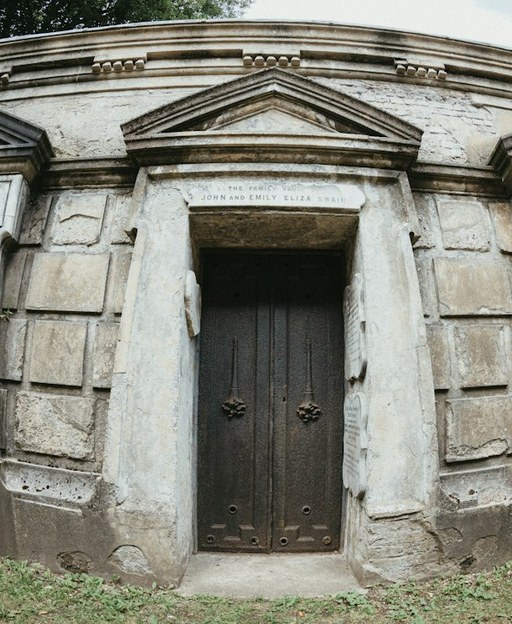
Highgate Cemetery is a Victorian garden cemetery in north London where about 170,000 people lie in around 53,000 graves. It opened in 1839, and you can still walk its Egyptian-style avenue, its circle of tomb vaults and its wooded hillside paths today. This guide explains how it began, what to see, how to book your visit, and how to search for an ancestor buried there.
Why Victorian London Built Garden Cemeteries
By the 1830s, London had a serious problem with its dead. The city’s population had grown fast, and the small churchyards in the centre had no room left. Gravediggers stacked coffins on top of each other. Families worried about disease, and many felt shocked by how crowded the old burial grounds had become.
Parliament allowed private companies to open new cemeteries on the edge of the city. Seven large ones opened between 1833 and 1841, and people now call them the “Magnificent Seven”. They are Kensal Green, West Norwood, Highgate, Abney Park, Nunhead, Brompton and Tower Hamlets. Highgate came third, in 1839. The London Cemetery Company had formed three years earlier to build it.
The founders wanted more than a place to bury people. They designed a landscape where families could walk, remember and show their status. Architects such as Stephen Geary and James Bunstone Bunning gave the site a steep hillside setting, winding paths and grand stone monuments. Victorian visitors came here on Sundays the way people visit a park today.
🏛️ Free Guide: How to Trace Your English & British Ancestry
Step-by-step: GRO records, census 1841–1921, parish registers, the National Archives (Kew), London Metropolitan Archives, and planning a heritage trip. Completely free.
Get the Free Guide → Subscribe free at the guide page to receive weekly London heritage storiesThe West Cemetery: Egyptian Avenue and the Circle of Lebanon
The original 1839 cemetery is now called the West Cemetery. It holds the most dramatic architecture, and you can only enter it on a guided tour.
The tour takes you through the Egyptian Avenue first. Victorians loved ancient Egypt, and the designers borrowed its look for a stone passage lined with burial vaults. Heavy gates stand at the entrance, and the vaults run along both sides of a sunken path. Walking between them feels like stepping into another century.
The avenue leads to the Circle of Lebanon. Here, family vaults curve around a huge cedar tree that already grew on the site before the cemetery opened. The builders kept the tree and set the vaults in a ring around it. Above them, the Terrace Catacombs hold hundreds more coffins in shelves behind iron gates. Your guide explains who built each tomb and why families paid so much for them.
Many of these tombs show the wealth of Victorian London. Merchants, publishers, performers and engineers all wanted a grand resting place with a view. The monuments include carved angels, broken columns, urns and stone doors. Each one tells you something about how Victorian families saw death, grief and memory.
The East Cemetery: Famous Names and Quiet Paths
The cemetery grew in 1860, when the company opened a second section across the lane. People call it the East Cemetery. You can walk around it on your own, which makes it the easier choice if you want a flexible visit.
The East side feels more open and more crowded with graves. Ivy covers some stones and trees push through others, so the whole place looks half-wild. Many visitors say this softer, overgrown look is their favourite part of Highgate.
Highgate holds many well-known people from literature, science and the arts. The novelist George Eliot, whose real name was Mary Ann Evans, lies here. She died in 1880 and still draws readers to her grave. The scientist Michael Faraday and the poet Christina Rossetti also rest at Highgate. The comic writer Douglas Adams, who wrote The Hitchhiker’s Guide to the Galaxy, died in 2001 and his grave sits in the East Cemetery. Fans often leave pens on it.
Highgate also links to another writer we have covered. Several members of the Dickens family, including his parents, lie in the cemetery. If you enjoy literary history, read our guide to Charles Dickens’ London and the real streets behind his novels before you go.
A Gothic Story: Rossetti’s Poems and the Highgate Legend
Highgate collects stories as well as graves. One of the best known concerns Elizabeth Siddal, the artist’s model and poet who died in 1862. Her husband, the painter and poet Dante Gabriel Rossetti, buried a notebook of his poems with her in a gesture of grief. Seven years later, he changed his mind. Friends arranged to open the grave in 1869 and take the book back. Historians still tell the tale, and it shows how personal the cemetery’s history can feel.
In the 1970s, the cemetery also became the centre of a newspaper frenzy about a “Highgate Vampire”. Crowds climbed the walls at night, and the press fed the excitement. Nothing supernatural happened, but the episode shows how the cemetery’s atmosphere sparks the imagination. By then, the site had fallen into decay.
How the Cemetery Survived
After the Second World War, fewer families bought new plots and the owners struggled to pay for upkeep. Vandals damaged tombs, and plants swallowed the paths. In 1975, volunteers formed the Friends of Highgate Cemetery. They took over the care of the site, and the charity still runs it today. Your ticket money pays for repairs, clearing and tours.
The cemetery is also a working nature reserve. Foxes, woodpeckers and many woodland plants live among the stones. Walk slowly and you will probably see more wildlife than you expect in the middle of a big city.
🏙️ Enjoying this? 3,000 London lovers get stories like this every week. Subscribe free →
How to Visit Highgate Cemetery
Plan your visit before you set out, because opening times and ticket rules change through the year. Check the official Highgate Cemetery website for current hours and prices, and book West Cemetery tours ahead of time, as places are limited.
Here is what to keep in mind:
- Getting there: The nearest Tube stations are Archway and Highgate, both on the Northern line. Each is a walk of roughly 15 minutes uphill.
- West Cemetery: You must join a guided tour. Tours run on set days and times.
- East Cemetery: You can wander on your own during opening hours.
- What to wear: Choose sturdy shoes. Paths are steep, uneven and sometimes muddy.
- Best season: Autumn brings golden leaves and quiet paths. Spring brings wildflowers.
- Combine it with: Waterlow Park and Hampstead Heath sit close by, so you can add a long walk after your visit.
Remember that this is still a place of burial and remembrance. Keep your voice low, stay on the paths and treat every grave with respect. Photography is usually fine for personal use, but check the current rules at the gate.
Tracing an Ancestor Buried at Highgate
If your family came from north London, an ancestor may rest at Highgate. Start with a death certificate or a census record, which gives you a name, a date and an address. Then contact the Friends of Highgate Cemetery to ask whether they can help you find the grave. Their volunteers keep records and can often point you to the right section.
Many families also appear in parish registers, which the London Metropolitan Archives hold for a large number of city churches. Our guide to tracing your English ancestry through London’s heritage records walks you through each step. If your ancestors lived in the city’s Victorian streets, our article on Victorian London streets and how to find your ancestors shows you where to look next.
Cemetery visits also pair well with other quiet corners of the city. Read about London’s ruined church gardens for more peaceful heritage walks, or learn how the city fixed another Victorian crisis in our story of the Great Stink of 1858 and the sewers that still run today.
Frequently Asked Questions
When did Highgate Cemetery open?
Highgate Cemetery opened in 1839. The company added the East Cemetery in 1860, so today the site has two parts on either side of Swain’s Lane.
Can you visit Highgate Cemetery without a tour?
Yes, but only the East Cemetery. You can explore it on your own during opening hours. The West Cemetery, with the Egyptian Avenue and Circle of Lebanon, needs a guided tour.
How many people lie in Highgate Cemetery?
About 170,000 people lie in around 53,000 graves, according to the Friends of Highgate Cemetery. Many graves hold several family members.
How can I find an ancestor’s grave at Highgate?
Gather a name and a burial date from a death certificate or census record. Then ask the Friends of Highgate Cemetery for help. They can often confirm a burial and suggest where to look.
Join 3,000+ London Lovers
Every week, get London’s hidden history, heritage walks, and stories from the city’s remarkable past — straight to your inbox.
Subscribe free — enter your email:
Already subscribed? Download your free London guide (PDF)
Love more? Join 64,000 Ireland lovers → · Join 43,000 Scotland lovers → · Join 30,000 Italy lovers →
Free forever · One email per week · Unsubscribe anytime