
One of the best things about basing yourself in London is what lies beyond it. Within two hours by train, you can reach Roman bath houses, medieval university cities, Georgian spa towns, white chalk cliffs above the sea, and stone villages where the streets have barely changed in 400 years. A day trip from London is not a consolation prize — for many visitors, it is the highlight of the trip. This guide covers the best options by journey time, with practical details for each.
Planning Your Day Trip: What You Need to Know
London sits at the centre of England’s rail network. Most day-trip destinations are within 90 minutes by train from Paddington, Waterloo, Victoria, or St Pancras. A return train ticket booked in advance typically costs between £20 and £45. The National Rail website lets you book up to 12 weeks ahead. Advance tickets are significantly cheaper than walk-up fares — for Brighton, the difference can be £30 or more.
If you plan to use trains several days in a row, a BritRail pass covers unlimited travel within England. Compare pass prices against individual tickets before you book. US visitors must buy BritRail passes before arriving in the UK — station ticket offices do not sell them.
Before you leave the city, read the London travel tips for US visitors — it covers Oyster cards, tipping culture, and how the British transport system works. A day trip fits well into a three-day London itinerary, typically on day two or three once you settle into the city.
The Cotswolds: England’s Most Photogenic Villages
The Cotswolds cover around 800 square miles of rolling hills, dry-stone walls, and honey-coloured limestone villages in the English Midlands. The stone used to build these villages — Cotswold limestone — turns golden in sunlight and gives the whole region a distinctive warmth that does not look quite real in photographs and looks even less real in person.
Bourton-on-the-Water is often the most-visited village, with its low stone bridges over the River Windrush running through the centre of the main street. It can be crowded in summer. Burford has a medieval high street that drops steeply to a river and a 12th-century church with Norman stonework. Castle Combe — often described as England’s most beautiful village — sits in a wooded valley with no through traffic and an almost theatrical perfection of old stone cottages.
Getting to the Cotswolds by public transport requires a train to Kingham, Moreton-in-Marsh, or Cheltenham (around 90 minutes from London Paddington) followed by local buses or a taxi. A rental car gives much more flexibility. The Cotswolds are best explored slowly — a morning in one village and an afternoon in another, with a lunch stop at a pub serving local ales and pies.
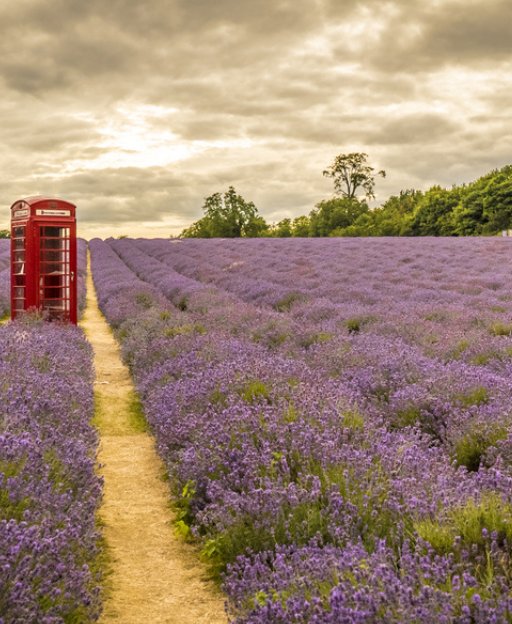
If you visit between June and August, the lavender farms around the Cotswolds are in bloom. The sight of purple lavender fields stretching to a dry-stone wall, with a red telephone box in the middle distance, is one of those English images that looks staged but is entirely genuine.
🗺️ Free Guide: The Best Day Trips from London (2026)
Top day trips by train, by car, and hidden gems most visitors never find — with travel times, insider tips, and the best time to visit each. Free when you subscribe to Love London.
Get the Free Day Trips Guide → Subscribe free at the guide page to receive weekly London travel storiesBath: Roman History and Georgian Architecture
Bath is 97 miles west of London and takes around 90 minutes by train from Paddington. It is a UNESCO World Heritage city and one of the most complete Georgian cities in the world. Builders constructed most of the city centre between 1720 and 1820, using the same cream-coloured Bath stone throughout. This gives Bath an architectural coherence rare anywhere in England.
The Roman Baths are the anchor attraction: a remarkably preserved Roman bathing complex built around a natural hot spring, used continuously for around 400 years after the Romans arrived in AD 43. The museum surrounding them is one of the best Roman sites in northern Europe. Book tickets in advance — queues at the door are long in summer and the entrance is timed.
The Royal Crescent and the Circus rank among the most photographed streets in Bath. The architect John Wood the Elder and his son designed both. They are residential and free to walk past. The terrace of 30 identical townhouses curving around a semi-circle of lawn looks extraordinary from every angle.
Allow three to four hours for the Roman Baths and the main Georgian set pieces. A further hour for lunch — Bath has excellent independent cafés along Milsom Street and in the lanes around the market — and you have a full and satisfying day from London.
Brighton: Sea Air and Street Life
Brighton is 54 miles south of London. A fast train from London Victoria takes 52 minutes; a slower Southern service runs throughout the day in around 70 minutes. Brighton is the closest you can get to the sea from central London, and on a summer weekend the city fills with Londoners who have come for exactly that reason.
The Brighton seafront runs along a long shingle beach — no sand, which surprises Americans — with the old Victorian pier (the Brighton Palace Pier) at the centre, complete with fairground rides, fish and chips, and amusement arcades. It is unapologetically commercial and enormous fun.
The Royal Pavilion — George IV’s extraordinary seaside pleasure palace built in an Indian-Mughal style — is five minutes walk from the station and worth an hour inside. The Lanes, a network of narrow medieval streets just inland from the seafront, have independent shops, antique dealers, and cafés at a density you rarely find in English town centres.
Brighton works best in good weather. The beach, the pier, and the outdoor eating in the Lanes are all weather-dependent. In autumn and winter, the Royal Pavilion and the small but excellent Brighton Museum provide indoor interest.
Oxford: Thirty-Eight Colleges and 900 Years of History
Oxford is 56 miles northwest of London and takes around an hour by train from Paddington or Marylebone. The city is home to the world’s oldest English-speaking university, founded in the 12th century, and its 38 colleges occupy much of the city centre. Walking around Oxford is itself the attraction — the architecture shifts from medieval chapel to Georgian library to Victorian museum, often within a single street.
Christ Church College is the largest and most visited, and the dining hall you can see on a guided visit inspired Hogwarts’ Great Hall in the Harry Potter films. The Ashmolean Museum — the world’s first public museum, opened 1683 — has free admission and a collection that includes Egyptian mummies, Raphael drawings, and Alfred the Great’s personal jewel.
The Bodleian Library has guided tours of its medieval reading rooms. The covered market in the centre of town has traded since 1774. For a view over the Oxford skyline, climb the 99 steps of the University Church of St Mary the Virgin — the view from the top shows the city as it has appeared for centuries.
Windsor: The Castle, the Town, and the Long Walk
Windsor is 23 miles west of London — the quickest train from London Waterloo takes 55 minutes. Windsor Castle ranks as the world’s largest occupied castle and serves as the official residence of the British monarch. Kings and queens have lived there since the 11th century. The State Apartments open to visitors most days. St George’s Chapel — where Henry VIII and King George VI lie buried — stands as one of England’s finest examples of Gothic architecture.
The Long Walk, a 2.65-mile straight avenue of trees running from the castle’s south gates to a hill topped with an equestrian statue of George III, is free and one of the great formal landscapes in England. Windsor town has a good mix of independent shops, restaurants, and pubs along the streets running down from the castle gates.
Stonehenge and Salisbury: Prehistoric England
Stonehenge is 85 miles southwest of London, and requires either a car or a combination of train to Salisbury (about 90 minutes from Waterloo) and then a local bus. The English Heritage Stonehenge visitor centre is at the end of the bus route. Book tickets well in advance — timed entry is mandatory and sells out quickly in summer.
Stonehenge itself needs less time than visitors often expect. The standing stones are visible from a path that circles around them but does not approach closely — the inner circle is accessible only on specialist tours booked months in advance. A standard visit to the outer path, the visitor centre, and the exhibition takes about 90 minutes.
Salisbury Cathedral, 8 miles from Stonehenge, holds the best-preserved of the four surviving copies of Magna Carta (signed 1215). The cathedral’s spire — at 123 metres, the tallest in England — is visible across the plain for miles in every direction.
Cambridge: The Other University City
Cambridge is 55 miles north of London and takes around an hour from King’s Cross or Liverpool Street. Like Oxford, the university dominates the city, but Cambridge’s river — the Cam — runs through the college backs in a way that creates one of the most beautiful town settings in England. Punting along the Cam past the college gardens and under the medieval bridges is the quintessential Cambridge activity. Several hire companies on the riverfront rent punts by the hour.
King’s College Chapel, completed in 1515, has the largest fan-vaulted ceiling in the world. The Fitzwilliam Museum has free admission and holds Rembrandt etchings, Greek vases, and illuminated medieval manuscripts. The Eagle pub on Bene’t Street is where Crick and Watson announced the discovery of the structure of DNA in 1953.
For the rest of what London offers as a base, the best time to visit London guide covers seasonal considerations that affect day trips too — Stonehenge in midsummer is extremely crowded, the Cotswolds lavender peaks in late July, and Brighton is at its best in June and September rather than August.
Once back in London, the London neighbourhoods guide covers where to spend your remaining London days — there is always more to find in the city itself.
How far is the Cotswolds from London?
The Cotswolds is approximately 80–100 miles from London, depending on which village you visit. By train, you can reach Moreton-in-Marsh or Kingham in around 90 minutes from Paddington. By car, the journey takes 90 minutes to two hours depending on traffic. A car gives significantly more flexibility within the Cotswolds, where the best villages have poor public transport connections.
What is the easiest day trip from London by train?
Brighton is the easiest day trip from London by train — it is 54 miles south of the city, takes under an hour, and trains run every 15 minutes from Victoria. Windsor is the second easiest, with a 55-minute journey from Waterloo and no need for advance booking on most days. Both work well as spontaneous day trips without much planning.
Do I need a car to visit the Cotswolds from London?
You can reach the Cotswolds by public transport — trains from Paddington serve Moreton-in-Marsh, Kingham, and Cheltenham — but a car makes the experience much better. The most beautiful villages are not on rail lines, and local bus services are infrequent. If you do not have a driving licence that works in the UK, consider joining a guided day tour from London, which operates from most central departure points.
How much does a day trip from London cost?
A return train ticket to Bath, Oxford, Brighton, or Cambridge typically costs £20–£45 if booked in advance, or up to £80 walk-up. Entry to the Roman Baths in Bath costs £23 for adults. Windsor Castle costs £30 for adult admission. Stonehenge is £24.50 per adult. The Cotswolds, Brighton beach, and Cambridge’s public spaces are free — you pay only for transport and any attractions you choose to enter.
Join 3,000+ London Lovers
Every week, get London’s hidden gems, local secrets, and travel inspiration — the kind you won’t find in any guidebook.
Subscribe free — enter your email:
Love more? Join 64,000 Ireland lovers → · Join 43,000 Scotland lovers → · Join 30,000 Italy lovers →
Free forever · One email per week · Unsubscribe anytime