
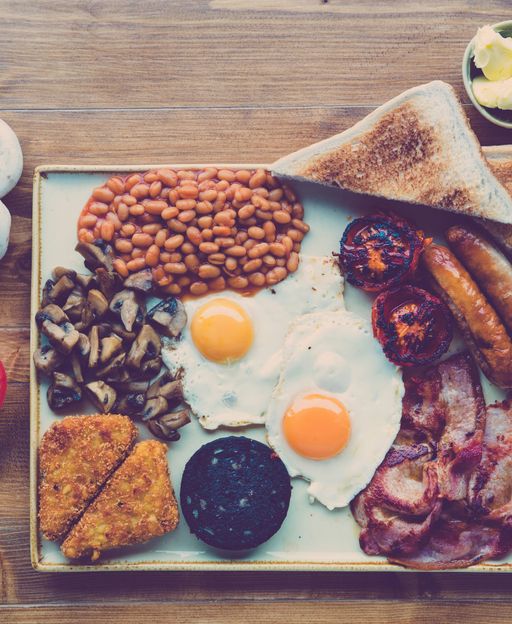
Order a full English breakfast in London and you will receive a plate that looks slightly overwhelming. Eggs — usually fried or scrambled. Back bacon, crisped at the edges. Two pork sausages, browned on all sides. Baked beans in tomato sauce. A grilled or fried tomato. Mushrooms. A slice of black pudding if you asked for it. Toast on the side. A mug of tea large enough to swim in. This is the full English breakfast, and London serves it everywhere from greasy spoons open before dawn to grand hotel dining rooms that charge £30 a head for the same basic plate.
Where the Full English Breakfast Came From
The full cooked breakfast as Londoners know it took shape in the 19th century. Before that, breakfast in Britain was whatever you could afford. The wealthy ate cold meats and bread. The poor ate porridge. It was the Victorian era’s obsession with robust, hearty eating that transformed the morning meal.
Cookery books of the 1800s began listing cooked breakfasts as a mark of a well-run household. Eggs, bacon, and kidneys were fashionable for those who could afford them. By the early 20th century, the cooked breakfast had spread down the social ladder, helped along by the expansion of cafés and railway refreshment rooms that served working men heading to factory shifts before 6am.
The post-war period cemented it. Rationing ended in 1954, and baked beans, sausages, and back bacon became affordable staples. The greasy spoon café — a word Londoners use without any embarrassment — became a fixture of every high street and back alley. These were simple places: Formica tables, mugs on hooks, a cook frying everything in the same pan, all day. They opened early and fed the people who built the city.
What Goes on a Full English Plate
There is no single official list, but most London versions include all or most of the following:
- Back bacon — British back bacon has a large eye of lean meat and a strip of fat. It is broader and less fatty than American streaky bacon, and it is cooked differently. Most London cafés grill or fry it until the fat is slightly crisp at the edges.
- Pork sausages — Two to three links of pork sausage, ideally with a good snap when you bite into the casing. The best London sausages have a high meat content and minimal filler. Ask for them well-browned.
- Eggs — Fried eggs are the default. Scrambled and poached are both common. Soft-fried eggs, with the yolk still runny, are the choice of most regulars.
- Baked beans — Heinz baked beans in tomato sauce. This is not negotiable in most cafés. They arrive in their own small section of the plate, warm, and they are very good with toast.
- Grilled tomato — A tomato halved and cooked under the grill or in a pan. It softens but holds its shape. It adds acidity to cut through the richness of the sausage and bacon.
- Mushrooms — Button or field mushrooms, fried in butter. The best ones are dark brown at the edges and properly cooked through.
- Black pudding — A slice of black pudding (blood sausage, made with oats and spices) is the most divisive component. Many cafés include it by default. You can ask to leave it off. You should probably try it at least once.
- Toast — White sliced bread, toasted. Butter on the side. The toast arrives separately and is for wiping the yolk from the plate.
A cup of tea — strong, with milk — is the standard drink. Coffee is widely available but tea is the correct choice here.
🗺️ Free Guide: The Best Day Trips from London (2026)
Top day trips by train, by car, and hidden gems most visitors never find — with travel times, insider tips, and the best time to visit each. Free when you subscribe to Love London.
Get the Free Day Trips Guide → Subscribe free at the guide page to receive weekly London travel storiesThe Greasy Spoon: A London Institution
The term “greasy spoon” is affectionate. It refers to a café that serves cooked food, usually from early morning, usually cheaply, usually without any interest in trends or presentation. The food arrives on a heavy ceramic plate. The tea comes in a large mug. The cook shouts your order number across a room full of builders, nurses finishing night shifts, and market traders who started work at 4am.
London has hundreds of these cafés, though their numbers have fallen significantly since the 1980s as rents have risen and tastes have shifted toward coffee shops and artisan bakeries. The survivors are worth tracking down. They represent something essential about London that no restaurant guide tends to cover.
E. Pellicci at 332 Bethnal Green Road is the most famous greasy spoon in London, and probably one of the most remarkable cafés in England. The family has run it since 1900. The interior, created in the 1940s by a local craftsman, is Grade II listed — the hand-worked wooden panelling, the Vitrolite glass, and the marquetry ceiling are all protected. The breakfast is excellent. The atmosphere is better. Regulars include everyone from cab drivers to artists. Go on a weekday morning.
Regency Café at 17–19 Regency Street in Westminster opened in 1946 and looks exactly as it did in the post-war years. The black-and-white tiled exterior, the Art Deco lettering, the hand-written menu on a chalkboard. It has appeared in several British films. The breakfasts are large and very good. Cash only. Arrive before 8am on weekdays if you want a table without waiting.
The Full English at London’s Best Restaurants
Not everyone wants the greasy spoon experience, and several London restaurants have elevated the full English into something more considered — without losing what makes it good.
Dishoom serves a version they call the Big Bombay breakfast. It is an Irani café interpretation: bacon naan rolls, masala beans, egg bhurji (a spiced scrambled egg), and chai. It is not a traditional full English, but it shows you how the format adapts when great ingredients and serious cooking are involved. Dishoom has multiple London branches in King’s Cross, Shoreditch, Carnaby, Covent Garden, Kensington, and Battersea.
The Wolseley on Piccadilly offers the full English in surroundings that could not be more different from a greasy spoon. The building is a former motor showroom designed in 1921, with arched ceilings, marble columns, and a dining room that feels like a grand European café. Their full English includes free-range eggs and Gloucester Old Spot sausages. It is expensive by greasy spoon standards but one of the finest dining rooms in London to eat breakfast in.
For a broader view of London’s food scene, the London food guide for US visitors covers everything from street food to fine dining, neighbourhood by neighbourhood.
Pub Breakfasts and Hotel Breakfasts
Many London historic pubs with food serve breakfasts on weekend mornings. A pub breakfast is typically a full English served in a large room with tables, wooden benches, and the slightly unusual smell of a pub before noon. The food is usually good and often cheaper than a dedicated breakfast café. Look for pubs near markets or mainline stations — these are most likely to have a working kitchen from 8am.
Hotel breakfasts in London range from the very bad to the exceptional. The included breakfast at many budget chain hotels is a watered-down version: pre-cooked sausages kept warm in a tray, powdered scrambled eggs, tinned tomatoes. It is not the same thing. If you are staying at a hotel that offers breakfast as an add-on, it is worth asking what is cooked to order. The difference between a cooked-to-order and a kept-warm breakfast is significant.
Borough Market, a short walk from London Bridge, opens on weekday mornings and its surrounding streets are home to several good breakfast options. Borough Market’s food stalls do not typically serve a full English, but the area’s cafés and the market’s own traders start selling from 8am on weekdays.
How to Order a Full English: Tips for First-Timers
A few things will help you order well in a London café:
- Specify your eggs. The default is fried. Say “sunny side up” and you will get a blank look — say “fried, runny yolk” or “fried, hard” instead. Scrambled and poached are both common alternatives.
- Black pudding. If you are unsure, ask for it on the side. A good black pudding is earthy, spiced, and rich. It is made from pig’s blood, oatmeal, and suet. It is worth trying once.
- White or brown sauce. HP sauce (brown, tangy, slightly fruity) is the classic accompaniment. Heinz tomato ketchup is also standard. Never ask for maple syrup.
- Toast, not bread. Greasy spoons serve sliced white bread, toasted. Do not expect sourdough or anything with seeds. The toast is for mopping and buttering.
- Pay first at the counter. Most greasy spoons take your order at the counter and hand you a number. You pay when you order. Tipping is not expected, though small coins left on the table are appreciated.
If you are planning a three-day London itinerary, a greasy spoon breakfast on day one sets the right tone. It is cheaper than a hotel breakfast and gives you a genuine London experience before the tourist sights begin.
What Makes a Good Full English
The quality of a full English comes down to three things: the sausages, the eggs, and the timing. Sausages should be pork, with a high meat content, cooked until the outside is brown and the inside is still moist. Eggs should be cooked to order — a fried egg that has been sitting under a heat lamp for 20 minutes is a different food entirely. And everything should arrive on the plate at the same time, hot, without the bacon having gone cold while the eggs were still cooking.
The best greasy spoons achieve this through repetition. A cook who has made the same plate five hundred times this week knows exactly when to drop the eggs so everything finishes together. The worst hotel versions fail at this basic coordination. The food arrives in waves: cold beans, then a hot plate, then the eggs five minutes later.
For first-time visitors to London, a full English breakfast at a proper greasy spoon is one of the most straightforward ways to experience a part of London that has nothing to do with tourists. The cafés that survive are good at what they do, they have regular customers, and they welcome strangers without ceremony.
What is a full English breakfast?
A full English breakfast is a cooked morning meal consisting of back bacon, pork sausages, fried or scrambled eggs, baked beans, grilled tomato, mushrooms, and toast. Black pudding is often included. It is a staple of London cafés and greasy spoons, and has been served in roughly this form since the early 20th century.
Where is the best full English breakfast in London?
E. Pellicci on Bethnal Green Road and the Regency Café in Westminster are the two most celebrated greasy spoons in London. The Wolseley on Piccadilly offers the full English in a grand brasserie setting. Dishoom serves a Bombay-influenced version across multiple London branches. For an authentic experience, any independent café near a working market or railway station will likely serve a good plate.
How much does a full English breakfast cost in London?
A full English at a greasy spoon typically costs between £8 and £14. At a mid-range café or pub, expect to pay £12 to £18. At a hotel restaurant or a place like The Wolseley, prices run from £18 to £30. The food quality at a well-run greasy spoon is often significantly better than at the expensive end of the range.
Is a full English breakfast available all day in London?
Most greasy spoons serve breakfast from opening time (often 6 or 7am) until the early afternoon, typically stopping around 2pm. Some London cafés serve all-day breakfast through to 4 or 5pm. Dishoom serves their breakfast menu until noon. The Wolseley serves breakfast from 7am on weekdays and until 11.30am at weekends.
Join 3,000+ London Lovers
Every week, get London’s hidden gems, local secrets, and travel inspiration — the kind you won’t find in any guidebook.
Subscribe free — enter your email:
Love more? Join 64,000 Ireland lovers → · Join 43,000 Scotland lovers → · Join 30,000 Italy lovers →
Free forever · One email per week · Unsubscribe anytime