
On Christmas morning 1950, staff at Westminster Abbey made a discovery that sent shockwaves through the British establishment. The most sacred object in the coronation ceremony — a 152-kilogram block of ancient sandstone that had sat in the Abbey for 654 years — was gone. The thieves were four university students from Glasgow. And they were never prosecuted.
A Stone Older Than England Itself
The Stone of Scone — also called the Stone of Destiny — is a block of reddish-brown sandstone. It measures roughly 66 by 42 centimetres and weighs 152 kilograms. Unremarkable to look at, perhaps. But for centuries before England existed as a unified kingdom, Scottish kings were crowned sitting upon it.
🏙️ Love London?
3,000 London lovers get hidden history, street-level stories, and local secrets every week. Free, forever — no spam, unsubscribe any time.
Subscribe free — enter your email:
Its origins are disputed. Legend claimed it was the very pillow that the biblical patriarch Jacob rested his head upon when he dreamed of angels ascending to heaven. More reliable history places it at the heart of Scottish coronations from at least the 9th century, when Kenneth MacAlpin united the Picts and Scots.
In 1296, all of that changed. King Edward I of England defeated Scotland in battle and seized the stone as a prize. He had a wooden throne built around it — the Coronation Chair — and installed it in Westminster Abbey. From that day, every English and later British monarch would be crowned sitting directly above it.
The message was deliberate. The stone didn’t just represent coronation. It represented conquest. For the next 654 years, the Scots didn’t forget.
Christmas Night, 1950
Ian Hamilton was 25 years old and studying law at Glasgow University when he decided to take matters into his own hands. He recruited three fellow students — Gavin Vernon, Kay Matheson, and Alan Stuart — and worked out a plan that was either brilliantly audacious or completely mad, depending on your point of view.
On Christmas Day, the four drove south to London. They waited until Westminster Abbey had closed and the city fell quiet. Then they got inside. Exactly how remains disputed — the door may not have been as secure as it should have been.
The stone was heavier than they had expected. During the effort to lift and move it, it broke cleanly into two pieces. At this point, most people would have abandoned the plan. Hamilton and his companions did not.
They loaded the two pieces into separate cars and drove north through the night. By the time Westminster Abbey opened its doors on Boxing Day, the Stone of Scone was somewhere north of the border.
The Search That Found Nothing
The reaction in London was somewhere between fury and embarrassment. Police set up roadblocks across the country. Scotland Yard launched one of its largest searches in years. The British press treated it as a national crisis.
The stone remained hidden. Hamilton and his companions moved it from house to house across Scotland. What surprised observers at the time was the reaction north of the border — where a significant number of Scots, including many who didn’t support independence, found the whole episode quietly thrilling.
After four months, the stone reappeared — and in the most pointed way imaginable. In April 1951, it was left on the altar of Arbroath Abbey in Angus. The choice of location was deliberate. Arbroath is where, in 1320, Scottish nobles signed the Declaration of Arbroath, one of the earliest documents in history asserting a nation’s right to self-determination.
The message was unmistakable. Scotland had sent it back — but on its own terms.
Why Nobody Was Ever Charged
The stone was recovered, repaired with copper pins, and returned beneath the Coronation Chair. The four students were interviewed by police. And then, remarkably, nothing happened.
The authorities chose not to prosecute. There were legal complications — it was unclear exactly which law had been broken — but the political calculation mattered more. A public trial would have made the four students heroes across Scotland. It would have turned the stone’s return into a far bigger story than the theft itself.
Hamilton went on to become a distinguished Scottish lawyer, eventually receiving an OBE. He wrote a memoir about the affair and remained entirely unrepentant. In interviews over the years, he described the episode not as a crime but as an act of repatriation.
Scotland Gets It Back — Officially
For forty-five years, the stone remained beneath the Coronation Chair as if nothing had happened. Then, in 1996, the Conservative government made an announcement that few had expected: the Stone of Scone would be returned to Scotland.
After 700 years in England, it arrived in Edinburgh on St Andrew’s Day, 30 November 1996. It took its place in Edinburgh Castle alongside the Scottish Crown Jewels. There was one condition attached: the stone must be returned to Westminster Abbey for every future coronation.
The condition has been honoured. For King Charles III’s coronation in May 2023, the stone made the journey south once more. It sat beneath a newly made Coronation Chair as the Archbishop of Canterbury presided. Afterwards, it went home to Edinburgh.
Visiting Westminster Abbey Today
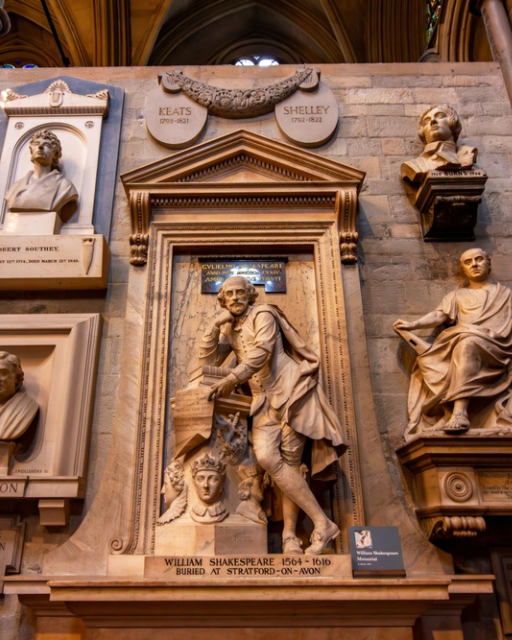
The original Coronation Chair — built around 1300 to hold the stone — is still in Westminster Abbey. It is one of the oldest pieces of functional furniture in Britain. Over the centuries, Westminster School pupils and assorted visitors carved graffiti into it, apparently unable to resist the temptation.
Westminster Abbey is one of the most layered historic buildings in London. Nearly every British monarch since 1066 has been crowned within its walls. The Shrine of St Edward the Confessor, Poets’ Corner, and the nave each hold stories that most visitors only skim the surface of.
If you are planning a visit to London, the Abbey repays those who go in knowing what to look for. Our complete guide to planning your London trip covers everything from getting there to making the most of your time in the city.
For more of London’s royal history, Windsor Castle’s story spans almost a thousand years — and holds just as many surprises as the Abbey itself.
A 152-kilogram block of sandstone has been fought over, stolen, hidden, repaired, returned, stolen again, and officially repatriated. It has crossed the border between Scotland and England more times than most people cross the street. Sitting in Edinburgh Castle today, it is still Britain’s most contested rock — and still capable of making history.
🇬🇧 25 Hidden Gems of London Most Tourists Never Find
From secret riverside walks to hidden Victorian tunnels, centuries-old pubs to rooftop gardens with skyline views — our free guide reveals the London most visitors never discover. Join 3,000+ London lovers who get it free.
Love more? Join 65,000 Ireland lovers → · Join 43,000 Scotland lovers → · Join 30,000 Italy lovers →
Free forever · Unsubscribe anytime
