
Every day, millions of people photograph Tower Bridge and see a medieval castle stretched across the Thames. Sturdy stone towers. Gothic arches. A skyline that looks like it belongs to the 14th century rather than the 19th.
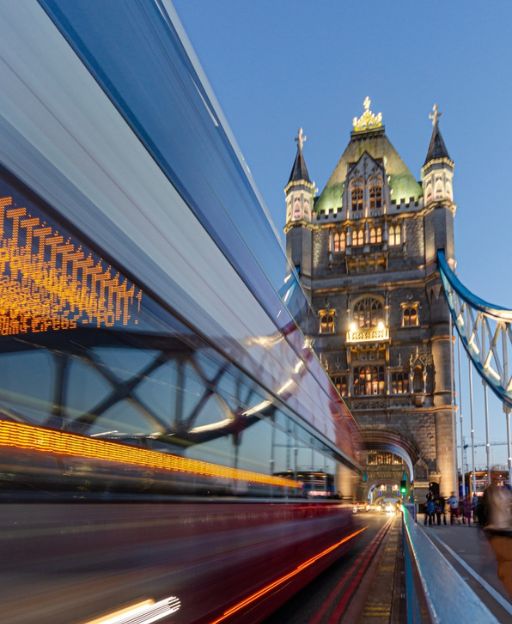
They are looking at a disguise.
Beneath the granite and Portland stone, Tower Bridge is a Victorian steel machine. Two hundred feet of iron latticework carries the weight of the towers and the two bascule arms that lift to let tall ships through. The Gothic exterior is a cladding — a costume — and an architectural choice that caused one of the most bitter arguments in Victorian London.
The Steel Frame Nobody Talks About
When Tower Bridge opened in 1894, The Engineer magazine called it a “monstrous debacle.” Professional architects and structural engineers were furious at what they saw as deliberate deception — hiding a triumph of modern engineering behind the pastiche of a medieval castle.
🏙️ Love London?
3,000 London lovers get hidden history, street-level stories, and local secrets every week. Free, forever — no spam, unsubscribe any time.
Subscribe free — enter your email:
They were not wrong about the facts. Every Gothic arch and decorative turret is a stone skin over a steel skeleton. The bascule arms that lift to allow ships through are made of the same Victorian ironwork that built the railways and the sewers — powerful, functional, and invisible.
But the critics were wrong about what mattered. London did not want an honest steel frame. London wanted something that looked like it had always been there, and that is exactly what it got.
Why Gothic? Because of What Stands Next Door
The decision to dress Tower Bridge in Gothic stone was not an accident. It was a careful response to the most important building on the site: the Tower of London, a nine-century-old fortress that stands just metres from the bridge’s north tower.
When City Architect Horace Jones began designing the bridge in the 1880s, he understood the problem immediately. Whatever he built would stand in permanent conversation with one of Britain’s most iconic medieval structures. A bare steel frame — however efficient — would have looked like a factory beside a cathedral.
Jones chose to answer in stone. The Gothic revival style — already used on the Houses of Parliament and fashionable in Victorian Britain — gave the bridge a visual language that harmonised with its ancient neighbour. Jones died in 1887 before construction was complete, and Sir John Wolfe Barry finished the work, preserving the Gothic vision while engineering the steel framework beneath it.
The Victorian Engineers Who Could Not Forgive It
Victorian engineering was at the height of its confidence in the 1880s. The Crystal Palace, the railways, the London sewers — engineers had rebuilt the world and they wanted credit for it. An honest steel structure, visible and proud, was what many believed the age demanded.
Tower Bridge, wrapping its steel bones in Gothic stone clothes, felt like a betrayal of that pride. The Civil Engineer and Architect’s Journal dismissed the towers as “mere masquerade.” Others argued that honest engineering was the true architecture of the modern age — and that dressing it up in borrowed medieval costume was cowardly.
The debate was not really about aesthetics. It was about what kind of city London wanted to become. A city that wore its industrial modernity openly, or one that preferred to wrap it in comfortable historical references.
London chose the references. And the engineers lost the argument to time.
The Public Could Not Get Enough of It
While the professional critics fumed, the public queued.
Tower Bridge opened on 30 June 1894 with the Prince of Wales presiding and tens of thousands lining the banks. Londoners had waited eight years to see their new bridge. When the bascules lifted for the first time, the crowd roared.
Within days, Tower Bridge was a symbol. Postcards sold in their thousands. Paintings appeared in shop windows. Artists who had spent careers sketching the Tower of London found they had a new subject. The bridge that the engineering press had called a debacle was already selling itself to the world.
A hundred and thirty years later, Tower Bridge appears on more photographs, souvenirs, and tourist posters than almost any structure in Britain. The critics were wrong, in the way critics often are when they mistake their professional standards for permanent truths.
What Happens When the Bridge Lifts
The bascule mechanism underneath all that stone is one of the most reliable pieces of Victorian engineering still in daily use. Each bascule arm weighs around 1,000 tonnes. When the bridge lifts, counterweights positioned at the rear of each arm descend into chambers inside the piers, balancing the load. The whole process takes about five minutes.
Originally driven by steam-powered hydraulic engines, the mechanism was converted to electric motors in 1976. The original Victorian hydraulic engines — polished brass and cast iron, still smelling faintly of oil — are preserved in the engine rooms below the bridge and are open to visitors. They are magnificent, and they are exactly the kind of honest Victorian engineering that the critics wanted people to see.
The bridge lifts around 800 to 1,000 times a year. You can check the lifting schedule online before you visit if you want to time it right.
The High-Level Walkways and Their Curious History
At 42 metres above the Thames, the high-level walkways connect the two towers. The views — east to Canary Wharf, west across the City — are extraordinary on a clear day.
When they were built in 1894, the walkways were purely practical: a pedestrian crossing available whenever the bascules were raised. They were popular at first.
Then they were quietly closed in 1910. The official reason was that they had become “unsuitable.” In practice, they had become a favoured gathering point for people who had no intention of crossing the bridge at all. The views were spectacular. The privacy was useful. The authorities closed them without much public explanation.
The walkways reopened in 1982 as a visitor attraction. A glass floor section was added later, letting you look straight down at the traffic below. Some visitors love it. Others discover, on the spot, that they do not love heights quite as much as they assumed.
Planning Your Visit to Tower Bridge
Tower Bridge is straightforward to reach. Tower Hill on the District and Circle lines, or London Bridge on the Jubilee and Northern lines, both leave you within easy walking distance. For a full guide to moving around the capital, the London transport guide for US visitors covers everything from the Tube to the river bus.
The Tower Bridge Exhibition includes the high-level walkways, the glass floor, and the Victorian engine rooms. Book tickets in advance in summer — queues on the day can be long. The engine rooms alone are worth the visit, and they tell a very different story from the Gothic towers above them.
If the Victorian architecture has you curious, the story of how London rebuilt after the Great Fire is equally absorbing. One architect rebuilt 87 churches after the fire and left a skyline that still shapes the City of London today — a very different kind of building campaign from the one that gave us Tower Bridge.
And if you’re still working out when to come, the month-by-month guide to visiting London will help you pick your moment.
Standing on the south bank at dusk, watching a red bus blur across the bridge with the lights coming on in the towers behind it, the argument about stone and steel feels very far away. Horace Jones was right. The disguise became the truth — and the truth became London.
🇬🇧 25 Hidden Gems of London Most Tourists Never Find
From secret riverside walks to hidden Victorian tunnels, centuries-old pubs to rooftop gardens with skyline views — our free guide reveals the London most visitors never discover. Join 3,000+ London lovers who get it free.
Get Your Free London Hidden Gems Guide →Love more? Join 65,000 Ireland lovers → · Join 43,000 Scotland lovers → · Join 30,000 Italy lovers →
Free forever · Unsubscribe anytime
