
Most visitors know Buckingham Palace for the Changing of the Guard and the balcony. Fewer know that it started life as a private London house, and that a king bought it because his family had outgrown St James’s. The story runs through three centuries of building work, arguments over money and one very bad year for the architect.
A Duke’s House by the Park (1703)
The site began as mulberry gardens, planted in the early 1600s. James I hoped to start a silk industry in London, but the mulberry trees he chose did not suit silkworms, and the plan failed. Over the next hundred years the land passed through several owners.
In 1703 John Sheffield, Duke of Buckingham and Normanby, built a grand new brick house here. The architect, William Winde, gave it a central block with two wings facing a forecourt. Buckingham House stood on the edge of St James’s Park, close to the royal court but still private property. The Duke’s family lived there for most of the next sixty years. It was a fine London home, but nobody then called it a palace.
George III Buys the Queen’s House (1761)
In 1761 King George III bought Buckingham House for about £21,000. He wanted a comfortable family home for his new wife, Queen Charlotte, away from the formal rooms of St James’s Palace. The household soon called it the Queen’s House.
The couple filled it with books, paintings and children. Fourteen of their fifteen children were born here. George III gathered a large collection of books, and that library later became a cornerstone of the British Library’s holdings. Court business still took place at St James’s, which is why ambassadors are still formally accredited to the Court of St James’s today. The Queen’s House was a home first and a place of state second.
John Nash and the Palace That Cost Too Much
George IV had grander plans. After he became king in 1820, he asked the architect John Nash to turn the house into a real palace. Nash kept the old core and wrapped it in new stonework. He added a central courtyard and planned a triumphal gateway in front, which later became Marble Arch.
The costs spiralled far beyond the estimate. Parliament grew angry, and the king’s advisers began to lose patience. George IV died in 1830, and the building was still unfinished. Nash lost his job, and the architect Edward Blore finished the work for the next monarch, William IV. William did not want to live there. He even offered the unfinished building as a home for Parliament after the fire of 1834. You can read what happened to Parliament in our guide to the Palace of Westminster and the 1834 fire.
🏙️ Enjoying this? 3,000 London lovers get stories like this every week. Subscribe free →
Queen Victoria Moves In (1837)
Queen Victoria became the first monarch to live at Buckingham Palace, moving in during 1837 soon after she took the throne. The palace suited a young queen alone, but it did not suit a growing royal family. It had too few bedrooms, and the ballroom was too small for the entertaining a monarch had to do.
Blore built a new east wing between 1847 and 1850, which closed off the courtyard and gave the palace the front that looks onto The Mall. The Royal Pavilion at Brighton, which Victoria disliked, helped pay for the work, because the government sold it to the town of Brighton. The Marble Arch, now too narrow for the state coach, moved to the corner of Hyde Park in 1851. A large new ballroom opened in 1855. Victoria’s husband, Prince Albert, drove much of this planning, and the family rooms still carry his stamp.
The Face You See Today: Webb and the Victoria Memorial
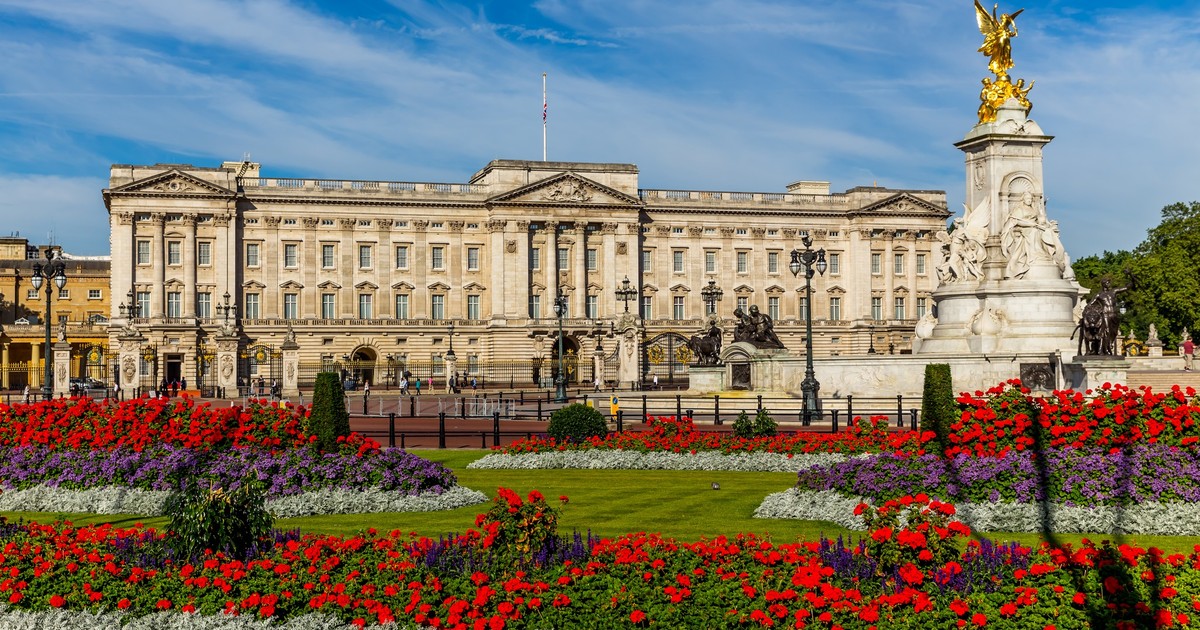
The east front you see in photographs is much younger than the rest of the palace. The stone Blore used in the 1850s weathered badly in London’s coal-smoke air. In 1913 the architect Sir Aston Webb refaced the whole front in Portland stone, the same pale limestone that clads St Paul’s Cathedral. He finished the job in a matter of months.
Webb also designed the setting in front of it. The Queen Victoria Memorial, carved by the sculptor Thomas Brock, was unveiled in 1911. It stands at the end of The Mall, so the palace now sits at the heart of a processional route for state events. The golden figure of Victory on top is visible in the photograph above. For more on the memorial, see this overview of the Victoria Memorial.
The Palace at War
Bombs hit Buckingham Palace nine times during the Second World War. In September 1940 a bomb destroyed the palace chapel. The royal family stayed in London and visited bombed streets across the city, including the East End. After one attack, the Queen, later known as the Queen Mother, remarked that the bombing made her feel she could look the East End in the face.
The destroyed chapel left a gap. Builders later used the site for The Queen’s Gallery, which opened in 1962 to show works from the Royal Collection. If your family has London roots, our look at the London Blitz and how to trace your family’s story may help you place relatives who lived through these years. On VE Day in 1945, the royal family stepped onto the palace balcony with Winston Churchill, while huge crowds filled The Mall below.
Buckingham Palace Today
The palace is the working headquarters of the monarchy, with about 775 rooms. It is also the setting for state banquets, investitures and garden parties. In 1993 the royal household opened the State Rooms to paying visitors for the first time, using the money to help repair Windsor Castle after its fire.
Opening dates, tickets and security rules change from year to year, so check the official visitor pages before you plan a trip. Our Buckingham Palace planning guide for US visitors covers how to get there, what to see outside and how to fit it into a day. For the wider story, the Buckingham Palace article on Wikipedia has a detailed timeline.
The palace shows its whole history in a single look. Winde’s 1703 house survives at the core. Nash’s grand rooms wrap around it, Blore’s east wing closes the courtyard, and Webb’s pale Portland stone dresses the front. When you stand at the Victoria Memorial and look back along the façade, you see three centuries of changing royal taste, from a duke’s country-style town house to the backdrop of national celebrations.
Frequently Asked Questions
When did Buckingham Palace become the monarch’s home?
Queen Victoria moved in during 1837, making her the first monarch to live there. Earlier kings used St James’s Palace for court business.
Who built Buckingham Palace?
William Winde designed the original house in 1703. John Nash remodelled it from the 1820s, Edward Blore finished the work and Sir Aston Webb refaced the east front in 1913.
Why is the east front made of Portland stone?
The earlier stone weathered badly in London’s smoky air. Webb chose hard-wearing Portland stone in 1913, which still looks pale and clean today.
Join 3,000+ London Lovers
Every week, get London’s hidden history, heritage walks, and stories from the city’s remarkable past — straight to your inbox.
Subscribe free — enter your email:
Free forever · One email per week · Unsubscribe anytime