
In the early 1960s, fashion in Britain was stiff, expensive, and made for people with money. Young Londoners had little of it and plenty of energy. They needed somewhere of their own. They found it on a short street in Soho.
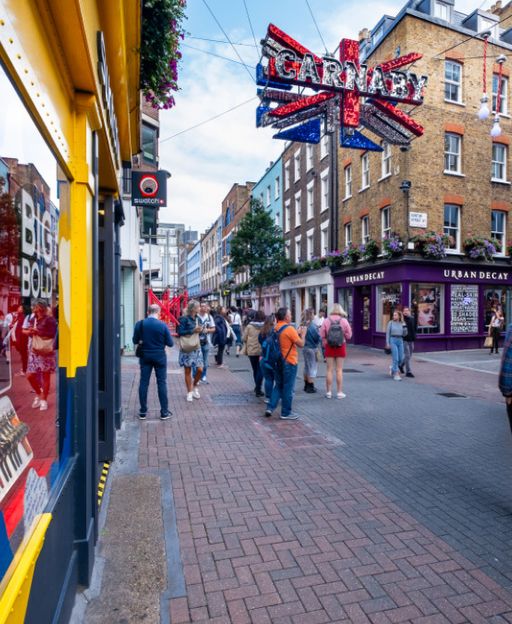
Carnaby Street is barely 200 metres long. You can walk it in under two minutes. But between roughly 1955 and 1975, it became one of the most talked-about addresses in the world.
The Street Nobody Expected to Matter
For most of its history, Carnaby Street was unremarkable. It ran between Beak Street and Ganton Street in the heart of Soho, lined with small warehouses, workshops, and very little else.
🏙️ Love London?
3,000 London lovers get hidden history, street-level stories, and local secrets every week. Free, forever — no spam, unsubscribe any time.
Subscribe free — enter your email:
After the Second World War, the streets around Soho became London’s unofficial home for bohemian culture. Jazz clubs, coffee bars, and art students filled the neighbourhood. Cheap rents attracted people with creative ideas and not much cash.
That’s what brought John Stephen to Carnaby Street in 1956. Stephen was a 21-year-old from Glasgow working in a menswear shop on nearby Regent Street. He noticed that young men wanted to dress differently — brightly, boldly, cheaply — and he opened a tiny shop selling exactly that.
He charged prices young people could actually afford. Within a few years, Stephen had opened five more shops on the same street. Others followed. By the early 1960s, the street had transformed completely.
The Look That Changed Everything
The clothes coming out of Carnaby Street in the early 1960s were unlike anything available elsewhere in Britain. Tight trousers in bold colours. Paisley shirts. Pointed boots. Short skirts. Clothes designed for movement, for fun, for standing out.
The traditional British fashion industry — centred on tailored suits and muted tones — had nothing to offer young people who wanted to look like themselves rather than their parents. Carnaby Street offered an alternative.
For the first time, fashion was affordable, fast, and fun. You didn’t need to save for months or visit a department store on Oxford Street. You could walk into one of the Carnaby boutiques with a few pounds and walk out looking completely different.
By 1964, Time magazine had run a feature on London as the fashion capital of the world. Carnaby Street featured prominently. Tourists began arriving specifically to walk the street and buy something to take home.
The Sound on Every Shop’s Turntable
You couldn’t walk through Carnaby Street in the 1960s without hearing music. Shops played records at full volume, competing with each other to be louder.
The Rolling Stones, The Kinks, The Who, The Small Faces — all became closely associated with the bold, unapologetic style pouring out of those small boutiques. The look and the sound were inseparable. You dressed like you listened.
Jimi Hendrix, who played some of his final performances just a few streets away at Ronnie Scott’s Jazz Club in Frith Street, was a regular in the Carnaby Street boutiques. The music scene and the fashion scene existed in the same few square blocks, each feeding the other.
This wasn’t just British youth culture finding its feet. It was being watched and copied around the world.
When the World Came to Look
By the mid-1960s, Carnaby Street had been pedestrianised, which only added to its appeal. The world’s press turned up regularly. Fashion photographers used the street as a backdrop. Film crews arrived from America, Germany, and Japan.
The shops kept adapting. Unisex clothing appeared on Carnaby Street years before it became a mainstream idea elsewhere. Designers barely out of their teens ran boutiques that influenced buyers in Milan and New York.
It didn’t last forever. By the early 1970s, the creative energy had shifted. Punk would find its home in Chelsea rather than Soho — a story told in its own right in the neighbourhood that gave the world punk. Carnaby Street became more tourist destination than creative laboratory.
But its influence never went away. The idea that fashion should be democratic — affordable, expressive, made for everyone regardless of class or income — is something Carnaby Street helped make mainstream. Before Carnaby, that idea barely existed in Britain.
What You’ll Find on Carnaby Street Today
Carnaby Street today is still pedestrianised, still colourful, and still busy. The independent boutiques of the 1960s have largely been replaced by chain stores and international brands, but the street retains something of its original energy.
Each December, the street is transformed by some of the most ambitious Christmas light displays in London — a tradition that draws people from across the city. The Carnaby sign and its Union Jack branding have become recognisable worldwide.
A short walk brings you to Regent Street, the food stalls and jazz venues of Soho, and some of the best independent shopping in central London. It’s easy to spend a full afternoon in this part of the West End without retracing your steps. The London 3-Day Itinerary includes Carnaby Street alongside other central highlights in a manageable route from any hotel.
Why It Still Matters
The Swinging Sixties have been written about, filmed, and romanticised countless times. But what actually happened on Carnaby Street was simpler and more radical than the mythology suggests.
A young man from Glasgow noticed that fashion was ignoring young people. He opened a small shop on an obscure Soho street with affordable prices and bold designs. Other people noticed what he was doing. A movement followed.
That’s how culture often works in London. Someone finds a quiet corner of the city and starts doing something that nobody has seen before. The city notices. The world follows.
Stand at one end of Carnaby Street on a busy afternoon and watch the people moving through it. They’re still dressed boldly, still in a hurry, still looking for something that feels like their own. Not much has changed, really.
🇬🇧 25 Hidden Gems of London Most Tourists Never Find
From secret riverside walks to hidden Victorian tunnels, centuries-old pubs to rooftop gardens with skyline views — our free guide reveals the London most visitors never discover. Join 3,000+ London lovers who get it free.
Get Your Free London Hidden Gems Guide →Love more? Join 65,000 Ireland lovers → · Join 43,000 Scotland lovers → · Join 30,000 Italy lovers →
Free forever · Unsubscribe anytime