
The Thames path is one of London’s most underused assets. You don’t need a tour guide, a ticket, or even a map to enjoy it. Pick two bridges, start at one, and walk to the other. That’s the whole plan.
This guide covers the best bridge-to-bridge stretches on the Thames, from the central tourist belt to the quieter reaches east and west. Each walk is practical: distances, what you’ll pass, and what’s worth stopping for.
Love exploring London? Get our free weekly guide — local walks, hidden spots, and things to do delivered straight to your inbox. Subscribe here →
Westminster Bridge to Waterloo Bridge (0.5 Miles)
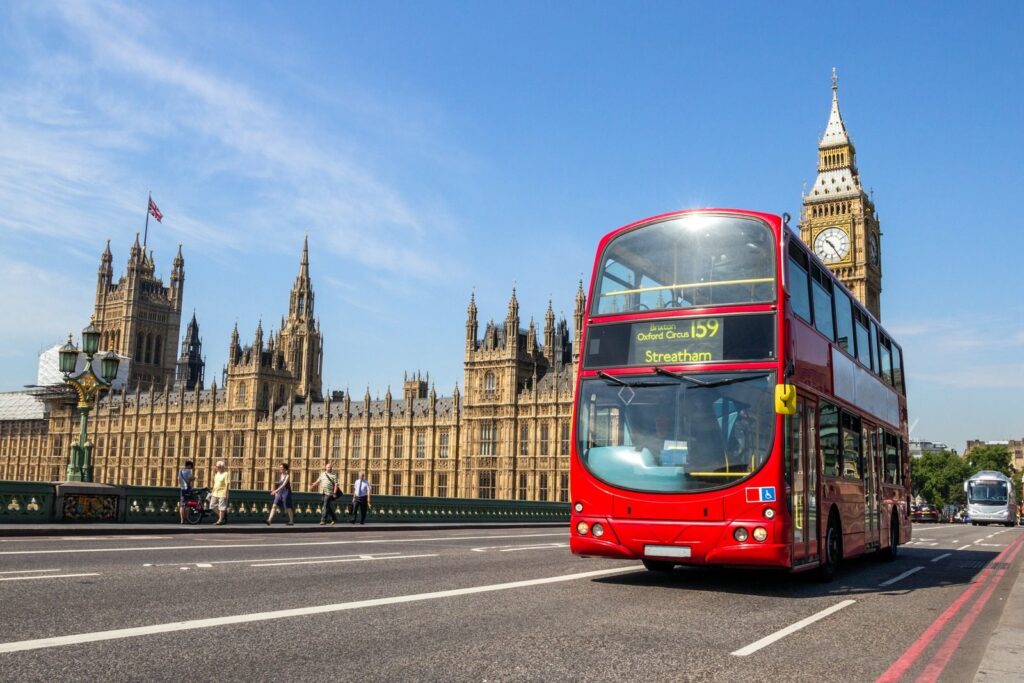
This is the most dramatic half-mile in London. Start on Westminster Bridge and you have the Houses of Parliament behind you and the South Bank stretching ahead. Cross to the south side and walk east along the river.
You’ll pass the London Eye almost immediately. It’s impossible to miss, though you can walk straight past it without queuing if you’re not bothered about going up. The real draw here is the view back across the water — the Victoria Embankment with its trees, the gothic spires of Parliament, and Big Ben (fully restored and chiming again since 2022).
Continue along the South Bank and you reach the Royal Festival Hall. This is a good place to stop: the building is free to enter, there’s often something happening in the foyer — a free gig, an art installation, or just a decent café. It was built for the Festival of Britain in 1951 and has been a public space ever since.
Waterloo Bridge itself offers what many Londoners consider the finest view of the city. Looking west you can see Somerset House, St Paul’s dome, and on a clear day, the hills of north London behind. The bridge is wide and flat, easy walking, and there’s a secondhand book market at the South Bank end most afternoons.
Distance: 0.5 miles south bank, 20–30 minutes
Best time: Late afternoon for the light on Parliament
Nearest station: Westminster (District, Circle, Jubilee)
Blackfriars Bridge to Millennium Bridge (0.3 Miles)
Short but packed. This stretch on the south bank takes you between two very different bridges and past some of London’s best-known cultural buildings.
Start at Blackfriars Bridge, which sits at the point where the old Fleet River joins the Thames — though you’d never know it now. The road bridge you can see alongside is actually a railway bridge, and the original Victorian piers from a demolished predecessor still sit in the river. The red and cream painted iron is worth a look.
Walk east along the South Bank and you quickly reach the Tate Modern. Entry to the permanent collection is free. If you’re pushed for time, the Turbine Hall alone is worth stepping inside — it’s vast, and there’s almost always a large-scale commission filling the space.
The Millennium Bridge connects Tate Modern to St Paul’s Cathedral on the north bank. It’s a pedestrian-only suspension bridge and offers a direct sightline straight up Ludgate Hill to the cathedral’s dome. The bridge wobbled alarmingly when it opened in June 2000 and had to be closed for modifications — it’s been solid ever since, but the story is part of its identity now.
Distance: 0.3 miles south bank, 10–15 minutes
Best time: Morning for fewer crowds at Tate Modern
Nearest station: Blackfriars (Circle, District)
London Bridge to Tower Bridge (0.4 Miles)
This is the walk that gets the most photographs. Tower Bridge is the image most people picture when they think of London, and seeing it from river level — approaching it on foot — is a different experience from any postcard.
Start at London Bridge (the current one, built in 1973 — visually unremarkable, but historically significant as the lowest crossing of the Thames for centuries). Head east on the south bank.
You’ll walk through Borough riverside, past the remains of Winchester Palace — a medieval great hall whose rose window survives in one of the old walls. The area around here is Southwark’s oldest quarter, and there are plaques on almost every building.
HMS Belfast sits moored mid-river as you approach Tower Bridge — a Royal Navy cruiser that served in the Second World War and is now part of the Imperial War Museum. You can visit it, though entry isn’t free.
Tower Bridge itself can be crossed on foot at road level for free, or you can pay to walk the glass-floored high walkways and visit the engine rooms. The bridge still opens for tall ships — it lifted 35 times in 2023. Check the schedule on the Tower Bridge website if you want to watch a lift.
Distance: 0.4 miles south bank, 15–20 minutes
Best time: Blue hour (dusk) for bridge lighting
Nearest station: London Bridge (Jubilee, Northern)
We share the best of London every week — walks, history, food, and what’s on. It’s free and you can unsubscribe any time. Join thousands of London lovers →
Albert Bridge to Battersea Bridge (0.5 Miles)
West London’s equivalent of the central stretch, but quieter and with a different character. Albert Bridge is one of the prettiest in London — a hybrid cable-stayed and chain suspension design, painted in pale pink and white, and illuminated at night by thousands of small light bulbs. It was built in 1873 and still carries a notice at each end asking soldiers to break step when crossing, because the vibration could damage the structure.
Walk west from Albert Bridge along the Chelsea Embankment on the north side, or through Battersea Park on the south. The park route is the better choice: Battersea Park has a lake, a boating pond, a Buddhist peace pagoda built in 1985, and long stretches of riverside path away from traffic noise.
Battersea Bridge is the oldest surviving bridge on this stretch — a cast iron crossing built in 1890 on the site of a much earlier wooden toll bridge. James McNeill Whistler painted the old wooden bridge multiple times in the 1870s; his famous Nocturne in Blue and Gold depicting a night scene here is in the Tate Britain collection.
Distance: 0.5 miles, 20–25 minutes (Battersea Park route)
Best time: Evening for Albert Bridge lights after dark
Nearest station: Sloane Square (District, Circle), then walk down
Richmond Bridge to Twickenham Bridge (1.2 Miles)
For those who want to escape the city without actually leaving it. This stretch in the far south-west of Greater London feels genuinely rural in places. The river widens, the banks are lined with willows, and on a weekday morning you can walk for twenty minutes without passing another person.
Richmond Bridge is the oldest surviving Thames crossing in Greater London, built in 1777 from Portland stone. It’s a listed structure and looks much as it did when it was built. Start here and head south along the north bank.
The path takes you through Richmond riverside — a Georgian-era waterfront that has remained largely intact, with boathouses and old pubs backing onto the water. You can hire a rowing boat here in summer from Richmond Bridge Boathouses.
Eel Pie Island sits in the middle of the river just past Richmond. It’s a private island today, home to artists and residents, but it was famous in the 1960s as a music venue — the Rolling Stones and The Who played there. You can’t visit, but you can see it clearly from the path.
Twickenham Bridge, your finish point, is an art deco structure built in 1933 in reinforced concrete. It’s less romantic than Richmond Bridge but historically interesting — the three arches were designed to open for barge traffic, though this mechanism has never actually been used.
Distance: 1.2 miles, 30–40 minutes
Best time: Any season — autumn colour on the riverbanks is excellent
Nearest station: Richmond (District, Overground, National Rail)
Practical Notes for Thames Walking
The Thames Path National Trail runs 184 miles from the source in Gloucestershire to the Thames Barrier in east London. Within Greater London, both banks are walkable for most of the central stretch, though the north bank becomes less accessible east of Tower Bridge without diverting inland.
A few things worth knowing before you go:
- High tide: Some sections of the south bank path flood briefly at very high tide. Check tide tables if you’re walking early morning in winter — the Thames is tidal as far west as Teddington.
- The path changes banks: There are stretches, particularly in east London, where the path crosses to the opposite bank. Signs are generally clear, but a map app helps.
- Pub stops: Almost every bridge has at least one riverside pub within five minutes’ walk. The Anchor in Bankside (near Southwark Bridge), the Founders Arms near Blackfriars, and the White Swan in Twickenham are all reliable choices.
- Cyclists: Much of the central Thames Path is shared with cyclists. The path is wide enough that this isn’t usually a problem, but be aware — particularly around the South Bank tourist stretch, where cycling is technically restricted but not always enforced.
- Guided walks: Context Travel and Blue Badge guides both run Thames walking tours if you want the history explained as you go. The London Walks company also runs self-guided audio tours you can download.
Which Stretch Should You Walk First?
For a first visit: Westminster to Waterloo (south bank) for the views, or London Bridge to Tower Bridge for the history. Both are under a mile and work well in either direction.
For Londoners who’ve done the tourist belt: Richmond to Twickenham is the one that surprises people. It doesn’t look like London. That’s the point.
For a longer walk: string together Westminster to Tower Bridge on the south bank. That’s roughly 2.5 miles, passes through Borough Market, past Tate Modern, across Millennium Bridge and back, and ends at one of the great views in London. Allow two to three hours with stops.
The Thames is always there. Most Londoners walk past it on their way to somewhere else. The bridge-to-bridge format turns the river from a backdrop into the destination.
Get more London walks, local guides, and things to do — straight to your inbox, every week. It’s free. Subscribe to Love London →