
Millions of visitors photograph it every year. It appears on more mugs, postcards, and fridge magnets than almost anything else in Britain. And almost everyone gets its name completely wrong.
The Bell Has a Name. The Tower Has a Different One.
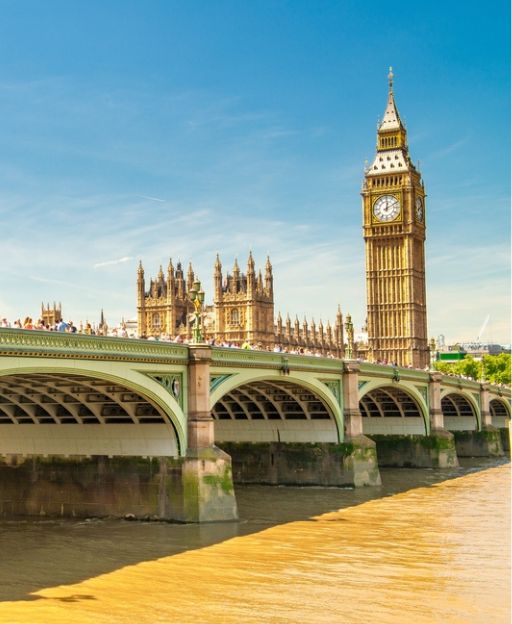
The famous tower on the north end of the Palace of Westminster is not called Big Ben. It never has been. The tower’s official name is Elizabeth Tower — a title it received in 2012 to mark Queen Elizabeth II’s Diamond Jubilee. Before that, it was simply called the Clock Tower. Big Ben is the name of the great bell that hangs inside it.
The bell weighs 13.5 tonnes and stands nearly 2.3 metres tall. When it strikes the hour, the sound travels across central London and has been broadcast by the BBC for almost a century. That deep, resonant bong is instantly recognisable anywhere in the world — but it belongs to the bell, not the building.
So why does everyone call the tower Big Ben? Because it is easier. Because when you look up and see that clock face glowing in the London night, you are not thinking about architectural nomenclature. You are thinking: that is Big Ben, and everything feels right with the world.
How the Bell Got Its Name — and Why Nobody Agrees
The naming of the bell is one of those London arguments that will never be properly settled. Two competing theories exist, and both have passionate supporters.
The first — and most commonly accepted — claims the bell was named after Sir Benjamin Hall, the First Commissioner of Works at the time of its installation in 1858. Hall was a large, outspoken man, and the bell was informally named in his honour. A plaque inside the belfry records his name to this day.
The second theory argues it was named after Benjamin Caunt, a celebrated bare-knuckle boxer of the era who was enormously popular with the London public. Caunt was nicknamed “Big Ben” for his size and fighting reputation.
Neither side can produce a definitive parliamentary record to settle the dispute. London has never let a small matter like evidence stop a good argument.
The Bell That Cracked — Twice
What most visitors do not know is that the bell they hear today is not the original. The first Big Ben, cast in 1856 and weighing over 16 tonnes, cracked during testing and had to be replaced.
A second bell was cast in 1858. It too cracked — in October 1859, just weeks after the clock began operating. For three years, a smaller temporary bell rang in its place while the situation was debated in Parliament.
When the repaired bell was reinstalled, engineers simply turned it so the crack would not be struck by the hammer. And so it has remained ever since. The distinctive note of Big Ben — that rich, resonant E — carries within it a hairline crack that has been ringing imperfectly for over 160 years. Many Londoners consider this the most beautiful imperfection in the city.
Enjoying this? 3,000+ London lovers get stories like this every week. Subscribe free →
The Penny That Keeps the Clock Running
The accuracy of the clock is maintained through one of the most low-tech solutions imaginable. Old pre-decimal pennies are placed on top of the pendulum inside the tower. Adding or removing a single coin changes the clock’s rate by approximately 0.4 seconds per day.
Clockmakers visit the tower regularly to make these minute adjustments, carrying a small pouch of old pennies. When the clock gains or loses time due to temperature changes, atmospheric pressure, or mechanical wear, a penny goes on or comes off.
The system was designed when the clock was first built in the 1850s and has never needed replacing. In an era of atomic clocks and GPS synchronisation, this Victorian tower still relies on coins to keep perfect time. That fact alone is worth the walk across Westminster Bridge.
The Tower That Is Slowly Leaning
Elizabeth Tower stands 96 metres tall, and it is not perfectly vertical. The tower leans to the northwest at approximately 0.26 degrees — a tilt of around 230 millimetres from base to top. The lean has been gradually increasing since construction finished in 1859, and accelerated slightly after excavation work for the Jubilee Line extension in the 1990s.
At its current rate, it would take several centuries to rival the famous tilt of the Tower of Pisa. London is in no hurry. Engineers monitor the lean regularly and consider the structure entirely stable. It is simply, quietly, becoming more itself.
Stand on Westminster Bridge and look carefully at the top of the tower. With the right angle on a clear day, the lean is visible to the naked eye. Most visitors never notice. It is the kind of quiet secret that makes this area endlessly rewarding — much like the 150-year-old secret hiding in Trafalgar Square just a short walk away.
Who Can Actually Go Inside
Here is where things get interesting for visitors. Access to Elizabeth Tower is strictly limited. International tourists cannot book a visit — the belfry is only open to UK residents, and only through their local Member of Parliament. Embassies cannot help. Neither can travel agents.
Those who do gain access face 334 steps with no lift. The staircase winds upward through the stone walls, past the enormous clock mechanisms, through the belfry, and out to the viewing gallery at the top. From there, the panorama across Westminster and the Thames is extraordinary.
The bells are far larger than any photograph suggests. The four quarter-bells — named Faith, Hope, Charity, and Prudence — have been chiming every fifteen minutes since 1859. If you are planning a visit to the Westminster area, our London planning guide covers everything you need. And the remarkable free Westminster Cathedral is worth combining into a longer afternoon.
What is Big Ben’s official name?
Big Ben is the name of the Great Bell inside the clock tower at the Palace of Westminster. The tower itself is officially called Elizabeth Tower — a name given in 2012 for Queen Elizabeth II’s Diamond Jubilee. Most people use “Big Ben” for the whole structure, but technically it refers only to the bell inside it.
Can tourists visit the inside of Elizabeth Tower?
Access to Elizabeth Tower is restricted to UK residents, who must arrange a visit through their local Member of Parliament. International visitors cannot book tours of the interior. The belfry requires climbing 334 steps, as the tower has no lift.
When is the best time to hear Big Ben strike?
The bells chime every quarter hour and carry clearly from Westminster Bridge. The most dramatic experience is at dusk on a clear evening, when the illuminated clock faces glow golden above the Thames. On New Year’s Eve, the midnight chimes are broadcast live by the BBC and heard by millions worldwide.
Why does Elizabeth Tower lean?
Elizabeth Tower leans approximately 0.26 degrees to the northwest due to natural ground settling over more than 160 years, with additional movement caused by underground excavation for the Jubilee Line in the 1990s. Engineers monitor the lean regularly and consider the tower entirely stable.
There is a moment, just after midnight on New Year’s Eve, when the sound of that cracked, imperfect, penny-adjusted bell carries across the Thames and the city holds its breath. A million people fall briefly, impossibly quiet. That sound has been marking the hours of London for 166 years. You do not need to know its real name to feel it.
🇬🇧 25 Hidden Gems of London Most Tourists Never Find
From secret riverside walks to hidden Victorian tunnels, centuries-old pubs to rooftop gardens with skyline views — our free guide reveals the London most visitors never discover. Join 3,000+ London lovers who get it free.
Get Your Free London Hidden Gems Guide →Love more? Join 65,000 Ireland lovers → · Join 43,000 Scotland lovers → · Join 29,000+ Italy lovers →
Free forever · Unsubscribe anytime
Subscribe Free