
On the morning of 30 January 1649, King Charles I woke before dawn, put on two shirts, and prepared to die in public on the street outside his own palace.
The extra shirt was deliberate. It was a bitter January. He was afraid that if he shivered on the scaffold, the crowd below might think it was from fear. He refused to give them that.
He walked through a first-floor window onto the scaffold built outside in Whitehall. He made a short speech almost no one could hear, and was executed shortly before 2pm. The crowd let out what witnesses described as a great groan — a sound many said they never forgot.
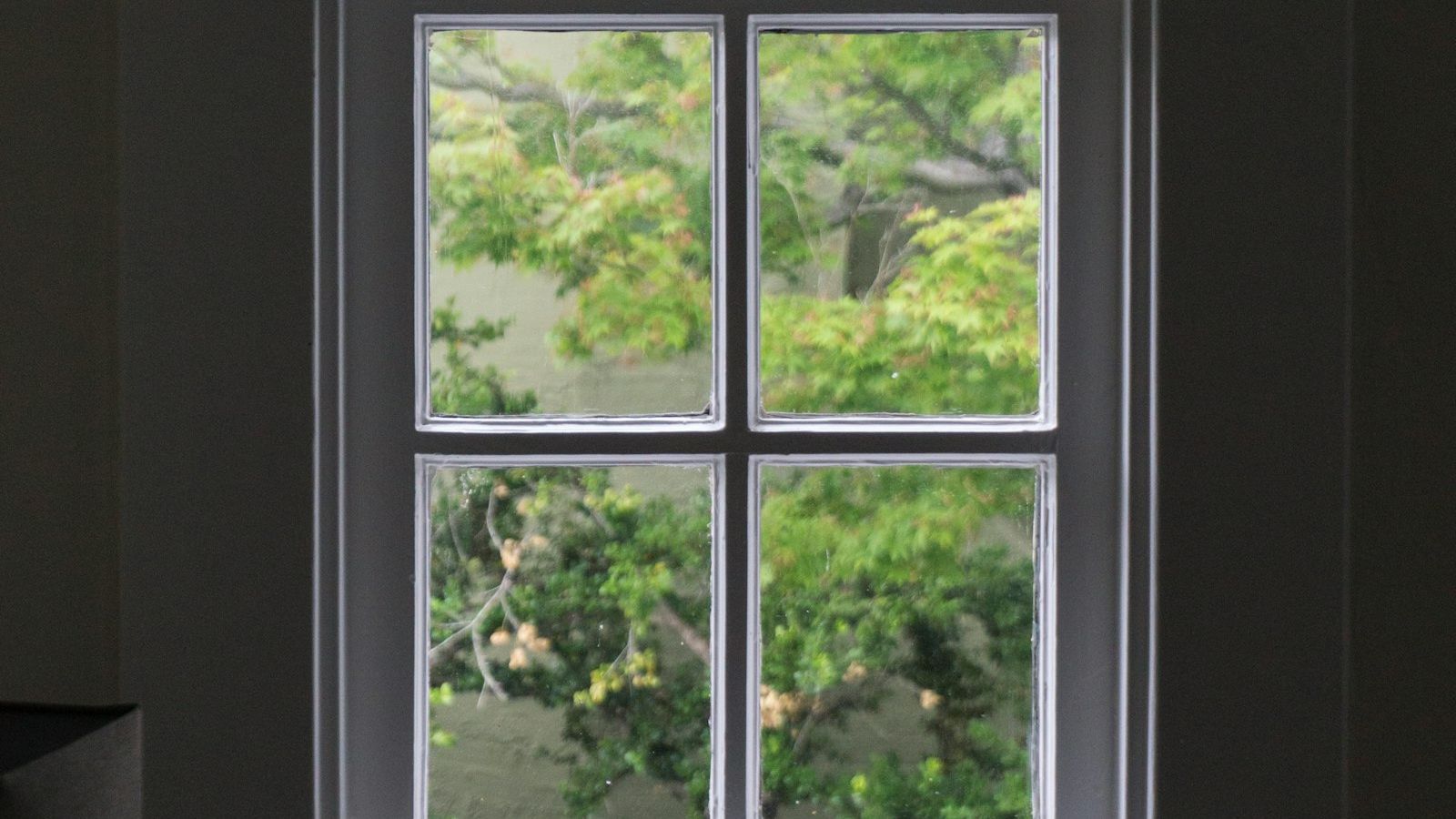
That window still exists. The room behind it looks almost exactly as it did that morning. And the building — the Banqueting House on Whitehall — is open to visitors, with almost no queue, most days of the year.
A Building Made for Celebration
The Banqueting House was not designed for tragedy. Inigo Jones built it between 1619 and 1622 as the ceremonial heart of the old Palace of Whitehall — at the time, the largest palace in Europe.
It was a building made for spectacle. Royal masques were performed here: elaborate theatrical productions with costumes, music, dancing and stage machinery. Ambassadors were received in this hall. Treaties were celebrated. State banquets were held under its roof.
Inigo Jones transformed English architecture with this single building. It was the first structure in England built entirely in the Italian Renaissance style — no Gothic arches, no medieval ornament. Clean lines, Palladian symmetry, pale Portland stone. It stood in sharp contrast to everything around it on Whitehall, and London had seen nothing like it before.
Today it sits rather quietly between government offices on one of the city’s busiest roads. Most people pass it without a second glance. That’s rather the point of visiting it — nobody does.
If you’re putting together your London itinerary, the London trip planning guide is the best place to start — it maps out the most rewarding routes through the historic centre.
The Rubens Ceiling Charles I Saw Last
In 1629, Charles I commissioned the Flemish master Peter Paul Rubens to paint the ceiling of the Banqueting House. Rubens worked on the panels for years, and they were installed in 1636.
There are nine panels in total, arranged as a series of allegories celebrating the reign of James I — Charles’s father — and the divine right of kings: the idea that monarchs rule by God’s authority alone, answerable to no earthly court or parliament.
The irony is almost unbearable. On the morning of his execution, Charles I walked through that hall and looked up at that ceiling one last time. He was walking toward his death for believing exactly what those paintings proclaimed.
The ceiling is still there. It is the only Rubens ceiling in the world that remains in its original setting — in the building it was made for, mounted as Rubens intended, unchanged since 1636. When you stand beneath it today and look up, you are seeing precisely what Charles I saw on his last morning.
Nothing in the Louvre. Nothing in the Uffizi. Nothing in any other gallery in the world can claim that.
Enjoying this? 3,000+ London lovers get stories like this every week. Subscribe free →
The Window That Changed Everything
The great hall where the Rubens ceiling hangs is on the first floor. The execution scaffold was built at street level outside. To reach it, Charles I had to step through one of the large first-floor windows.
There is some debate among historians about exactly which window. Most accounts suggest it was the central window on the north end of the building, though the precise spot has been argued over for centuries.
What is not in dispute is what happened next. Charles I stepped out, spoke briefly, laid his head on the block, and was executed with a single blow. He was 48 years old. He had been King of England, Scotland and Ireland for 24 years.
The crowd’s reaction was immediate and visceral. One eyewitness, Philip Henry, wrote that the sound from the crowd was unlike anything he had ever heard — not a cheer, not a jeer, but something between grief and disbelief. England had never executed its own king before. No one quite knew what came next.
The answer, as it turned out, was eleven years of republican government under Oliver Cromwell, followed by the restoration of Charles’s son as King Charles II in 1660. The monarchy survived. The building survived. The window survived.
The Statue That Has Looked South Ever Since
At the north end of Whitehall, at the edge of Trafalgar Square, stands an equestrian statue of Charles I. It was cast in 1633 — six years before the Civil War began, sixteen years before the execution.
When Parliament won the war, they ordered it melted down for scrap. A brazier named John Rivett purchased it, began selling small bronze trinkets supposedly cast from the metal, and quietly hid the statue intact in his workshop. After the Restoration, the statue emerged unharmed.
In 1675, it was placed on the spot where it stands today. The positioning was deliberate. The statue faces south, down the full length of Whitehall, directly toward the Banqueting House. Toward the window. Toward the place the king’s father died.
Charles I has been looking toward that spot for 350 years. The sightline is still clear. On a quiet morning, standing beside the statue and looking south, you can see the Banqueting House at the far end of the road.
Beneath the statue is also the site of the original Charing Cross — the memorial erected by Edward I in 1290 to mark one of the resting places of his wife’s funeral procession. The cross was destroyed by Parliament in 1643. The statue replaced it as the city’s symbolic centre, and all official distances from London are still measured from this spot.
The secrets hidden in plain sight around this part of the city are remarkable — including the 150 years of history hiding in Trafalgar Square just beyond the statue.
Visiting the Banqueting House Today
The Banqueting House
The Banqueting House is managed by English Heritage and open to visitors most days. Entry is charged, though it’s free with an English Heritage membership. It’s worth checking opening times before you go — the building occasionally closes for private events.
The building is smaller than the outside suggests. One great hall. The undercroft below. The ceiling above. But it is the context that makes it extraordinary.
Standing in the hall and looking up at the nine Rubens panels, then looking out toward Whitehall, you are standing in one of the most historically charged rooms in Britain. The acoustics are remarkable too — the hall was built to amplify sound for performances, and even a whisper travels clearly across the room.
Every year on 30 January, the anniversary of Charles I’s execution, members of the Royal Stuart Society gather outside to lay a wreath. It’s a small and quiet ceremony, but it has been happening for decades. In a city that constantly reinvents itself, there is something worth noticing about a tradition that refuses to let a date go unmarked.
For the full story of royal London and the palaces that shaped British history, it’s worth reading about the palace Henry VIII stole from a cardinal — another chapter in the long, complicated royal story of this stretch of the Thames.
Frequently Asked Questions
Where is the Banqueting House in London?
The Banqueting House is on Whitehall, in central London, between Trafalgar Square and Parliament Square. The nearest Underground stations are Westminster (Jubilee, Circle and District lines) and Charing Cross (Northern and Bakerloo lines). It takes about five minutes to walk from either.
Can you visit the Banqueting House today?
Yes. The Banqueting House is open to visitors and managed by English Heritage. Entry is charged, but free for English Heritage members. It’s best to check opening times before visiting, as the building sometimes closes for private functions. Most visits take around 30 to 60 minutes.
What is special about the Banqueting House ceiling?
The nine painted panels were created by Peter Paul Rubens between 1629 and 1636, commissioned by Charles I. They are the only Rubens ceiling still in its original setting — in the building they were designed for, mounted exactly as Rubens intended. No other building in the world can make that claim.
When was King Charles I executed?
Charles I was executed on 30 January 1649, outside the Banqueting House on Whitehall. He stepped through a first-floor window onto a scaffold built in the street below. He wore two shirts that morning so that any shivering from the cold would not be mistaken for fear.
London is full of places where history happened. Most of them have been buried, rebuilt, or smoothed over into something presentable. The Banqueting House is one of the rare exceptions — a room that has kept its silence and kept its ceiling, and asks very little of you except that you stand in it and think.
🇬🇧 25 London Places Most Visitors Miss
From secret riverside walks to hidden Victorian tunnels, centuries-old pubs to rooftop gardens with skyline views — our free guide reveals the London most visitors never discover. Join 3,000+ London lovers who get it free.
📲 Know someone who’d love this? Share on WhatsApp →
Love more? Join 65,000 Ireland lovers → · Join 43,000 Scotland lovers → · Join 29,000+ Italy lovers →
Free forever · · Unsubscribe anytime
Subscribe Free