
In 1514, Cardinal Thomas Wolsey decided to build the finest private residence England had ever seen. He had the wealth, the power, and the ambition. What he didn’t have was good judgment about what Henry VIII might think when he saw it.
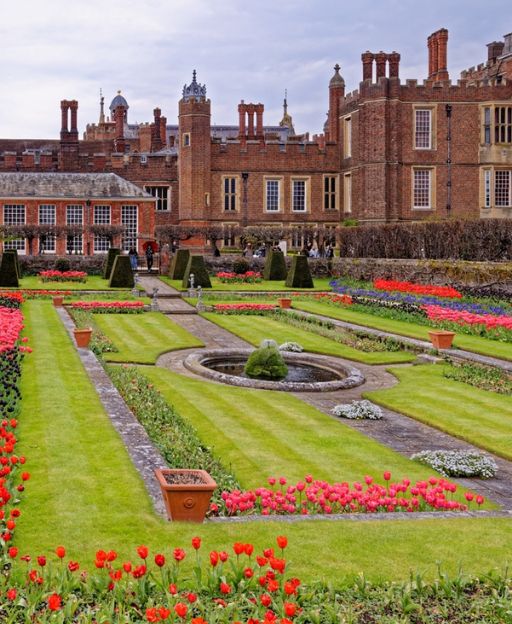
A Cardinal Who Built Too Beautifully
Thomas Wolsey had risen from humble origins in Suffolk to become Henry VIII’s Lord Chancellor — the most powerful man in England after the king himself. By 1514, he was determined that his home should reflect that position.
🏙️ Love London?
3,000 London lovers get hidden history, street-level stories, and local secrets every week. Free, forever — no spam, unsubscribe any time.
Subscribe free — enter your email:
Hampton Court was his statement to the world. He imported decorative tiles from Antwerp and commissioned tapestries from the workshops of Brussels. He constructed a Great Hall capable of seating five hundred guests at a single feast. The kitchens alone covered nearly 36,000 square feet — large enough to prepare banquets for the entire royal court.
Wolsey had the River Thames diverted to improve the grounds. He installed elaborate water gardens and orchards. No private citizen in England had ever built anything quite like it, and Wolsey made sure everybody knew it.
What he hadn’t accounted for was how much his king would want it.
The Day Henry VIII Asked for the Keys
By 1525, Henry VIII was visiting Hampton Court so regularly that Wolsey understood the situation. To keep the king’s favour, the palace would have to be handed over. Wolsey presented it as a gift.
It didn’t work. Within five years, Wolsey had been arrested for treason. He died on his way to London before any trial could take place. The palace he had built to display his importance now belonged entirely to the man who had destroyed him.
Henry moved fast. He demolished Wolsey’s private apartments and replaced them with two sets of state rooms — one for himself, one for the queen. He commissioned the astronomical clock that still hangs above the main gatehouse today, a masterpiece of Renaissance engineering that tracks the time, the phases of the moon, and the tidal movements on the Thames. He expanded the kitchens, the gardens, and the tennis courts.
Most significantly, he built the Great Hall — the finest surviving Tudor hammer-beam roof in existence. It took five years to complete and consumed a small fortune in carved timber and painted decorations. Henry used it to throw the kind of feasts that Wolsey had only dreamed of.
Six Queens and a Haunted Gallery
Hampton Court witnessed more of Henry’s domestic drama than any other royal residence. Jane Seymour, his third wife, gave birth to the future Edward VI in the palace in October 1537. She died there twelve days later of complications. Henry wore black for three months.
Catherine Howard — wife number five — was arrested at Hampton Court in 1541 on charges of adultery. According to tradition, she broke free from her guards and ran screaming along the corridor leading to the chapel, desperately trying to reach Henry before she could be stopped. The guards caught her before she got through the door.
That corridor is now called the Haunted Gallery. Staff who work there after dark tend not to mention what they sometimes see. Visitors regularly report a sense of unease in the passage that is difficult to explain. Whether you believe in ghosts or not, the story stays with you long after you leave.
Hampton Court continued to be used by every monarch until George III, who refused to live there after an unhappy childhood visit. It has been open to the public ever since, which means you can walk through the same rooms where six queens slept, worried, and in some cases plotted their survival.
The Gardens That Took Four Centuries to Create
Henry VIII’s original Tudor gardens were swept away by later monarchs with different tastes. What replaced them is extraordinary: a collection of garden spaces that took four centuries to layer together, each one reflecting the style of whoever was on the throne at the time.
William III commissioned the famous hedge maze in the 1690s — one of the oldest surviving mazes in the world. It covers a third of an acre and still baffles visitors today. On busy days, you can hear people calling to each other across the hedges, trying to navigate their way out by committee.
The Great Vine was planted in 1768 and is still alive. Each September it produces a crop of Black Hamburg grapes that are sold to visitors. The Privy Garden, which runs along the south front of the palace, was painstakingly restored in the 1990s to its exact appearance in 1702 — hedges, statues, and all. It is one of the most precise historical garden restorations in Britain.
In spring, the formal gardens fill with tulips. The image is worth the journey from London on its own.
Why Hampton Court Is Worth the Journey Beyond the City
Hampton Court sits just 35 minutes from London Waterloo by direct train. That fact is quietly astonishing — one of the finest royal palaces in Europe, carrying over 600 years of British history, and you can reach it before morning coffee has worn off.
Unlike the Tower of London or Buckingham Palace, Hampton Court rarely sells out in advance. The rooms are quieter, the crowds thinner, and the experience more personal. You can stand in Henry VIII’s Great Hall with space to look up. You can walk the Haunted Gallery without pressing up against other visitors. You can sit in the Privy Garden without a tour guide explaining things over your shoulder.
If you’re working out how to structure your time across London’s many neighbourhoods and attractions, Hampton Court makes an ideal full-day trip — enough for the State Apartments, the kitchens, the maze, and at least one circuit of the gardens before the light fades. Pair it with a walk along the Thames towpath back towards Kingston if the weather holds.
For those drawn to royal history, Windsor Castle — the family’s main working residence for nearly a thousand years — tells a very different chapter of the same story. Where Hampton Court was built to impress and then stolen, Windsor was built to last and has never been given up.
Together, they give you the full arc of British royal ambition.
Standing in the Courtyard Where It All Happened
There is a particular moment at Hampton Court that visitors tend to remember. It happens when you step into the Base Court — the first courtyard beyond the gatehouse — and look up at the warm red brick, the terracotta roundels of Roman emperors, and the chimneys twisted into decorative knots.
This is what Wolsey built to tell the world who he was. Henry stood in this same spot and decided he wanted it. Six queens lived and died behind these walls. Oliver Cromwell paced these courtyards during the Commonwealth. Charles II walked his spaniels through the avenues of chestnut trees that still run toward the river.
All of that is still here. You just have to show up.
🇬🇧 25 Hidden Gems of London Most Tourists Never Find
From secret riverside walks to hidden Victorian tunnels, centuries-old pubs to rooftop gardens with skyline views — our free guide reveals the London most visitors never discover. Join 3,000+ London lovers who get it free.
Get Your Free London Hidden Gems Guide →Love more? Join 65,000 Ireland lovers → · Join 43,000 Scotland lovers → · Join 30,000 Italy lovers →
Free forever · Unsubscribe anytime