
Kensington Palace London is a royal home set inside Kensington Gardens, about two miles west of Buckingham Palace. Kings and queens lived here from 1689, and Queen Victoria was born in its rooms. This guide helps US visitors plan a Kensington Palace London visit, with history, nearby sights and travel tips.
Opening days, tickets and room closures change through the year. The charity Historic Royal Palaces runs the visitor side of the palace. Always check its official Kensington Palace page before you book. We do not print prices or hours here for that reason.
What Is Kensington Palace London?
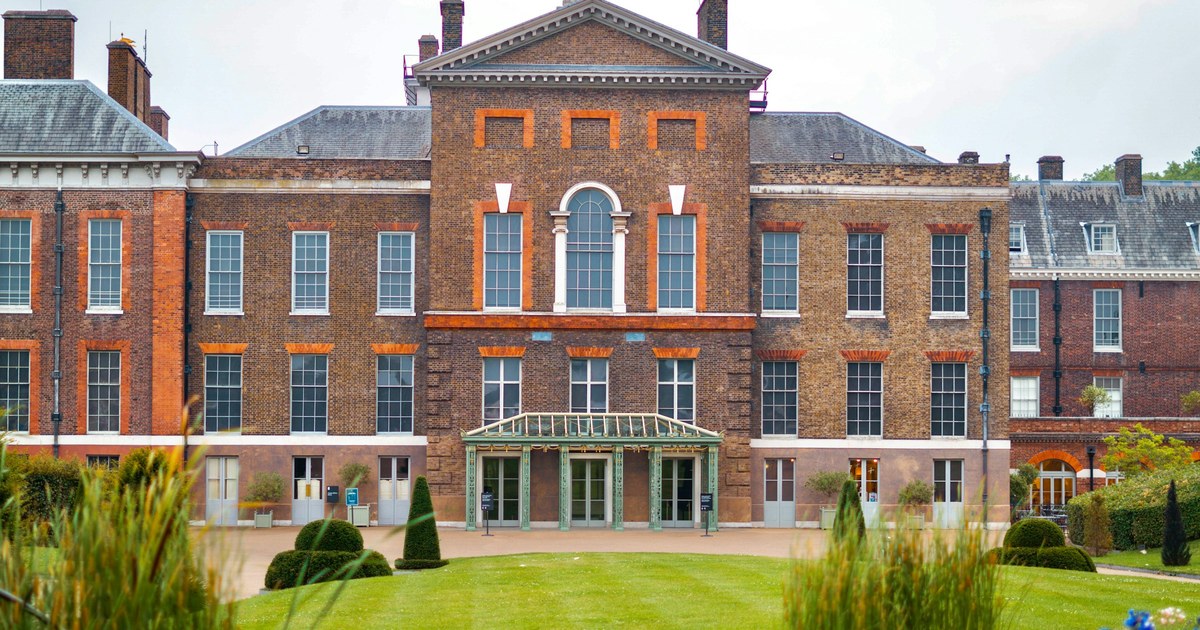
Kensington Palace is a red-brick royal residence on the western side of central London. It began as a modest house. Sir George Coppin built a two-storey Jacobean mansion on the site in 1605, when Kensington was still a village.
The house became a palace in 1689. William III and Mary II bought it that summer for £20,000. William had asthma, and the damp air by the Thames at Whitehall made him ill. Kensington sat higher and drier, so it suited him better.
The couple asked Sir Christopher Wren to expand the house. Wren added a pavilion at each corner and turned the main front to face west. The court moved in shortly before Christmas 1689. For about seventy years, the palace was a favourite home of British monarchs.
Part of the palace is still a private royal home today. The public side, with the State Apartments, is run by Historic Royal Palaces. Compare it with the grander official residence in our Buckingham Palace planning guide.
A Short History of the Palace
Wren, Kent and the Georgian Court
Mary II died of smallpox here in 1694. William III died at the palace in 1702 after a fall from his horse at Hampton Court. Queen Anne then took over and built the Orangery in 1704, a garden building where she liked to entertain.
Under George I, the artist William Kent decorated the state rooms. He painted the King’s Grand Staircase with 45 courtiers, including servants and a boy known as Peter the Wild Boy. George II was the last reigning monarch to live at the palace. He died there in 1760.
Victoria Grows Up at Kensington
Princess Alexandrina Victoria was born at the palace on 24 May 1819. She grew up there under strict rules set by her mother and an adviser, Sir John Conroy. Her childhood was lonely.
In 1837, officials woke her to say her uncle William IV had died. She became queen at eighteen. She held her first Privy Council meeting in the palace’s Red Saloon, then moved to Buckingham Palace. Her story is the best reason to visit for many Americans, because it shows how a quiet girl became a global monarch.
The Twentieth Century and Diana
A bomb damaged the palace on 14 October 1940, during the Blitz. Repairs took years. Our guide to the Blitz shows other places where you can see wartime scars.
Diana, Princess of Wales, later lived in apartments at the palace. After her death in 1997, crowds left flowers at its gates. A statue of Diana now stands in the Sunken Garden, which was unveiled in 2021. Many visitors walk there to pay their respects.
Love London, every week
Hidden corners, history and local tips in one free weekly email.
What to See Around Kensington Palace
The palace sits inside a large royal park. You can fill a whole day here without leaving the area.
Kensington Gardens
Kensington Gardens is a Royal Park, and entry is free. Queen Caroline asked Charles Bridgeman to redesign it during the reign of George II. His layout still shapes the park, including the Round Pond and the Broad Walk. The Serpentine lake lies just beyond.
A bronze statue of Queen Victoria stands in front of the palace. Her daughter, Princess Louise, designed and carved it. You can walk right up to it, and it makes a good photo spot.
The Diana Memorial Playground
Families with young children should visit the Diana Memorial Playground. It has a large wooden pirate ship and plenty of room to run. The playground is a short walk from the palace. Our London with kids guide has more family ideas.
The Albert Memorial and Royal Albert Hall
Walk south through the park to find the gilded Albert Memorial. Victoria ordered it after the death of her husband, Prince Albert. Across the road stands the Royal Albert Hall, a round concert hall with a red-brick frame. See our Great Exhibition story for how Albert shaped this part of London.
The Museums Next Door
The museum quarter lies about a mile south. The Victoria and Albert Museum and the Natural History Museum are both worth a visit. Check their sites for entry details and special exhibitions.
Notting Hill and Hyde Park
Notting Hill is a short walk north. Its pastel houses and Portobello Road draw big crowds. Our Notting Hill guide explains how to see it. Hyde Park meets Kensington Gardens to the east, so you can walk toward Marble Arch or Hyde Park Corner.
How to Get to Kensington Palace
The palace is easy to reach by Underground. Pick the station that suits your route.
- High Street Kensington: Take the Circle or District line. The walk through the park takes about ten minutes.
- Queensway: This is on the Central line. The gardens start just across the road.
- Notting Hill Gate: This is on the Central, Circle and District lines. It is a pleasant walk through the park.
Buses also stop near the park. You can pay with a contactless bank card or phone on the Tube and buses. Our getting around London guide explains how it works. For live service updates, use the Transport for London journey planner.
Tips for US Visitors
Kensington is one of the calmest corners of central London. These tips will help you enjoy it.
- Book ahead. Timed tickets can sell out on busy days. Use the official site only, and avoid resellers.
- Pair it with a walk. The gardens are free, so plan for the weather. A light waterproof jacket helps.
- Know the difference. Buckingham Palace is the working royal headquarters. Kensington Palace is where royals have lived and where you can see state rooms. Our Buckingham Palace history tells that story.
- Plan a tea stop. The Orangery is a well-known spot for tea. Check the official page for what is on offer. Our afternoon tea guide lists other choices.
- Dress for autumn and winter. Daylight ends early in the colder months. See our London in November guide.
A Simple Half-Day Plan
Start at High Street Kensington station and walk into the park. Visit the palace first, while you have energy. Then stroll to the Sunken Garden and the Round Pond. Walk south to the Albert Memorial for the view. Finish with a coffee near the Royal Albert Hall.
Allow four to five hours in total. Our best parks in London list has more green spaces to try on another day.
Frequently Asked Questions
Is Kensington Palace worth visiting?
Yes, especially if you enjoy royal history. You can see rooms where Queen Victoria lived as a child. The gardens are free and pleasant, even if you skip the rooms.
Where is Kensington Palace in London?
It stands inside Kensington Gardens in west London, in the Royal Borough of Kensington and Chelsea. The nearest Underground stations are High Street Kensington, Queensway and Notting Hill Gate.
Who was born at Kensington Palace?
Queen Victoria was born there on 24 May 1819. Queen Mary, the wife of George V, was born there in 1867. Both births show how long the palace served as a royal family home.
How long do you need at Kensington Palace?
Plan two to three hours for the palace itself. Add more time if you want to walk through Kensington Gardens. A half day works well for most visitors.
What is the difference between Kensington Palace and Buckingham Palace?
Buckingham Palace is the monarch’s official London residence and workplace. Kensington Palace is a royal home that has housed many family members. The public can visit parts of Kensington Palace through Historic Royal Palaces, so check the official site for access.
Join 3,000+ London Lovers
Every week, get London’s lesser-known corners, local stories and secrets, straight to your inbox.
Subscribe free — enter your email:
Join the Love London newsletter →
Free forever · One email per week · Unsubscribe anytime