
London Museums Guide: The Best Museums in London for US Visitors (2026)
London has more world-class museums than almost any city on the planet. Better still, most of them are completely free. This London museums guide covers everything US visitors need to know — which museums to prioritise, how long to spend at each, what to book in advance, and how to make the most of your time. Whether you have one day or a full week, London’s museum scene will genuinely surprise you.
London has over 200 museums. Picking where to go first can feel overwhelming. This guide cuts through the noise and gives you clear, honest recommendations based on what US visitors actually enjoy most.
Why London Museums Are Unlike Anything in the US
Here’s the thing that surprises almost every American visitor: the best museums in London are free. The British Museum, the Natural History Museum, the National Gallery, the Victoria and Albert Museum — all free, all the time. No admission fee. No catch.
This isn’t a promotional offer. It’s how London works. The government funds these institutions so that everyone can access them. That means a family of four can spend an entire day at the Natural History Museum without spending a penny on entry.
The collections are also genuinely extraordinary. The British Museum holds two million years of human history. The Victoria and Albert Museum has the world’s greatest collection of decorative arts. The National Gallery has masterpieces by Rembrandt, Vermeer, da Vinci, and Van Gogh. All free.
If you’re planning your trip budget, read our London travel budget guide — you’ll find that museum entry rarely needs to feature in your costs at all.
The Best Free Museums in London
The British Museum
This is London’s most visited museum and arguably the most important museum in the world. The collections span six continents and two million years. You’ll find the Rosetta Stone, the Elgin Marbles, Egyptian mummies, Viking hoards, and Roman treasures all under one roof.
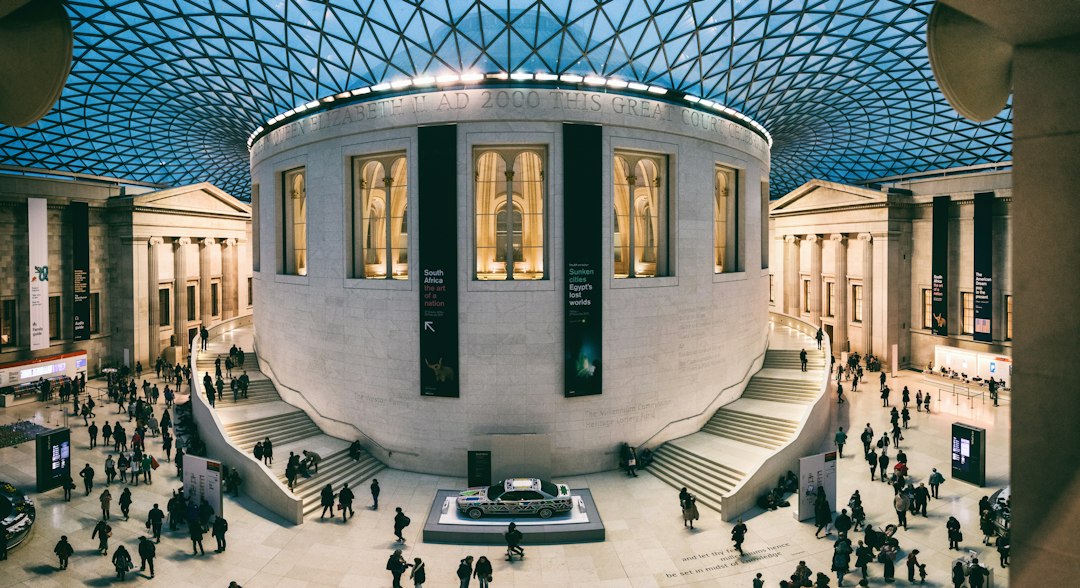
The museum is enormous. Most visitors can’t see everything in a single visit. Pick two or three galleries that interest you most and focus on those. The Great Court at the centre of the building is worth seeing on its own — it’s a stunning glass-roofed space that feels more like a cathedral than a museum atrium.
Practical tips: Book a free timed entry ticket in advance, especially during peak summer months. The museum is busiest between 11am and 3pm. Arrive at 9am when it opens for a quieter experience. Allow at least three hours for a meaningful visit, or a full day if you want to go deep.
Location: Great Russell Street, Bloomsbury. Nearest Tube: Holborn or Tottenham Court Road.
The Natural History Museum
The Natural History Museum is one of the most beautiful buildings in London, never mind what’s inside. The terracotta and blue façade stretches along the length of Cromwell Road in South Kensington. Inside, the main hall still has its famous blue whale skeleton hanging from the ceiling — a genuinely jaw-dropping sight.
The collections cover dinosaurs, geology, human evolution, ecosystems, and the natural world in extraordinary depth. The Dinosaur Gallery draws the biggest crowds. The Vault, which holds the museum’s most extraordinary specimens including a T. rex tooth and giant crystals, is worth seeking out.
Practical tips: This is one of the best museums in London for families — children consistently rate it their favourite. The queue to enter can be long in summer. Book timed entry in advance for free on the museum’s website. The café gets very busy at lunchtime; bring snacks or eat early.
Location: Cromwell Road, South Kensington. Nearest Tube: South Kensington (a short walk through the subway tunnel).
The Victoria and Albert Museum (V&A)
The V&A is directly across the road from the Natural History Museum. It’s the world’s largest museum of art and design, with 145 galleries covering fashion, jewellery, photography, architecture, furniture, ceramics, and more.
What makes the V&A special is its range. You can spend an hour in the fashion galleries looking at 400 years of European dress, then walk into an Islamic art gallery, then into a room full of Renaissance sculptures. The collections are deep, the building is beautiful, and the café in the Victorian courtyard is one of the nicest places to sit in London.
Practical tips: Allow at least three hours. The museum is large and the galleries interconnect in ways that can be confusing — pick up a map at the entrance. The V&A shop is exceptional if you’re looking for gifts and design-led souvenirs.
The National Gallery
The National Gallery sits on the north side of Trafalgar Square. Its collection of Western European paintings runs from the 13th to the 19th century and includes works by almost every major name in art history — Caravaggio, Rubens, Velázquez, Monet, Cézanne, Turner, and Constable.
Room 34 holds the Van Gogh paintings, including Sunflowers. Room 66 has Monet’s Thames scenes. These aren’t prints or replicas — these are the real paintings, and standing in front of them is a different experience to looking at a photograph.
Practical tips: The National Gallery is free but special exhibitions require a paid ticket. The Sainsbury Wing cafe has good food and great views of Trafalgar Square. No photography is allowed in some rooms — check the signage.
Tate Modern
Tate Modern occupies a converted power station on the South Bank. The building alone is worth the trip — the Turbine Hall, a vast open space that once housed the power station’s generators, now hosts large-scale art installations that rotate throughout the year.
The permanent collection covers modern and contemporary art from 1900 to the present. Picasso, Matisse, Dalí, Warhol, Rothko, and Louise Bourgeois all feature prominently. The views from the top-floor restaurant across the Thames to St Paul’s Cathedral are among the best in London.
Practical tips: The permanent collection is free. Major exhibitions cost £20-25. The new Blavatnik Building extension connects to the original Boiler House and doubles the available gallery space. Plan for two to three hours minimum.
The Science Museum
The Science Museum is next door to the Natural History Museum in South Kensington. It covers the history of science, technology, medicine, and engineering from ancient times to the present day.
Highlights include the Making the Modern World gallery, which has Stephenson’s Rocket locomotive, early spacecraft, and an original Apple 1 computer. The Medicine Galleries cover 400 years of medical history in fascinating and sometimes unsettling detail. The IMAX cinema and interactive galleries make this particularly good for visitors with children.
If you’re bringing the family, our London with Kids guide covers all three South Kensington museums in detail and explains how to plan a full day around them.
The Best Paid Museums in London
Some of London’s most extraordinary museum experiences do require a ticket. These are worth every penny.
Churchill War Rooms
The Churchill War Rooms are the best paid museum in London for US visitors with an interest in history. The underground bunker complex, preserved exactly as it was when the lights were switched off in 1945, is where Churchill and his Cabinet ran Britain’s war effort.
The experience is genuinely atmospheric. You walk through the Map Room, the Cabinet Room, and Churchill’s private quarters. The Churchill Museum attached to the bunker is one of the finest biographical museums anywhere in the world.
Tickets cost around £30 for adults. Book in advance — popular time slots sell out weeks ahead. Allow two to three hours.
Location: Clive Steps, King Charles Street, Westminster.
Tower of London
The Tower of London is one of the most historically layered sites in the world. It has served as a royal palace, a prison, a place of execution, a zoo, an armoury, and a treasury over nearly 1,000 years of history.
Today it houses the Crown Jewels, the Royal Armouries, and a permanent garrison of Yeoman Warders (Beefeaters) who give guided tours throughout the day. The Crown Jewels display is extraordinary — the Imperial State Crown alone holds 2,868 diamonds.
Adult tickets cost around £34. Book in advance. The queues to see the Crown Jewels can be long — arrive early in the morning or late in the afternoon.
Kew Gardens
Kew Gardens is technically a botanical garden rather than a museum, but it has an extraordinary scientific collection — over 50,000 living plant species plus vast herbarium collections used by researchers worldwide. The Palm House, Waterlily House, and Temperate House are Victorian glasshouses that feel like museum exhibits in their own right.
Adult tickets cost around £21. Allow a full half-day at minimum; many visitors spend an entire day here.
Hidden and Specialist Museums Worth Knowing About
London has hundreds of smaller, specialist museums that most visitors never find. These are some of the best.
Sir John Soane’s Museum, Holborn
This is one of the most extraordinary spaces in London. Sir John Soane, the architect who designed the Bank of England, filled his house with thousands of antiquities, paintings, and curiosities. After his death, it was preserved exactly as he left it. Admission is free. The atmosphere is unlike anywhere else in the city — cramped, labyrinthine, and utterly fascinating.
The Wallace Collection, Marylebone
The Wallace Collection is a free museum in a magnificent townhouse near Oxford Street. The collection includes Old Master paintings (including Rembrandt, Hals, and Poussin), 18th-century furniture, porcelain, and one of the finest collections of arms and armour in the world. It’s consistently quieter than the larger free museums.
Museum of London Docklands
The Museum of London Docklands tells the story of the East End, the Thames, and trade from Roman times to the present day. It’s free, and the Transatlantic Slavery gallery is one of the most powerful and honest museum installations in Britain.
The Courtauld Gallery, Somerset House
The Courtauld holds one of the finest Impressionist and Post-Impressionist collections in the world. Van Gogh’s Self-Portrait with Bandaged Ear is here, along with major works by Manet, Degas, and Modigliani. Located in the beautiful Somerset House on the Strand. Admission costs around £10.
Practical Tips for Visiting London Museums
Booking in Advance
Even for free museums, many now require a timed entry ticket booked in advance. This is especially true at peak times — school holidays, summer, and public holiday weekends. Book on each museum’s official website. Third-party booking sites sometimes charge unnecessary fees for free entry tickets.
Getting Between Museums
The South Kensington cluster (Natural History Museum, V&A, Science Museum) is walkable between sites. You can cover all three on foot in a single day, though you won’t do justice to all of them.
For the central London museums (British Museum, National Gallery, Tate Modern), use the Tube or walk — distances are manageable. The Bloomsbury area around the British Museum is a pleasant neighbourhood to explore on foot.
For more on getting around the city, see our Getting Around London guide which covers the Tube, buses, walking, and the Oyster Card system.
Best Times to Visit
Museum crowds follow predictable patterns. The absolute busiest times are:
- School holidays (late July through August, October half-term, Christmas/New Year)
- Bank Holiday weekends
- Mid-morning to mid-afternoon on any weekend
The quietest times are weekday mornings, especially Tuesday through Thursday. If you visit during peak season, arrive right when the museum opens.
Museum Cafés and Restaurants
London’s museum cafés have improved dramatically in recent years. The V&A café is genuinely lovely. The Great Court Restaurant at the British Museum is good value. Tate Modern’s restaurant on the top floor has excellent views and decent food, though prices are high.
For budget visitors, bring your own food. All the major museums have outdoor or courtyard spaces where you can eat a packed lunch. There’s no rule against it.
How to Plan a Museum-Focused London Trip
If museums are your primary reason for visiting London, here’s how to structure your time effectively.
Two Days of Museums
Day 1 — South Kensington: Natural History Museum in the morning (two to three hours). Lunch in South Kensington. Victoria and Albert Museum in the afternoon (two to three hours). The Science Museum can be added if you have energy left, or saved for another visit.
Day 2 — Central London: British Museum in the morning (open at 9am, aim for three hours). Walk or Tube to Trafalgar Square for the National Gallery after lunch. Evening: Tate Modern for the free permanent collection and the Turbine Hall, plus great views from the restaurant.
Adding Paid Museums
If you’re including the Churchill War Rooms or Tower of London, schedule these on separate days from your free museum visits. Both require substantial time and energy — trying to combine them with a full day at the British Museum is too much.
The Churchill War Rooms pair well with a walk through Westminster. The Tower of London pairs well with Tower Bridge and a walk along the South Bank. If you’re planning a 7-day visit, our 7 Days in London itinerary shows exactly how to fit museums alongside the rest of London’s highlights.
London Museums Guide: Frequently Asked Questions
What is the best museum in London for first-time visitors?
The British Museum is the single best museum for first-time visitors. The collection covers the full breadth of human history across every continent and civilisation, and entry is free. The scale and quality of what’s on display is genuinely unmatched anywhere in the world. If you only have time for one museum, make it this one.
How much does it cost to visit London museums?
Most of London’s major museums are completely free to enter, including the British Museum, Natural History Museum, Victoria and Albert Museum, National Gallery, Tate Modern, and Science Museum. Paid museums like the Churchill War Rooms (around £30) and Tower of London (around £34) require advance booking. Even with two or three paid museum visits, museum costs for a week in London remain far lower than in most US cities.
Is it worth booking London museum tickets in advance?
Yes, for most major museums — even free ones. The British Museum, Natural History Museum, and V&A all operate timed entry systems during busy periods. Booking a free timed-entry ticket online takes two minutes and saves potentially hours of queuing. For paid museums like the Churchill War Rooms and Tower of London, advance booking is essential — popular time slots sell out weeks ahead during summer and school holidays.
Where are most of London’s museums located?
London’s museums cluster in two main areas. South Kensington holds the Natural History Museum, V&A, and Science Museum — all within a short walk of each other. Central London has the British Museum (Bloomsbury), National Gallery (Trafalgar Square), and Tate Modern (South Bank). The Churchill War Rooms are in Westminster, near the Houses of Parliament. Most sites are easily accessible by Tube.
Join 3,000+ London Lovers
Every week, get London’s hidden gems, local secrets, and travel inspiration — the kind you won’t find in any guidebook.
Subscribe free — enter your email:
Love more? Join 64,000 Ireland lovers → · Join 43,000 Scotland lovers → · Join 30,000 Italy lovers →
Free forever · One email per week · Unsubscribe anytime