
There is a gallery tucked into the quiet streets of South London that opened its doors seven years before the National Gallery. Before Trafalgar Square. Before London even had a national art collection worth speaking of. It displayed Rembrandts and Rubens to any member of the public who cared to visit.
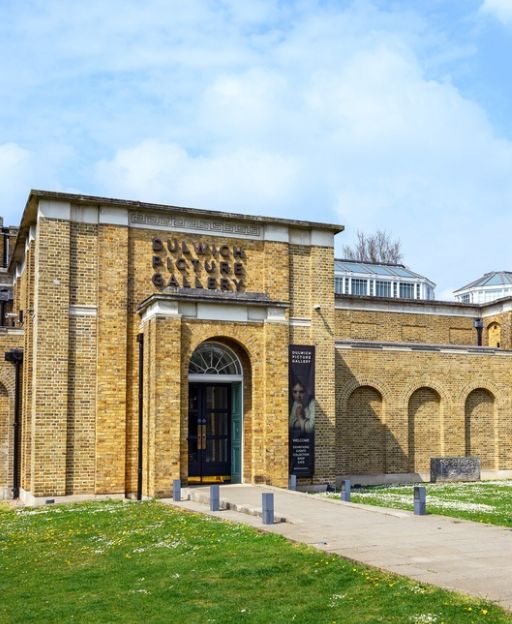
That gallery is still there. Most visitors to London never find it.
A Collection That Was Never Meant for London
The story begins with a Polish king and a plan that went badly wrong.
🏙️ Love London?
3,000 London lovers get hidden history, street-level stories, and local secrets every week. Free, forever — no spam, unsubscribe any time.
Subscribe free — enter your email:
In the 1790s, an art dealer called Noel Desenfans was commissioned to build an art collection for King Stanislaus II of Poland. The collection was to form the foundation of a national gallery in Warsaw. Desenfans spent years acquiring masterpieces — Rembrandt, Rubens, Van Dyck, Poussin, Canaletto.
Then Poland was partitioned. The king lost his throne. He died in 1798 without ever receiving a single painting.
Desenfans was left holding one of the finest art collections in Europe with nowhere to put it.
What Happened Next Changed London Forever
Desenfans tried to sell the collection to the British government. He proposed that it form the basis of a national gallery. The government declined.
When Desenfans died in 1807, the collection passed to his close friend Sir Francis Bourgeois — a painter and Fellow of the Royal Academy. Bourgeois had a different idea. He left the entire collection to Dulwich College, a school in South London, along with money to build a gallery to house it.
He chose an architect named Sir John Soane. The same man quietly transforming the Bank of England.
The Building With a Tomb Inside
The Dulwich Picture Gallery opened in 1817. It was the world’s first purpose-built public art gallery — predating the National Gallery by seven years.
What surprises most visitors is how intimate it feels. Soane designed the rooms to receive natural light from above through skylights, illuminating the works without damaging them. It was a radical idea at the time.
Then there is the mausoleum.
Built into the heart of the gallery, it holds the remains of Bourgeois and the Desenfans couple. Amber glass panels fill the chamber with a warm, golden glow. You can stand in a 200-year-old gallery and look through a wall of light into the tomb of the man who gave it all away.
It is one of the strangest and most moving things in London.
What Hangs on the Walls
The collection holds around 600 works. Rembrandt, Rubens, Van Dyck, Gainsborough, Poussin, Watteau, Murillo, Canaletto — names that belong in the great museums of the world.
Here, you might find yourself standing alone in front of a Rembrandt portrait. No crowds pressing behind you. No audio guide competing for your attention.
That kind of quiet encounter with great art is increasingly rare in London. Dulwich still offers it.
The Village Around the Gallery
Dulwich Village is its own discovery. This is not the South London of gritty reputation. It is a Georgian village of handsome houses and independent shops, with a park that stretches behind the gallery.
The area feels barely changed from the nineteenth century. Locals walk dogs along College Road. Old almshouses stand a short stroll from the gallery entrance. A toll gate — the last surviving in London — still marks the road through the village.
People who find this corner of South London rarely tell many others. Telling tends to ruin things.
How to Get There
Dulwich Picture Gallery is a ten-minute walk from North Dulwich or West Dulwich stations. Thameslink trains run from London Bridge in around twelve minutes. Admission is modest — well below what most London attractions charge — and certain days offer free entry.
If you are planning your trip to London, Dulwich makes an excellent half-day escape from the usual circuit. Pair it with a walk through the village and lunch at a pub on the green.
London hides its best things. The London Museum holds 80 million objects most visitors never suspect are there. And South London has been rewarding the curious since 1911 — quietly, without any fuss.
🇬🇧 25 Hidden Gems of London Most Tourists Never Find
From secret riverside walks to hidden Victorian tunnels, centuries-old pubs to rooftop gardens with skyline views — our free guide reveals the London most visitors never discover. Join 3,000+ London lovers who get it free.
Get Your Free London Hidden Gems Guide →Love more? Join 65,000 Ireland lovers → · Join 43,000 Scotland lovers → · Join 30,000 Italy lovers →
Free forever · Unsubscribe anytime