
Eight miles from Trafalgar Square, a stag stands in the morning mist beneath an ancient oak. He lifts his head slowly. Watches. Then turns and walks away into the grey.
This isn’t the Scottish Highlands. This is Greater London — and it has been this way for nearly 400 years.
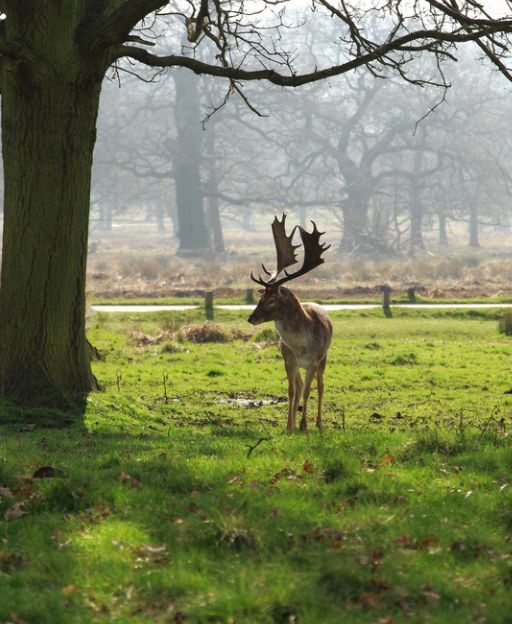
Richmond Park is the largest of London’s Royal Parks, covering 2,500 acres of open grassland, ancient woodland, and heath. More than 600 red and fallow deer roam freely here, as they have for centuries. Arrive early on a still morning and you can forget the city exists at all.
A King’s Land — and the Battle to Keep It Open
Richmond Park was enclosed in 1637 by King Charles I, who wanted a private hunting ground close to his palace at Richmond.
To create it, he seized common land from local farms and villages. The residents of Richmond and the surrounding area did not accept this quietly.
A brewer named John Lewis challenged the Crown in court more than a century later and won public access rights in 1758. His legal victory is the reason you can walk freely through Richmond Park today. A pub near Ham Gate bears his name. The right of access he secured remains enshrined in law.
The park’s 2,500 acres make it around ten times the size of New York’s Central Park. On a weekday morning, vast stretches of it can feel entirely empty.
600 Deer and the Space They Share With You
The deer in Richmond Park are wild animals. Not tame. Not fed. They are part of a functioning managed ecosystem, and they have the right of way.
The herd includes red deer — larger, with magnificent antlers — and fallow deer, which are smaller and spotted. Red deer shed their antlers each spring and regrow them over summer. By September, the stags are ready for the rut.
The autumn rut runs from late September through to mid-October. Stags bellow, charge, and clash antlers across the open grassland in fierce competition for hinds. It is one of the most dramatic wildlife displays you can witness anywhere in a major European city.
The golden rule: stay at least 50 metres from the deer at all times. Never approach them. Never feed them. Never position yourself between a stag and his herd. The Royal Parks post clear guidance at every entrance during rut season.
Ancient Oaks and a Nature Reserve Inside the Capital
Richmond Park has been designated a National Nature Reserve since 1992. It contains more than 1,000 ancient and veteran trees — some over 700 years old.
These pedunculate oaks pre-date the park itself. They were growing here when Richmond was a market town and London was half its current size. Their gnarled shapes and hollowed trunks provide habitat for over 1,000 species of invertebrate.
In the south-east corner of the park, the Isabella Plantation is a woodland garden free to enter all year round. In late April and May, azaleas and rhododendrons erupt in brilliant pinks, reds, and oranges along its winding paths. Even outside of flowering season, the still ponds and enclosed woodland make it one of the most tranquil walks in Greater London.
If you love London’s quieter green spaces, central London hides hundreds of secret gardens most visitors never find.
Enjoying this? 3,000+ London lovers get stories like this every week. Subscribe free →
King Henry’s Mound and the Protected View of St Paul’s
Near the Pembroke Lodge car park, a small grass hillock rises from the ridge. It is called King Henry’s Mound, and it contains one of the most unusual legal curiosities in Britain.
Look east through a circular gap cut in the trees, and you can see the dome of St Paul’s Cathedral — 10 miles away in the heart of the City of London.
This view has been protected by law since 1710. No building may be constructed anywhere in that sightline between the mound and Wren’s cathedral. In a city that builds constantly upwards, Parliament has kept this horizon clear for over 300 years.
It takes about 30 seconds to spot. It tends to stay with you considerably longer.
Pembroke Lodge and the Philosopher’s Childhood
On the western edge of the park, a Georgian mansion sits on a ridge with sweeping views across Surrey. On clear days you can see Windsor Castle on the horizon.
This is Pembroke Lodge, and it was the childhood home of Bertrand Russell — philosopher, mathematician, and Nobel laureate. His grandparents held the house as a grace-and-favour residence from the Crown while raising him here after the death of his parents.
Today it is a café and events venue, open to the public. The garden is free to explore. The views from the terrace on a winter afternoon are among the finest in Greater London.
The park also contains the Pen Ponds — two large lakes at its centre that attract herons, cormorants, and kingfishers throughout the year. Fishing is available with a permit from the Royal Parks.
Richmond Park pairs beautifully with Virginia Water, another Royal Park to the south-west, which contains genuine Roman columns shipped from Libya in the 19th century — a very different kind of London surprise.
How to Plan Your Visit to Richmond Park
Richmond Park is open every day from dawn to dusk. Entry is free for pedestrians and cyclists. Car parks charge a fee, and spaces fill quickly on sunny weekends and Bank Holidays.
The nearest Underground station is Richmond on the District Line (Zone 4), about 30 minutes from central London. From there, Richmond Gate is a 10-minute walk south. Buses connect the park from Kingston and Wimbledon, and cycling along the Thames towpath from the west is a popular route.
Cafés include Pembroke Lodge (with terrace seating and views), the Roehampton Gate Café, and Broomfield Hill Café near the car park. Dogs are welcome but must be kept on leads near deer between 1 March and 31 October.
For more on how to structure your time in the capital, our London trip planning guide covers everything from where to stay to what not to miss on your first visit.
When is the best time to visit Richmond Park to see the deer?
Early morning in autumn — late September to mid-October — is the peak time. The red deer rut is in full swing, and stags can be heard bellowing from across the park at dawn. Winter mornings are also excellent: fewer visitors, low light through the oaks, and the fallow deer often gather in large herds on the open grassland.
How do you get to Richmond Park from central London?
Take the District Line to Richmond station (Zone 4), then walk south for about 10 minutes to reach Richmond Gate. Journey time from central London is approximately 30 minutes. The park is also reachable by bus from Kingston-upon-Thames and Wimbledon, or by cycling along the Thames towpath from the west.
Is it safe to walk close to the deer in Richmond Park?
Yes, if you follow the guidelines. Keep at least 50 metres from the deer at all times, and never approach stags during the autumn rut or hinds with young calves in spring. The Royal Parks provide seasonal advice at every entrance. Dogs must be on leads near the herd between March and October.
What is the Isabella Plantation in Richmond Park?
The Isabella Plantation is a woodland garden in the south-east corner of Richmond Park, free to enter year-round. Its azaleas and rhododendrons are at their most spectacular in late April and May. The rest of the year, the enclosed paths, bridges, and ponds make it one of the most peaceful places in Greater London.
London rewards those who leave the tourist trail. Richmond Park is one of the simplest places to do that — and one of the most memorable places you’ll find yourself returning to.
🇬🇧 25 Hidden Gems of London Most Tourists Never Find
From secret riverside walks to hidden Victorian tunnels, centuries-old pubs to rooftop gardens with skyline views — our free guide reveals the London most visitors never discover. Join 3,000+ London lovers who get it free.
Get Your Free London Hidden Gems Guide →Love more? Join 65,000 Ireland lovers → · Join 43,000 Scotland lovers → · Join 29,000+ Italy lovers →
Free forever · Unsubscribe anytime
Subscribe Free