
Most people who visit London put afternoon tea on their list. Most of them also think they already know what it is.
They imagine small sandwiches, a pot of tea, and perhaps a scone. What they actually get — if they do it right — is something far stranger, more ritualistic, and more argued-over than any other British tradition. Here is what really happens.
What Afternoon Tea Actually Is (and What It Isn’t)
The first thing to know: afternoon tea and high tea are not the same thing.
Afternoon tea is elegant. It is served between 3pm and 5pm. It arrives on a tiered cake stand. It involves finger sandwiches, scones, and pastries. It is the domain of drawing rooms, white tablecloths, and a certain unhurried pace.
High tea is a working-class meal. It was eaten at the kitchen table in the early evening after a long shift. It included meat pies, cheese, bread, and yes — tea. The “high” refers to the height of a dining table, not a low side table.
If you ask a London hotel for “high tea” expecting something grand, you will get confused looks. In London, “afternoon tea” is what tourists mean. Use that phrase.
Before you visit, it is worth reading our London planning guide to get your timing and bookings sorted in advance.
Where the Whole Thing Started
Afternoon tea was invented in the 1840s by Anna, the 7th Duchess of Bedford.
She complained of a “sinking feeling” in the late afternoon — the long gap between lunch and the fashionable late dinner hour of the era. She began asking for a tray of tea, bread, and cakes to be brought to her room around 4pm.
She enjoyed it so much that she began inviting friends to join her.
By the end of the decade, afternoon tea had become a full social ritual across upper-class England. The Duchess had, quite accidentally, created one of Britain’s most enduring traditions — and a billion-pound industry that shows no sign of slowing down.
What Arrives on the Stand
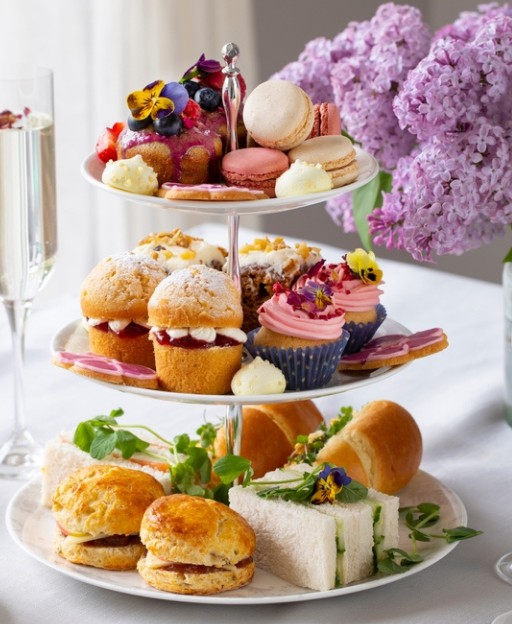
The three tiers of an afternoon tea stand are not random. They follow a deliberate order, from bottom to top.
Savoury first: The bottom tier holds the finger sandwiches. Classic fillings are cucumber and cream cheese, smoked salmon, egg mayonnaise, and coronation chicken. They are cut into neat rectangles or triangles with the crusts removed. Eating them first is not optional — it is simply the rule.
Scones in the middle: Plain scones and fruit scones sit on the second tier. They should arrive warm, with a small pot of clotted cream and strawberry jam on the side. This is where things get complicated — more on that shortly.
Sweets at the top: The top tier holds the miniature pastries, éclairs, macarons, and slices of cake. In London’s grander hotels, these are often small works of art, changed seasonally. They are the reward for everything that came before.
Enjoying this? 3,000+ London lovers get stories like this every week. Subscribe free →
The Great Scone Argument
Mention the words “jam first” in Devon and you will start an argument. Mention “cream first” in Cornwall and the response will be identical.
The debate is real and ancient. Cornish tradition says clotted cream goes on first, then the jam — the cream acts as the base, and the jam finishes it. Devonian tradition insists on jam first, with the cream spooned on top.
Both sides have passionate defenders. There is no resolution in sight. The Cornish and Devon county councils have both published official statements on the matter.
In London, most establishments serve both elements and let you decide. Most Londoners choose jam first simply because it is easier to spread on a warm scone. But raise the topic at your table and see what happens to the conversation.
Choosing Your Tea
The tea menu at a London afternoon tea often runs to several pages, which surprises most visitors.
English Breakfast is the most familiar — a robust blend that holds up well to milk. Darjeeling is lighter and floral, sometimes called the “champagne of teas.” Earl Grey is flavoured with bergamot citrus rind and divides opinion sharply. Assam is strong and malty. Lapsang Souchong is smoked, and intensely so.
If you are unsure, ask your server. Staff at most London afternoon tea venues know their teas well and will guide you based on whether you take milk, whether you want something robust or delicate, and how much caffeine you want.
Whatever you choose, let it steep for three to five minutes before pouring. Removing the bag too early leaves the flavour weak. Leaving it too long turns the tea bitter. The right cup sits somewhere between the two.
Where to Go in London
The options range from around £25 to over £100 per person. The price difference is not always about the quality of the food.
The grand hotel experiences — The Ritz, Claridge’s, The Savoy, The Dorchester — charge for atmosphere, history, and sheer spectacle. Booking weeks or months in advance is necessary. A dress code is enforced. These are occasions, not meals.
For something more accessible, the department store options work well. Fortnum & Mason in Piccadilly has been serving afternoon tea since 1926 and remains one of the most consistent experiences in the city. Quality is high and cost is moderate by hotel standards.
Neighbourhood cafés across London offer their own versions at lower prices. The sandwiches may be slightly thicker. The stands may not match. The experience is no less genuine — and often less formal, which suits many visitors perfectly.
After your afternoon tea, London’s food scene has plenty more to offer. The Borough Market nearby is a feast in its own right, and a proper Sunday roast is the other great British food tradition worth experiencing.
The Unwritten Rules
Do not drink your tea before eating the sandwiches. The food always comes first. This is not written anywhere, but it is observed by most.
Do not move up the tiers before finishing the one below. The structure of the stand exists for a reason, even if no one explains it.
Milk in the tea before or after pouring is, again, a matter of deep personal conviction. Purists say milk first warms the cup and prevents the tannins from “stewing” against the porcelain. Others add it after to judge the correct amount. Both camps have been at it for over a century.
Do pour for others before pouring for yourself. At a formal afternoon tea, the person seated closest to the pot traditionally pours for the table.
Most importantly: do not rush. An afternoon tea is designed to take an hour. It is one of the few meals in London that actively resists being hurried. Take the full hour.
Frequently Asked Questions
What is the difference between afternoon tea and high tea in London?
Afternoon tea is a light, elegant mid-afternoon meal served with finger sandwiches, scones, and pastries on a tiered stand. High tea is a traditional working-class evening meal that includes heartier food like meat pies and bread. When visiting London as a tourist, you almost certainly want afternoon tea — not high tea.
How much does afternoon tea in London cost?
Expect to pay between £25 and £80 per person at a quality London establishment. Grand hotels like The Ritz or Claridge’s charge £90 to over £100 per person. Department stores like Fortnum & Mason offer a mid-range experience. Independent cafés can be as low as £20 to £25 and are perfectly worthwhile.
Do you need to book afternoon tea in London in advance?
Yes — always book ahead. For London’s most famous venues, bookings need to be made several weeks in advance, sometimes months for weekends or special occasions. Even mid-range options fill up quickly. Book as soon as you know your travel dates.
Is there a dress code for afternoon tea in London?
The grand hotel experiences typically enforce a smart casual or formal dress code. Jeans, shorts, and trainers are often not permitted at The Ritz or Claridge’s. Always check the venue’s website before you go. Independent cafés and department store options usually have no dress code requirements.
There is a reason afternoon tea has survived nearly two centuries without changing very much.
It asks you to stop. To sit. To pour slowly, eat carefully, and argue cheerfully about whether the cream goes before or after the jam.
London moves fast. Afternoon tea does not. That, more than anything else, is rather the point.
🇬🇧 25 Hidden Gems of London Most Tourists Never Find
From secret riverside walks to hidden Victorian tunnels, centuries-old pubs to rooftop gardens with skyline views — our free guide reveals the London most visitors never discover. Join 3,000+ London lovers who get it free.
Get Your Free London Hidden Gems Guide →Love more? Join 65,000 Ireland lovers → · Join 43,000 Scotland lovers → · Join 29,000+ Italy lovers →
Free forever · Unsubscribe anytime
Subscribe Free