Before every State Opening of Parliament, the Yeomen of the Guard still process by lantern-light through the cellars beneath the Palace of Westminster, a ceremonial search for gunpowder that dates back to the night of 4–5 November 1605, when a Yorkshireman calling himself John Johnson was found guarding 36 barrels of it. That man was Guy Fawkes, and four centuries later Britain still marks his failure with bonfires, fireworks and toffee. This is Guide № 012 in The Love London Guide series.
Get the Full Collectible Guide (Free PDF)
Bonfire Night (Guy Fawkes) — in a beautifully designed, printable booklet. The Love London Guide № 012.
What Actually Happened in 1605
The Gunpowder Plot was a conspiracy to blow up the House of Lords during the State Opening of Parliament on 5 November 1605, killing King James I and much of the Protestant establishment in a single blast. The plotters leased a undercroft directly beneath the Lords chamber and packed it with gunpowder concealed under firewood. Fawkes, a soldier with explosives experience gained fighting in the Low Countries, was the man left to light the fuse. He was discovered in the early hours of 5 November, arrested, and interrogated in the Tower of London.
The plot unravelled after an anonymous letter warned Lord Monteagle to stay away from Parliament that day. A search of the cellars followed, and Fawkes was caught with a slow match and touchwood on him. Under torture he eventually named his fellow conspirators; his signature on the later confession is famously shaky. You can read Parliament’s own account of the plot and see where the Lords chamber stood via the UK Parliament site, and the Tower of London, run by Historic Royal Palaces, still displays material connected to the interrogation.
Why We Burn a “Guy”
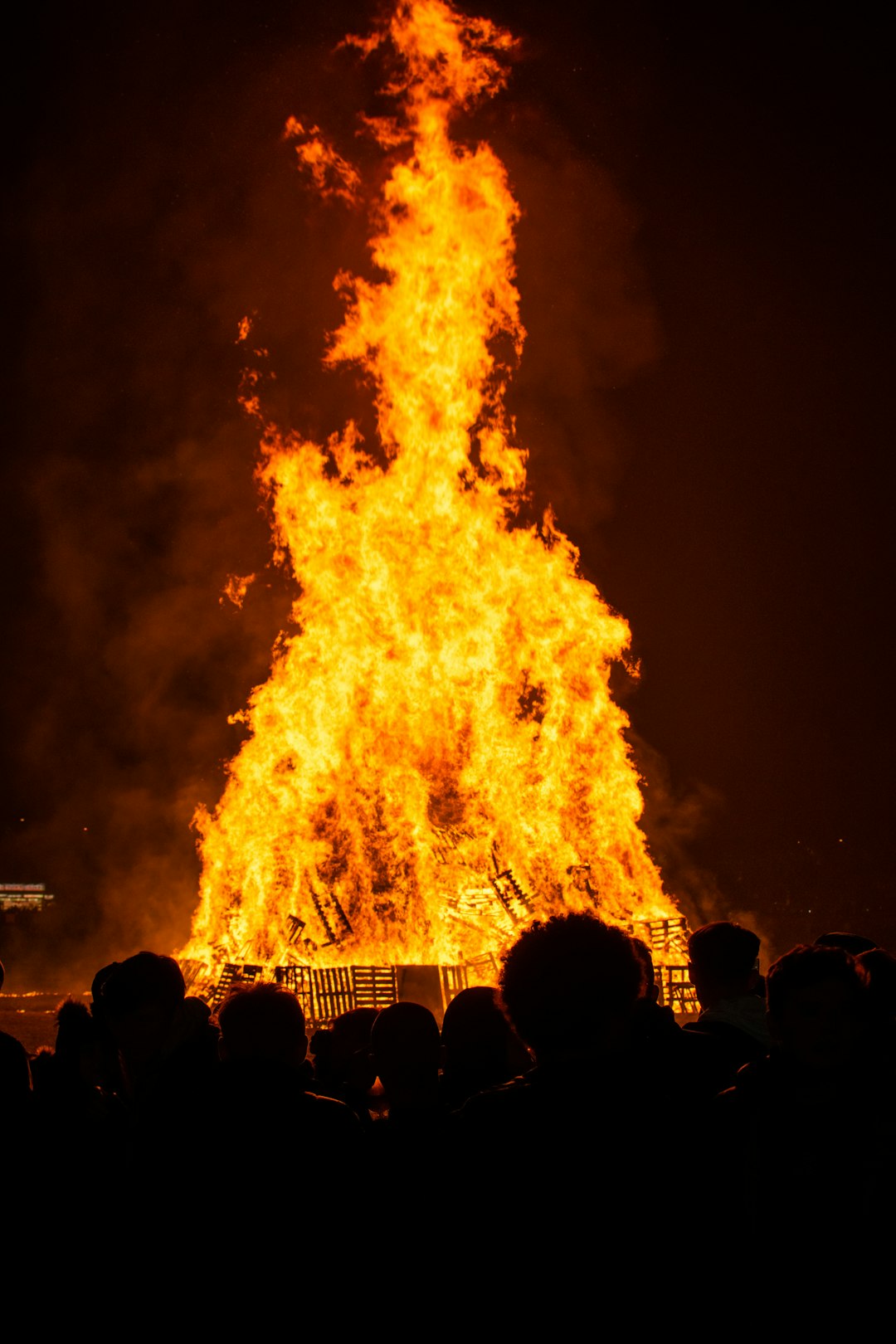
Fawkes was not the ringleader — that was Robert Catesby, a Warwickshire gentleman who recruited the thirteen or so conspirators. But Fawkes was the man caught red-handed, and it was his name that stuck. Parliament passed the Observance of 5th November Act in 1606, requiring an annual thanksgiving for the king’s deliverance; the public bonfires and effigy-burning grew up around it over the following centuries. Children once wheeled home-made effigies through the streets asking for a “penny for the Guy” to buy fireworks, a custom now largely faded.
The word “guy” itself comes directly from these effigies. Originally meaning a grotesque or oddly dressed figure, it drifted over the 19th and 20th centuries — especially in American English — into the everyday term for a man, and then for people in general. Few people saying “you guys” realise they are invoking a 17th-century would-be assassin.
Lewes, Ottery St Mary and the Regional Traditions
The grandest Bonfire Night celebrations are not in London at all but in Lewes, East Sussex, where several independent bonfire societies stage torchlit processions, costumed marches and enormous themed effigies on 5 November. In Ottery St Mary in Devon, residents carry barrels of flaming tar on their backs through the crowded streets, a tradition said to stretch back generations. Both events draw large crowds and are run by local volunteers rather than commercial operators, so dates and arrangements are worth checking locally before travelling.
Fireworks, Food and Safety
British fireworks law is stricter than many visitors expect. Under the Fireworks Regulations, you must be 18 to buy consumer fireworks, and setting them off in public is restricted to set hours — generally until 11pm, extended to midnight on 5 November itself. The rules and category definitions are published by GOV.UK. Because of noise and litter concerns, many people now favour large organised displays over back-garden fireworks.
The food is half the point. Traditional Bonfire Night fare includes bonfire toffee (a hard, dark treacle toffee), parkin (a sticky oatmeal-and-ginger cake associated with Yorkshire and Lancashire), toffee apples, jacket potatoes cooked in the embers and hot soup. Animal-welfare charities such as the RSPCA publish guidance each year on keeping pets calm, as the bangs distress many dogs, cats and horses.
Where to See It in London
London has no single official bonfire, but several reliable large-scale displays run each year. Alexandra Palace in north London hosts a long-established fireworks festival with views back over the city skyline. Organised displays also appear at venues and parks managed by individual London boroughs; the National Trust and other venue operators sometimes stage events at their properties too. Because popular displays sell timed tickets and sell out, booking directly through the venue’s own website is the safe approach.
Myths Worth Retiring
Myth: Guy Fawkes led the Gunpowder Plot. He did not. Robert Catesby conceived and led it; Fawkes was the explosives man and the one caught, which is why history remembers his name above the others.
Myth: Fawkes was burned at the stake. He was sentenced to be hanged, drawn and quartered in January 1606. On the scaffold, commonly said to have been weakened by torture, he fell or jumped and broke his neck, dying before the worst of the sentence was carried out. It is his effigy, not his body, that is burned each year.
Myth: The cellar search is just for show. The ceremonial search of the Palace of Westminster’s cellars before each State Opening is indeed ceremonial — but it is a genuine, maintained tradition carried out by the Yeomen of the Guard, not a tourist re-enactment.
Frequently Asked Questions
Is Bonfire Night a public holiday?
No. The 5th of November is not a bank holiday in the United Kingdom, so shops, offices and transport run as normal. Celebrations happen in the evening, and organised displays are often moved to the nearest weekend.
Why is it sometimes called Guy Fawkes Night and sometimes Bonfire Night?
Both names refer to the same 5 November event. “Guy Fawkes Night” emphasises the historical origin, while “Bonfire Night” describes what people actually do. The two are used interchangeably across Britain, with regional preferences.
What is the “Remember, remember” rhyme?
It begins “Remember, remember the fifth of November, gunpowder, treason and plot.” It is a traditional verse recited around the occasion, recalling the failed attempt on Parliament. Several longer versions exist, but the opening lines are the ones most people know.
More The Love London Guides
The Love London Guide is a numbered series — one tightly focused subject at a time, each with its own downloadable collectible edition. Guide № 001 is Fish and Chips, Guide № 002 is Trooping the Colour, Guide № 003 is The Red Telephone Box, Guide № 004 is English Breakfast Tea, Guide № 005 is The British Pub, Guide № 006 is The Great British Queue, Guide № 007 is London Dry Gin, Guide № 008 is Savile Row Tailoring, Guide № 009 is The Ravens of the Tower of London, Guide № 010 is British Sayings & Idioms, Guide № 011 is The Full English Breakfast, This is Guide № 012. More editions are on the way.
🇬🇧 Join 3,000+ London Lovers
Every weekday, a free story from London: the people, places and history behind it, from people who live and love it.
Subscribe free — enter your email: